In a world where women are constantly expected to balance careers, caregiving, relationships, and emotional labour, wellness has evolved into something deeper than beauty routines or fitness trends. Increasingly, women are searching for practices that offer not just physical strength, but also mental calm, emotional balance, and a sense of connection with themselves. For many, yoga has become exactly that space.
Far beyond the aesthetic of complicated poses and flexible bodies often seen online, yoga today is being embraced as a holistic lifestyle practice that nurtures the body while quieting the mind.
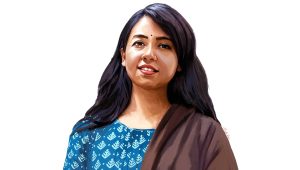
For Brity Dev, chief yoga instructor at Ananda Yoga & Wellness Institute, the journey with yoga began in childhood. Growing up, she watched her parents and relatives practise yoga at home, surrounded by yoga books and instructional CDs. What began as quiet fascination eventually turned into professional passion.
After completing her MBA from BRAC University, she received a scholarship through the Indian High Commission to pursue a 300-hour Yoga Instructor Course at SVYASA Yoga University in Bangalore. Since 2019, she has been working professionally as a yoga instructor.
“Yoga has never been just a physical practice for me,” said Brity. “It is a journey inward, where the body, mind, and soul meet each other with honesty and harmony.”
That philosophy of connection lies at the heart of yoga itself. The word “yoga” originates from the Sanskrit word meaning “union”, a union between breath and movement, awareness and action, body and mind.

For many women, that union becomes especially meaningful in lives dominated by stress and overstimulation.
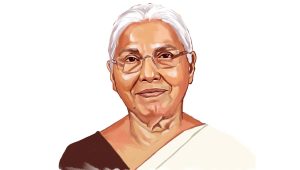
Promiti Prova Chowdhury, founder and instructor at Prabhayoga, discovered yoga during a physically difficult chapter of her life. Back in 2012, she suffered from severe lower back pain. Despite medication and physiotherapy, relief remained temporary. With little knowledge about yoga, she walked into the Indira Gandhi Cultural Centre hoping to try something different.
“After three weeks, my pain was gone,” she recalled. “I became more flexible than ever, and I fell in love with the process.”
For Prova, yoga felt unlike any other form of exercise; scientific, systematic, and deeply comforting. Beyond physical movement, she believes yoga functions as meditation, separating the mind from the noise of daily life.




Both instructors emphasise that yoga’s impact extends far beyond flexibility.
Physically, regular practice strengthens the body while improving posture, balance, mobility, digestion, and sleep quality. Certain poses are believed to support women experiencing PMS, PCOS, hormonal imbalance, urinary tract issues, menstrual discomfort, and postpartum weakness. Gentle hip openers such as Butterfly Pose and Goddess Pose help support pelvic health, while restorative poses ease cramps and bloating.
Yoga also becomes particularly valuable during different hormonal phases of a woman’s life.
During pregnancy, breathing exercises and gentle movement can help reduce back pain, improve posture, and emotionally prepare women for childbirth. During menopause, restorative yoga and calming breathwork are often used to manage stress, sleep disturbances, and mood fluctuations.
But perhaps yoga’s most powerful effect is on emotional wellbeing.
“Yoga calms the nervous system and helps the mind slow down,” said Brity. “It creates inner space, something many women forget they ned.”
Prova echoes the same sentiment, explaining that one of yoga’s greatest strengths lies in its ability to support mental health alongside physical wellness. According to her, yoga works in three interconnected dimensions: fitness, beautification, and emotional wellbeing.
“Unfortunately, many women prioritise beautification over health,” she said. “Why not choose a natural and healthier alternative?”
Unlike many competitive fitness environments, yoga encourages self-awareness instead of comparison. The practice does not demand perfection, extreme athleticism, or a certain body type. In fact, one of the biggest misconceptions surrounding yoga is that it is “only for flexible people.”
“You do not come to yoga because you are flexible,” Brity explained. “This is for every woman who is willing to show up for herself, even a little bit at a time.”
That accessibility is what continues to draw women of different ages and lifestyles toward the practice. Whether through power yoga sessions that build endurance or gentle restorative classes focused on healing, yoga adapts itself to the practitioner rather than forcing the practitioner to adapt to it.
For beginners intimidated by yoga, both instructors offer similar advice: start slowly and without judgment.
Yoga, they insist, is not about mastering impossible postures. It is about learning to reconnect with one’s breath, body, and inner balance, even if only for a few moments each day.
At its core, yoga gives women something modern life often takes away: stillness, self-awareness, and the freedom to simply breathe.