


Some games you remember. Vice City you can practically smell: sun cream, hairspray and a PlayStation 2 working harder than it ever wanted to.
GTA III had only just dragged the series into 3D, and a mere 12 months on, Rockstar North handed us a sequel that made its predecessor look like a rough draft. These days we wait more than a decade between numbered GTAs. Back then, a year was plenty.
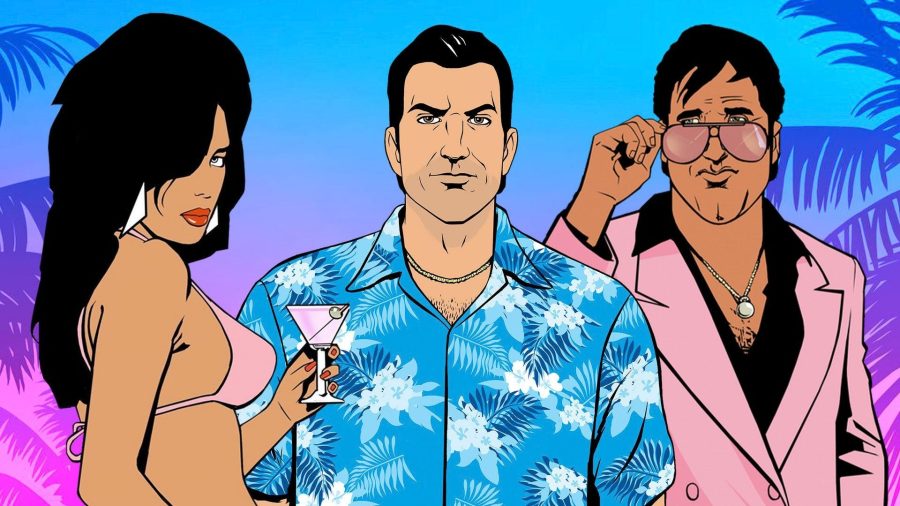
Then there was the man at the centre of it. GTA III’s hero never said a word. Tommy Vercetti, played by Ray Liotta, had opinions about everything. Fresh out of prison after 15 years, shipped to Vice City by the Forelli family, he watches his first drug deal go spectacularly wrong and decides the sensible response is to take over the whole town. Casting a Goodfella as your gangster was a flex so confident it made these games feel like proper cinema.

The supporting cast read like the back of a well-thumbed VHS box: Dennis Hopper, Burt Reynolds, Gary Busey, Danny Trejo, Tom Sizemore. Lance Vance was voiced by Philip Michael Thomas, who played Ricardo Tubbs in Miami Vice, which is the video-game equivalent of a wink so big it needs its own postcode. Ricardo Diaz’s mansion looked suspiciously like Tony Montana’s. Rockstar wasn’t hiding its homework. It was waving it in the player’s face.
And the look of the place. Pink flamingos, teal palm trees, neon everywhere, pedestrians dressed in outfits MJ would have approved of. When you climbed into your first car, Billie Jean was playing and that was no happy accident: it was engineered to be that song every time. The radio did the rest. Broken Wings by Mister Mister now belongs to Vice City whether Mister Mister likes it or not and you could be mid-chase on a dirt bike to the sound of 99 Luftballons and it felt right.



Rockstar also handed us toys. Motorcycles returned, and we could finally pilot aircraft, including helicopters and a seaplane. You could walk into buildings. You could buy the taxi company, the film studio, the Malibu Club and a car dealership, then drive about collecting your takings like a crime lord on his rounds. Pizza delivery meant lobbing pies at customers from a scooter. Failed a mission? A taxi would whisk you back to the start, a small mercy in an age of no mid-mission checkpoints. And through all this, our empire-building hero could not swim. A man who ran a city, defeated by a puddle.
It was also where Rockstar began experimenting with scripted, multi-stage missions and Cop Land is the glorious, infuriating poster child. Lure two officers into a garage, steal their uniforms, stroll into a police-infested mall and plant a bomb with a five-second fuse. Then escape a five-star wanted level, with SWAT teams, the FBI and Lance, who has the survival instincts of a paper boat, in tow. Plenty of us hated it. Plenty of us did it again. The beauty was that it let you ignore the plan entirely and wander in wearing your Hawaiian shirt or leave by helicopter the moment things got hot. Freedom, with consequences.
The world agreed it was something special. Vice City sold more than 17.5 million copies, became the best-selling game of 2002 and ended up the third-biggest seller on the PS2. Sony had even secured a year of PlayStation 2 exclusivity.
Will the new Vice City have the same swagger, the same ability to turn a car park into a memory? We can’t know yet. But 2002 taught us to trust Rockstar when it takes us somewhere sunny and slightly criminal.