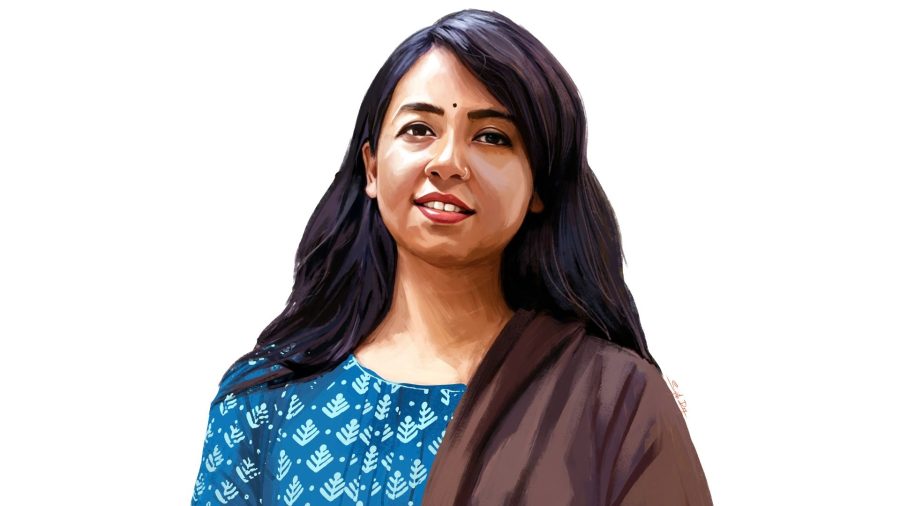



From green laundry soap to intricate window grill patterns, Sarah Jabin believes art should preserve memory and nostalgia rather than let history slip away unnoticed. As a Charukola graduate and visual artist, she has spent years pioneering her unique soap sculpture technique while capturing the disappearing residential architecture of old Dhaka.
Speaking to Shamim Shopno from TIMES, she reflects on her artistic journey, the practical realities facing artists in Bangladesh, and her lifelong devotion to creativity.
TIMES: Tell me about your journey as an artist. When did you first realise that art was something you wanted to pursue seriously?
Sarah: The decision to pursue art seriously came much later. As a child, I drew like any other kid and attended a normal children’s art school. The idea to enrol in fine arts actually came from my uncle. A friend of his studied at Charukola, so my uncle suggested that I try for Charukola. Initially, I prepared for the general university entrance exam alongside fine arts coaching, but eventually, I decided not to take exams anywhere else. I got admitted on my second try.
What kinds of things, people or experiences usually inspire you to create?
I am fascinated by trying new things, and I am still learning and experimenting. I started with painting at the institution but later explored sculpture and printmaking. My primary inspiration was my mother. Since childhood, I watched her make various types of pottery, wax flowers, and sewing. Growing up surrounded by her creative work deeply shaped my artistic instincts.
How much of your personality is reflected in your sculptures?

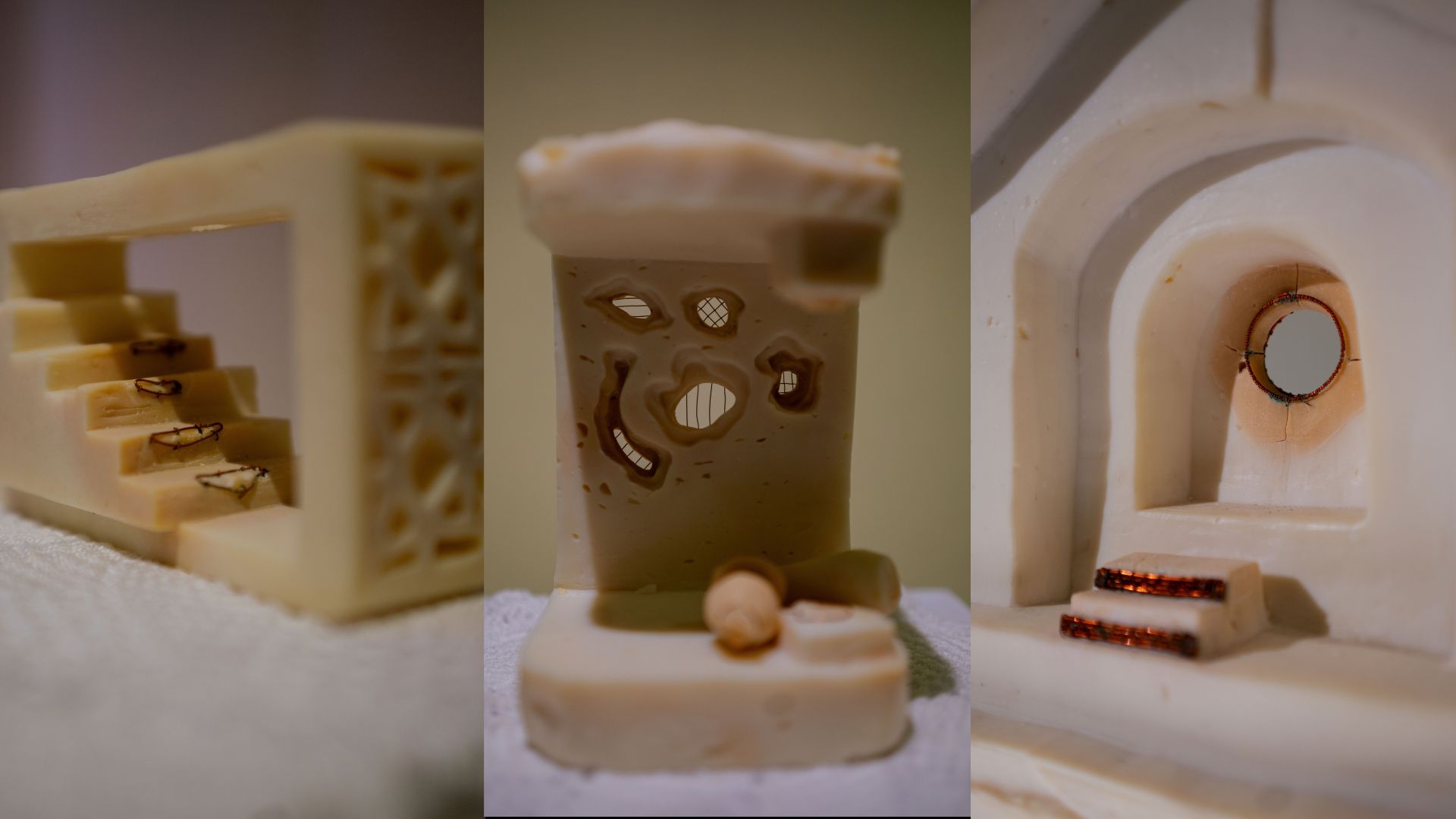
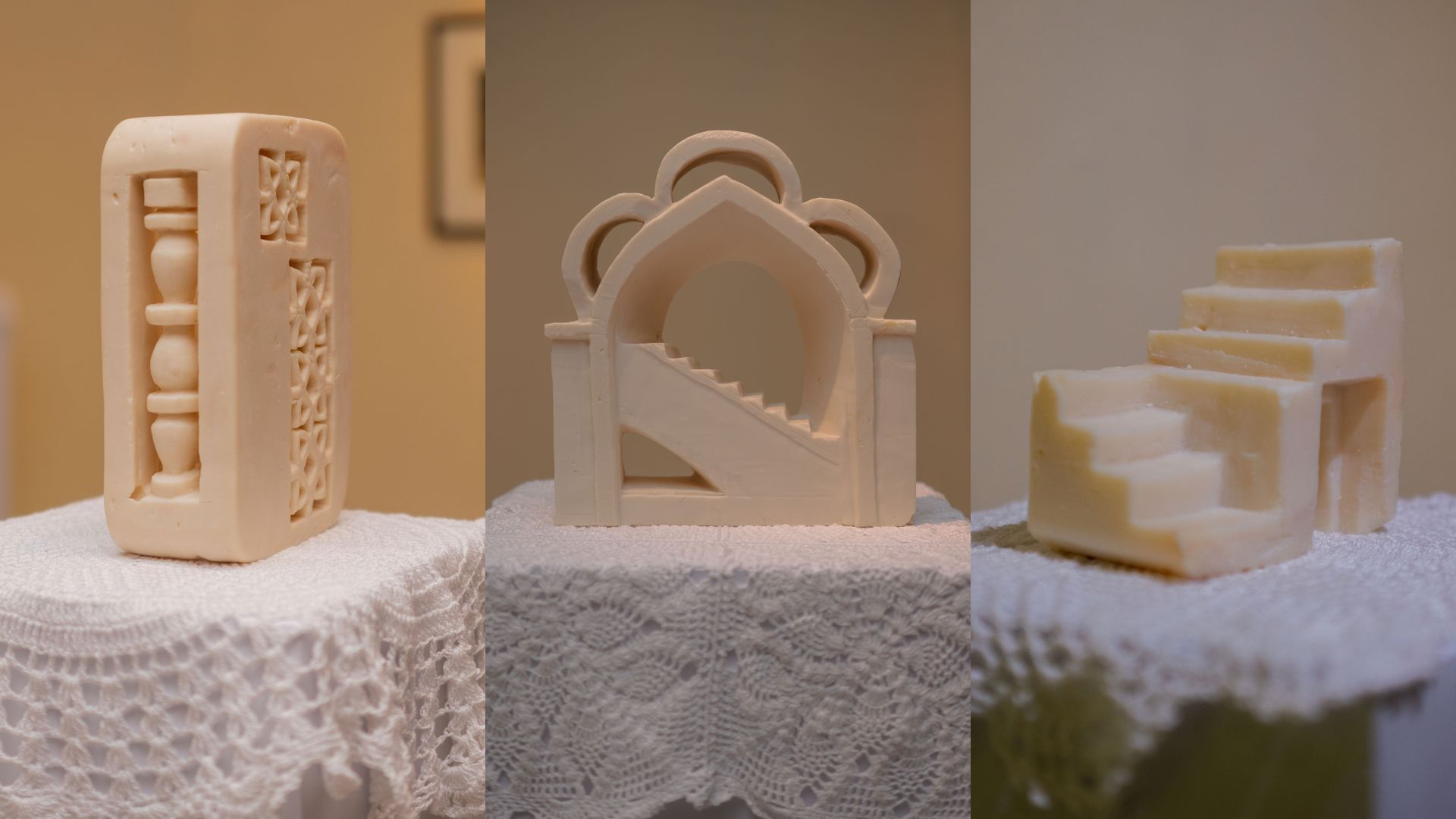
My personality and personal history are heavily reflected in my work. For example, my sculpture series focuses on old houses from the ’50s to the ’90s, capturing a diminishing time. I grew up in an old traditional house, and moving into a modern apartment flat felt like a major emotional shift. My childhood memories are tied to visiting old homes, like my father’s uncle’s house in Khilgaon or my aunt’s old zamindar-style house in Azimpur.
Flats lack the feeling and essence of those old homes. My work represents my memories of childhood and the experience of seeing those familiar old houses being torn down and replaced.
Sculpting requires immense attention to detail. How did you develop that instinct?
When working with physical mediums, I realised how much I enjoyed holding and crafting 3D objects. I used to visit friends in other departments, like crafts and sculpture and watch them work with clay outdoors. Also, because my mother made candles and wax flowers, I was already familiar with small tools and precise handling from a young age.
Soap is an unconventional medium compared to wood or metal. What attracted you to experiment with soap?


It started out of boredom during the COVID-19 lockdown when no one could go outside. I bought a block of green laundry soap, sat on the rooftop with a safety cutter, and carved a figure just to pass the time. I enjoyed it, so I began carving other store-bought soaps: a white elephant, a pink Meena, and a green parrot.
Was there a childhood connection to soap as well?
Yes! My grandmother used 570-branded laundry soap to wash clothes and would leave it in the sun to dry. As a kid, I used to steal those soap blocks and scrape them with tiny objects to collect thin, translucent, reddish shavings. When I started carving soap during the pandemic, my family jokingly said, “She’s at it again!”
Store-bought soaps are small and soft. How did you transition to making your own specialised soap blocks?
Initially, I tried compressing multiple store-bought soaps together, but larger blocks crumbled because heat couldn’t reach the core. Commercial soaps also contain skin-care additives that make them too soft for intricate carving. So around 2021, I decided to formulate my own “soap block” recipe. Since I didn’t have a science background, I had to spend days reading, studying basic chemical properties, and experimenting. After five failed attempts, I finally perfected my durable soap block formula about two to three years ago.
How did your family react to your career choice?
My mother and uncle were supportive from the beginning, but my father and aunts initially disapproved. When I missed my first attempt at Charukola, I was pushed into studying English at Eden College. But for my second attempt, I took a stand, bought a separate phone, and exclusively sat for the fine arts admission test. Once I got in, my family saw my dedication and accepted my decision.
What has been the biggest challenge in building an identity as an artist in Bangladesh?
Financial sustainability is the biggest hurdle. An artist cannot rely solely on art sales to make a living, especially early in their career, because the local buyer market is limited and heavily reliant on foreign buyers. As a result, many talented artists switch to digital media, 3D design, or corporate jobs. I tried working at an advertising agency for six months, but the corporate schedule left zero time for my creative work. Now, I work as a Workshop Coordinator and Trainer at Alliance Française, which allows me to balance income with my artistic practice.
Does being a woman in this field present unique challenges?
Yes, it absolutely makes a difference. The primary issue is safety and security. If a male peer needs to stay at the studio working until 11pm, he can easily do so. For me, staying that late brings up significant safety concerns about how I will get home. However, I prefer not to be labelled as a “female artist”; a male counterpart is simply called an “artist,” and I want to be recognised strictly as an artist as well.
Who are your favourite artists and inspirations?
I admire works across many artistic movements and eras, so it’s hard to name just one. However, Frida Kahlo has always been a major inspiration for me. In Bangladesh, I am deeply inspired by Novera Ahmed. Directly, working alongside multidisciplinary artist Mahbubur Rahman during a documentary project was hugely inspiring in terms of work ethic and artistic commitment.
How do you handle failure in your artistic process?
Failure is an essential part of growth. Developing my current soap block formulation alone required five failed chemical experiments before achieving success on the sixth attempt. Some failures are heartbreaking, but I firmly believe that a person can restart at any point in life. You grieve briefly, pick yourself up, and start fresh.
Where do you see yourself in five years, and what is your ultimate dream?
I don’t focus on static five-year goals or single destinations. In five years, I just want to be continuously learning, experimenting, and producing a high volume of work. While every artist dreams of exhibiting in major international museums, my ultimate goal is to lead an intensely busy artistic journey to be making art constantly until my final days, completely immersed in my creative process.