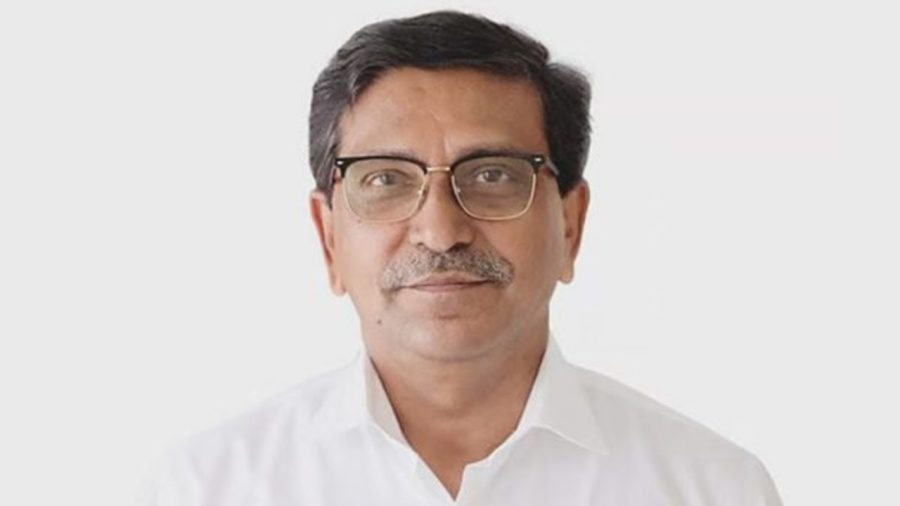



The International Crimes Tribunal-2 has kept the crimes against humanity case against Awami League leader Mahbub Ul Alam Hanif and three others pending for verdict following the conclusion of arguments from both sides on Wednesday.
The case relates to the killing of six people in Kushtia during the July uprising, and the judgment could be delivered on any day.
Earlier on 5 October, Prosecutor Gazi MH Tamim presented arguments on behalf of the prosecution. State defence lawyer Amir Hossain presented counter-arguments for the accused on Wednesday.
Following the completion of arguments, the court kept the case awaiting verdict.
Prosecutor Tamim stated that as part of the government, Hanif accepted the decisions taken to suppress the Julyuprising and implemented them through subordinates. The prosecution asserted that as a civilian leader, he carried out these actions through directives to subordinates and via telephone conversations.
Tamim noted that the tribunal had previously awarded the maximum penalty to former prime minister Sheikh Hasina, Awami League leaders Obaidul Quader and Bahauddin Nasim for the same offence. He expressed the prosecution’s expectation that Hanif would receive the same punishment, as he played a role in committing crimes from an identical position.

The prosecutor further stated that as joint general secretary of a major political party, Hanif participated in all party decisions and incited as well as aided the crimes against humanity committed during the uprising. He added that Hanif demonstrated support by attending various meetings chaired by Obaidul Quader.
According to the prosecution, Hanif issued phone instructions to the Superintendent of Police (SP) of Kushtia, district and upazila chairmen, and Awami League leaders and activists to carry out killings. Transcripts and recordings of these telephone conversations have been submitted to the tribunal as evidence.
The prosecution maintained that the lethal attacks in Kushtia in July 2024 were part of a planned and coordinated assault arising from political directives, organisational coordination, and local-level activities aimed at crushing the anti-government movement.



Case records show that on 27 July 2024, local Awami League leader Asgar Ali stated in a speech outside the Kushtia District that Hanif had instructed them to suppress the movement “by any means”. The prosecution laid special emphasis on this statement during final arguments.
The prosecution argued that the killings in Kushtia occurred as a direct result of the statements, directives, and organisational roles of the accused.
Earlier, on 10 June, the tribunal kept the case awaiting verdict after the prosecution and defence concluded their arguments.
Arguments were later reopened after the prosecution submitted additional evidence.
A total of 19 witnesses, including the investigating officer, testified in the case.
All four accused are currently absconding. Lawyers have therefore been appointed to represent them at state expense.
Besides Hanif, the other accused are Kushtia District Awami League President Sadar Uddin Khan, district General Secretary Azgar Ali and Kushtia City Awami League General Secretary Ataur Rahman Ata.
The prosecution brought three charges against the accused.
The charges include being present at and expressing support for a meeting where Awami League leader Obaidul Quader said Chhatra League was sufficient to suppress the movement, allegedly giving orders to kill students and members of the public and taking part in a conspiracy at a meeting in Kushtia on 29 July, and the killing of six people in Kushtia.
Six people were killed and several others injured in Kushtia during the July-August mass uprising.
A crimes against humanity case was subsequently filed before the International Crimes Tribunal against Hanif and the three others over the incidents.
The prosecution submitted formal charges on 6 October last year.
The tribunal began the trial of the four accused on 2 November the same year.