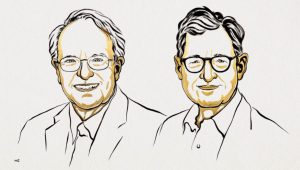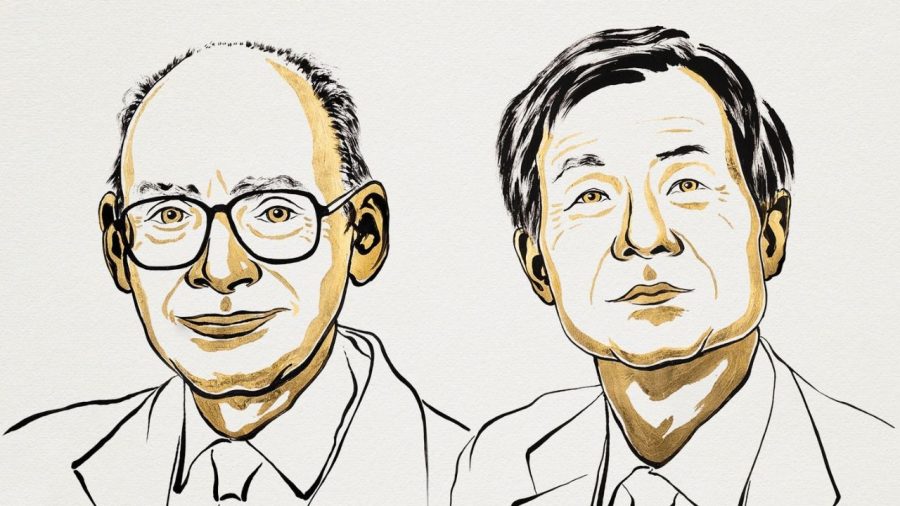



Scientists Henri Kagan and Kenso Soai have been awarded the 2026 Nobel Prize in Chemistry “for the discovery of non-linear effects and autocatalysis in asymmetric organic synthesis,” the Royal Swedish Academy of Sciences announced on Wednesday.
The chemistry accolade is the third prize announced during Nobel week, following those for medicine and physics presented on Monday and Tuesday.
Highlighting the significance of the research, Heiner Linke, Chair of the Nobel Committee for Chemistry, stated that this year’s award focuses on foundational chemistry. He explained that many molecules exist in two distinct versions that resemble mirror images, much like human hands.

“They look alike, but they are not identical. I cannot put my hands on top of one another,” Linke noted, adding that such non-identical mirror-image molecules are termed chiral, derived from the Greek word for hand.
The Nobel Prizes were established under the will of Swedish inventor and businessman Alfred Nobel, a chemist who accumulated vast wealth during the 19th century from warfare inventions, most notably dynamite.




The science, literature, and peace honours have been conferred since 1901, experiencing only brief interruptions primarily caused by the world wars. The economics prize was created as a later addition and is financed by the Swedish central bank.
Although chemistry awards are sometimes overshadowed by physics, literature, and peace laureates, they have recognised major scientific milestones, including nuclear fission and genetic sequencing techniques.
Last year, the chemistry award was presented to scientists Susumu Kitagawa, Richard Robson, and Omar Yaghi for developing metal–organic frameworks – molecular structures designed to help address global challenges such as climate change and fresh water shortages.
In addition to international acclaim, Kagan and Soai will share a monetary award of 12 million Swedish crowns ($1.2 million).
King Carl XVI Gustaf of Sweden will present the laureates with their medals on 10 December, marking the anniversary of Alfred Nobel’s death, during a ceremony in Stockholm followed by a lavish banquet at Stockholm City Hall. The peace prize remains the only Nobel Prize awarded separately in Oslo rather than Sweden.