


For decades, managing an economy felt like steering a cargo ship through heavy fog.
When inflation spiked or growth stalled, central banks and finance ministries reached for standard Keynesian levers, slashing interest rates or boosting public spending, hoping for smooth sailing.
Yet, when the catastrophic stagflation of the 1970s hit, those traditional steering mechanisms failed entirely.
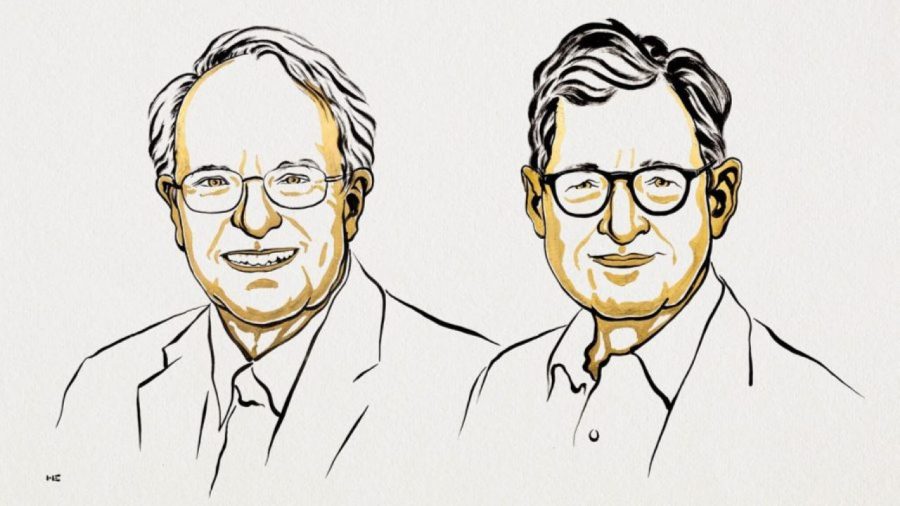
This fundamental problem remained unresolved until American economists Robert E Hall of Stanford University and Michael Woodford of Columbia University triggered a paradigm shift in economic policy.

In recognition of their transformative contributions, the Royal Swedish Academy of Sciences (Kungliga Vetenskapsakademien) on Monday announced awarding Hall and Woodford the 2026 Sveriges Riksbank Prize in Economic Sciences in Memory of Alfred Nobel “for microeconomic foundations of macroeconomic stabilisation.”
By replacing outdated, top-down assumptions with models built from the bottom up, grounded firmly in microfoundations, the pair provided the analytical blueprint used by central banks and finance ministries around the world today.
Traditional post-war models relied heavily on rigid statistical correlations. Economists assumed, for instance, that inflation always dropped when unemployment rose, or that household consumption moved in direct proportion to immediate disposable income.




The 1970s oil shocks shattered these assumptions when inflation and unemployment surged simultaneously, leaving policymakers helpless.
Renowned critics pointed out the fatal flaw: macroeconomic trends are not static rules, but rather the aggregate outcome of millions of individual decisions made daily by households and businesses. If human expectations change, standard macro-correlations collapse.
To resolve this, Robert E Hall turned economic research completely on its head in 1978. He reasoned that if household spending depends on what families expect to earn in the future, then current consumption itself serves as the ultimate indicator of consumer expectations. People only alter their spending habits when unforecastable new information arrives, meaning true changes in consumption cannot be predicted.
By establishing this benchmark, Hall proved that forward-looking expectations govern consumer behaviour.
His research showed that while most households act on long-term expectations, a distinct minority live hand-to-mouth, a distinction that became vital for modern policy design.
Building upon Hall’s breakthrough, Michael Woodford unified these insights into a workable, three-equation New Keynesian model that serves as a virtual laboratory for central bankers.
Woodford demonstrated that businesses do not alter prices instantly because adjustment is costly; instead, firms look forward, anticipating competitor costs and central bank credibility. Furthermore, he showed that central banks steer economies not by altering the sheer volume of money in circulation, but by adjusting interest rates relative to a “natural” neutral rate, targeting the “output gap” to manage sudden supply shocks and stabilise inflation.
While New Keynesian models cannot eliminate economic downturns entirely, Hall and Woodford’s Nobel-winning framework has radically transformed crisis management. When global supply chains collapsed and energy prices soared during recent economic disruptions, central bankers drew directly on their microfounded architecture.
Rather than triggering prolonged stagflation as in the 1970s, modern central banks successfully cushioned economic fallout and brought inflation under control far faster, proving that small, individual micro-decisions truly yield massive macroeconomic insights.