


A decade after the historic 2016 referendum split the nation, the ghost of Brexit has returned to haunt Westminster.
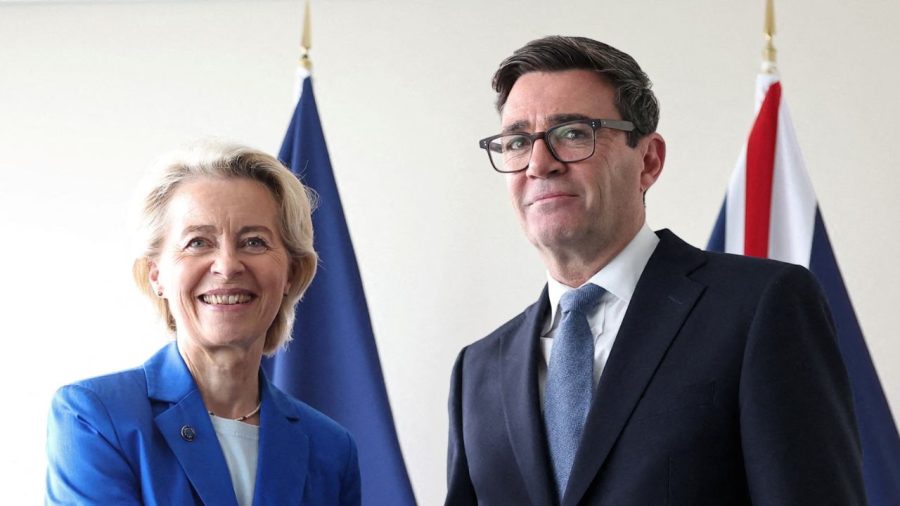
Addressing a packed House of Commons, Prime Minister Andy Burnham threw open the windows on Britain’s foreign policy, declaring that the post-Brexit settlement had “done more harm than good” and warning MPs that refusing closer ties with Brussels would be a “dereliction of duty”.
To add fuel to the political fire, Burnham dropped a startling bombshell, publicly confirming that Russian state-sponsored interference had actively targeted the 2016 Leave campaign.
So how did a nation that spent years marching out of Europe find itself standing at the continental crossroads once again?
The catalyst is a potent mixture of economic friction and demographic inevitability.
According to official forecasts from the independent Office for Budget Responsibility (OBR), leaving the EU’s single market and customs union has dealt a long-term 4% blow to UK productivity, leaving trade volumes 15% lower than if Britain had remained.
Meanwhile, public sentiment has undergone a dramatic transformation, a national phenomenon widely dubbed “Bregret”.

Polling reveals that between 52% and 61% of Britons now favor rejoining the bloc, backed by 75% of Labour voters and over two-thirds of young people aged 18 to 24.
Grassroots momentum reached fever pitch when an official parliamentary petition demanding re-entry gathered more than 111,000 signatures, forcing lawmakers into a high-stakes parliamentary debate.
Across the domestic political battlefield, opinions are fiercely divided.
Burnham has laid out four distinct pathways for the country’s long-term future: preserving the current framework, negotiating a bespoke customs union, re-entering the single market, or “going all the way” to full EU membership.



While Liberal Democrats and Green Party leaders press for immediate integration, opposition figures have reacted with outrage.
Conservative leader Kemi Badenoch warned that reversing Brexit would allow Brussels to “plunder” Britain, while former chief negotiator Lord Frost estimated rejoining could cost $26 billion in net contributions.
Reform UK deputy leader Richard Tice vowed to fight any attempt to rejoin, calling it a “backdoor betrayal” of 17 million voters.
Yet across the English Channel, the diplomatic weather is surprisingly welcoming.
French President Emmanuel Macron declared British return would be “excellent news,” while Spanish Prime Minister Pedro Sánchez insisted the UK would be welcomed back “with open arms”.
EU Ambassador Jukka Salovaara signaled that Brussels stands ready to engage once London clarifies its ambitions, though former negotiators like Andrew Duff emphasize that Europe will demand unwavering commitment without special privileges.
However, EU officials and legal scholars warn that “Membership 2.0” would look fundamentally different from Britain’s comfortable pre-2020 deal.
Under Article 49 of the Treaty on European Union (TEU), any returning nation must secure unanimous approval from all 27 member states and satisfy the strict democratic and economic Copenhagen criteria.
Crucially, Brussels has made clear that Britain would not inherit its historic Thatcher-era budget rebate or bespoke opt-outs.
Rejoining would require accepting full jurisdiction of the European Court of Justice and restoring the free movement of people.
Even smaller stepping stones are already causing friction.
Talks over a reciprocal Youth Mobility Scheme have hit hurdles over university tuition fees and visa caps, while UK industry warns that emerging “Made in Europe” manufacturing rules could exclude British firms.
While mandatory adoption of the euro and the Schengen passport-free zone are standard obligations for applicant states, experts point out that actual euro entry depends on meeting economic convergence tests, while Britain’s Common Travel Area with Ireland could preserve border flexibility.
Despite these formidable hurdles, policy analysts at think tank Best for Britain argue that because the UK retains high regulatory alignment, a fast-track accession could take under five years, mirroring Finland’s rapid entry in the 1990s.
Nonetheless, polling shows that 64% of the British public believe a second national referendum must take place before any final re-entry deal is ratified.
As London and Brussels prepare for a crucial UK-EU summit, Britain stands on the brink of its most historic choice in a generation: remain an isolated rule-taker on the sidelines, or take the long, winding road back into Europe.