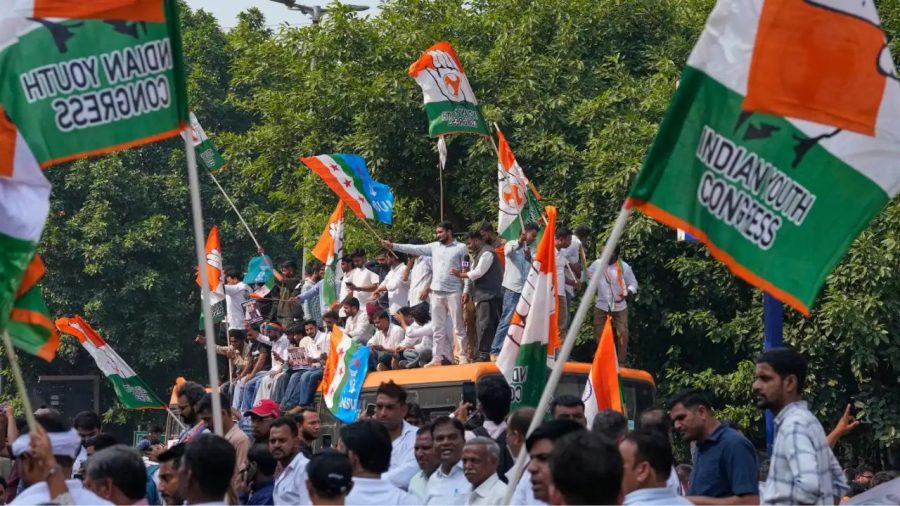



Hundreds of opposition party members, left-wing student groups and supporters marched to India’s Supreme Court on Monday to protest the removal of millions of names from voter lists, a revision that has triggered days of unrest in the capital and posed a challenge to Prime Minister Narendra Modi, based on reports from multiple agencies.
The demonstrators, who want Chief Election Commissioner Gyanesh Kumar to resign, headed to the court to file a petition after Chief Justice Surya Kant turned down their request for a meeting.
Kant said the issues were already before the court and that discussing pending cases would violate judicial ethics and propriety, and suggested the opposition file a petition instead.
Opposition parties and supporters of the “Cockroach” youth movement have taken to the streets almost daily this month to demand Kumar’s resignation over the voter list revision, which critics say benefits Modi’s Bharatiya Janata Party (BJP).
The revision, which began last year, has led to more than 130 million names, more than the population of Japan, being struck from the rolls.
They include 28 million people who had died, 63 million who had relocated and 30 million who could not be traced.

Critics say the process is politically motivated and risks disenfranchising eligible voters.
Opposition parties allege that Muslims and other minorities, who are unlikely to support the Hindu nationalist ruling party, are disproportionately affected.
The Election Commission has denied favouring any party and says wrongly deleted voters can re-enrol.
The commission and the BJP say the exercise is needed to remove duplicate and ineligible names, and both reject the claims about minorities.




The BJP has accused its rivals of trying to undermine the country’s democracy by wrongly questioning legitimate electoral processes.
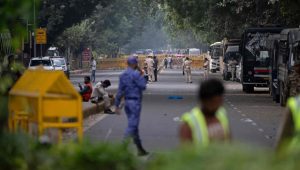
Police detained thousands of protesters over the weekend, including leaders of the “Cockroach Janta Party” (CJP), as supporters of the youth movement tried to march and were stopped by thousands of security personnel who locked down central Delhi.
Ahead of Monday’s demonstration, authorities closed six metro stations for 10 hours and restricted traffic along more than 20 stretches.
Hundreds of security personnel in anti-riot gear were deployed in central Delhi, with key roads barricaded and water cannon on standby.
Anirudh Siyag, a PhD student who joined the protest, said: “The fundamental values of this country are being assaulted, institutions are losing their independence…I am here to protest against this assault.”
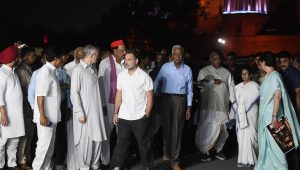
Opposition leader Rahul Gandhi of the Congress party described the growing protests as a fight to defend the constitution. “We will not back down,” he told reporters in New Delhi.
The BJP said the protests were the Congress party’s attempt to seize power.
“By discrediting constitutional institutions, spreading chaos and riots on the streets, and attacking people in the name of politics, all it seeks is a return to power,” Agriculture Minister Shivraj Singh Chouhan told reporters.
Modi has not publicly commented on the protests, but party leaders have dismissed them, with some calling the activists “anarchists.”
Delhi Police announced that Jantar Mantar was no longer designated as an official protest site and that three new venues had been identified, according to an official order.
CJP supporters staged a sit-in for weeks earlier this year at the historic observatory in the central business district to force Education Minister Dharmendra Pradhan to quit over exam paper leaks.
Separately, CJP leaders met Delhi Police to “demand” a date for a peaceful protest, threatening to announce a new protest call if a date is not given within 24 hours.
The youth movement, which has mobilised protests in recent months over issues ranging from government school infrastructure to jobs, is one of the biggest political challenges to Modi and the BJP in his 12 years in power.
The latest protests erupted after the Indian Express newspaper reported last month that Kumar’s two deputies had raised several concerns internally about voter list revisions, registration procedures and digital systems.