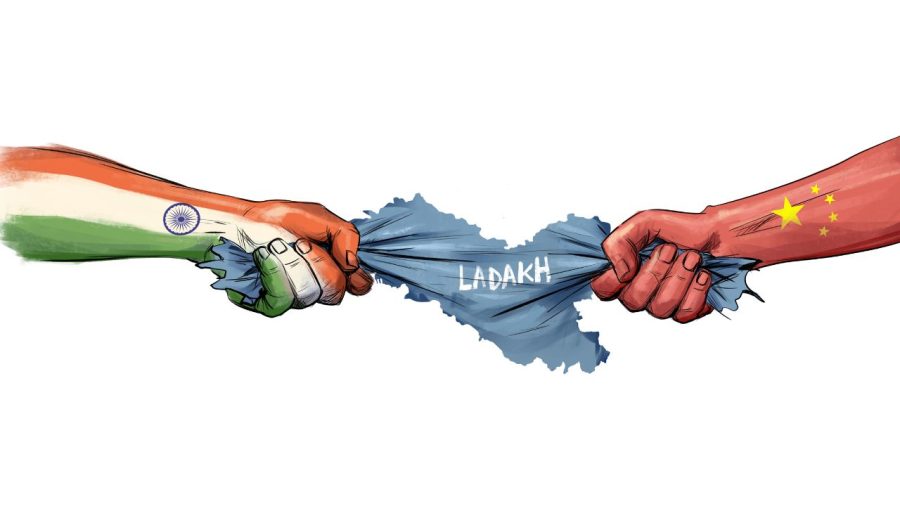



India declared on Tuesday that the Union Territory (UT) of Ladakh is an integral part of the country and that no amount of denial by China can change this established fact, after Beijing objected to New Delhi’s move to formally identify 28 geographical features in the region, according to The Hindustan Times.
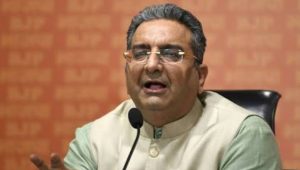
Responding to media queries on the comments made by the Chinese side, external affairs ministry spokesperson Randhir Jaiswal said in a statement: “UT of Ladakh is an integral and inalienable part of India. No amount of denial by the Chinese side can change this established fact.”
Chinese foreign ministry spokeswoman Mao Ning told a briefing in Beijing earlier on Tuesday that China has never recognised the Union Territory, which she said India set up illegally and unilaterally. She called the move illegal and invalid and insisted the western section of the China-India boundary has always belonged to China.

Jaiswal also defended the government’s decision to identify the 28 places and geographical features on the official Survey of India map, describing the announcement by the Union home ministry as “self-explanatory”.
The home ministry had announced on October 2 that the 28 places and features in Ladakh had been identified using standard place and feature names on the official Survey of India map. The identification was carried out in consultation with the Union Territory administration and local stakeholders. The list includes Gogra and Hot Spring, which were among the friction areas during the military standoff along the Line of Actual Control (LAC). Reports said another location, Dehra Compass, lies in the disputed Aksai Chin region, which China claims.




The exercise follows a similar move in August, when the government standardised the names of 27 places and features in Arunachal Pradesh. It also comes after years of Chinese naming of places in territory India regards as its own. Between 2017 and 2024, China issued four lists of “standardised” names, including 30 places in April 2024, 11 in April 2023, 15 in December 2021 and six in April 2017. Another batch followed in April this year. China calls Arunachal Pradesh “Zangnan”, or southern Tibet, and New Delhi has rejected the lists, saying a change of name does not alter the status of Indian territory or its sovereignty over it.
Ladakh has itself been a sticking point since it became a Union Territory on 31 October 2019. In September 2020, China’s foreign ministry said it did not recognise the “so-called” Ladakh territory, which it described as illegally established by India. New Delhi replied that Ladakh and Jammu and Kashmir have been, are and would remain integral parts of India, and that China had no standing to comment on its internal matters.
The rival claims overlap along the Himalayan frontier. India says China is illegally occupying about 38,000 square kilometres in Aksai Chin, which borders eastern Ladakh. Beijing has controlled the area since the 1950s. The two countries also fought a border war in 1962 that spilled into Ladakh.
Relations deteriorated sharply in 2020. The standoff in eastern Ladakh erupted on 5 May that year, following violent clashes in the Pangong Lake areas. At least 20 Indian soldiers were killed in clashes later in 2020. The two sides disengaged from the Gogra area in August 2021 and from Gogra-Hot Springs, also known as Patrol Point 15, in September 2022. In October 2024 they reached an understanding to disengage their militaries in eastern Ladakh, which led to a meeting between Prime Minister Narendra Modi and Chinese President Xi Jinping.
Friction has continued. In January 2025, India lodged a protest after China created two new counties, He’an and Hekang, in Hotan prefecture, and said parts of their jurisdiction fall inside Ladakh. In 2023, India also protested against a Chinese “standard map” that placed Arunachal Pradesh and Aksai Chin within China’s borders.