Elon Musk has suggested that the US government may be behind speed restrictions imposed on Ukrainian weapons relying on SpaceX’s Starlink satellite network.
The unexpected speed limits, introduced on Tuesday night, disrupted Kyiv’s battlefield operations, hampering its ability to direct drones at Russian targets and defend its airspace, reports BBC.
Starlink restricted speeds to 100mph (160km/h), causing weapons travelling faster than that to lose their connection. While SpaceX owns both services, Starlink provides civilian satellite internet access, whereas its military-grade sister service, Starshield, is designed for government and military use.
Musk said Starlink was reserved for civilian or defensive purposes and that a commercial company could not allow its services to be used for offensive military operations.
Responding to appeals from Ukrainian officials on social media platform X to restore full connectivity, Musk said Starshield systems were owned and controlled by the US government. Decisions on speed limits and usage, he added, rested with the US military and the US president.

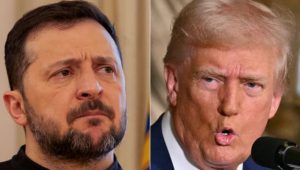
Ukrainian President Volodymyr Zelensky had earlier told UK media that he hoped the disruption was the result of a major technical error and called for the service to be restored.
Former Ukrainian defence minister Mykhailo Fedorov said on Wednesday evening that speed limits had been partially restored. He added that fully lifting the Starshield restrictions was now critical to Ukraine’s defence.
The US government has not commented on the matter.
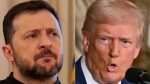



Political tensions add to concerns
Political friction between Kyiv and Washington is believed to have influenced the restrictions.
Serhiy Beskrestnov, an adviser to President Zelensky, wrote on Telegram that the move could not be a coincidence and was linked to the current political climate.
Tensions have escalated as US President Donald Trump has grown increasingly frustrated with Ukrainian strikes on Russian energy facilities.
Zelensky said Washington had threatened to cut off intelligence sharing unless Kyiv accepted an energy ceasefire proposed by Trump. However, Trump denied making such threats on Tuesday.
The connectivity disruptions coincided with heavy Russian strikes on Ukraine, which hit energy and communications infrastructure used by the Ukrainian military and killed several people in Kyiv.
Zelensky described the barrage as one of Russia’s largest attacks, saying that although many drones had been intercepted, several targets were hit.
At least 600,000 people across Ukraine were left without electricity. Residents received no prior warning before incoming drones struck.
Zelensky visits London amid growing tensions
During a one-day official visit to London on Wednesday, Zelensky was greeted with a hug by UK Prime Minister Andy Burnham at Downing Street and met King Charles.
Speaking to UK journalist Piers Morgan, Zelensky acknowledged feeling betrayed after the US arranged a deal to import 300,000 tonnes of Russian diesel. However, he said the situation was more complex than his personal feelings.
Before Zelensky’s arrival, No 10 announced plans to accelerate the delivery of lightweight multirole missiles to help Ukraine shoot down Russian drones.
Burnham reaffirmed that British support for Ukraine remained steadfast.