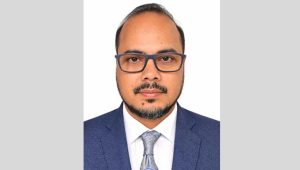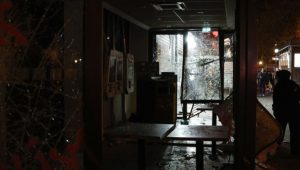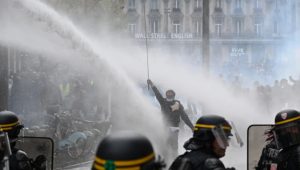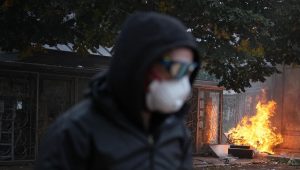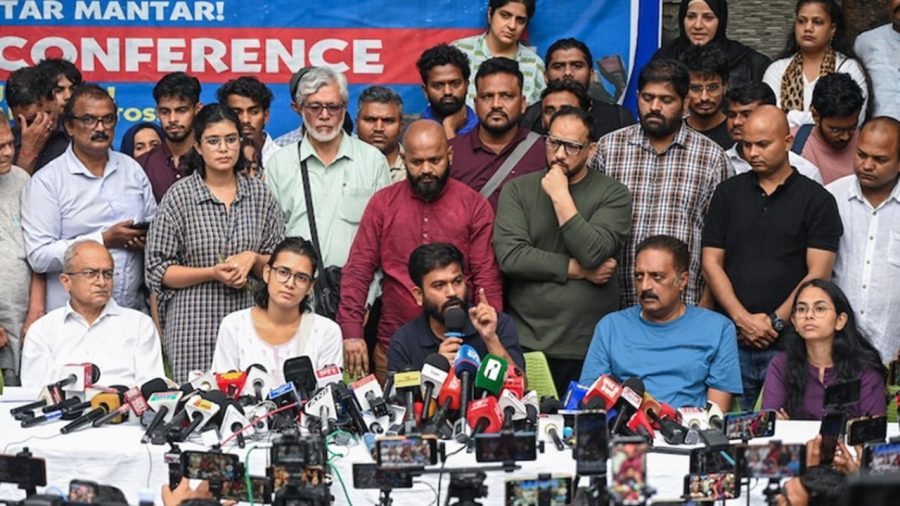



Police detained Cockroach Janata Party (CJP) founder Abhijit Deep and All India Students’ Association (AISA) president Neha Bora on Friday as they headed to protests in Delhi demanding the resignation of Chief Election Commissioner Gyanesh Kumar and opposing the electoral roll revision process.
Security was tightened across the capital following their detention.
Indian media reported that Abhijit was detained at his residence in Jhandewalan, central Delhi, to prevent him from joining the ‘Lehra Do Tiranga’ protest, while Neha Bora was detained in the Mandi House area.
More than 20 police personnel visited Abhijit’s home on Friday morning to serve a notice directing him to stay away from the protest. He was subsequently detained as he attempted to head towards the venue.
Several other protesters were detained, although police did not disclose their number.

More than 25,000 police and paramilitary personnel were deployed across Delhi ahead of Friday’s demonstration, The Indian Express reported.
Additional CCTV cameras were installed around Central Park in Connaught Place and Rajiv Chowk Metro Station. Central Park was closed for two days under restrictions, while around 16 buses were stationed at key locations to transport detained protesters.
Despite the heavy security measures, demonstrations continued.
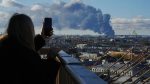

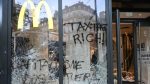

According to the Associated Press (AP), thousands gathered in Connaught Place carrying national flags and demanding the chief election commissioner’s resignation.
Tensions persisted throughout the day as police attempted to prevent demonstrations while protesters continued to gather.
Indian Defence Minister Rajnath Singh further fuelled the controversy surrounding the protests by accusing Congress and its allies of attempting to engineer a change of government similar to Bangladesh’s political upheaval.
Speaking at a press conference in Lucknow, Uttar Pradesh, on Friday, Singh alleged that opposition forces were exploiting youth-led protests to create political instability and undermine confidence in democratic institutions.
He claimed the movement went beyond opposition to the electoral roll revision and the Election Commission, alleging that its underlying objective was to change the government.
The allegations remain unsubstantiated, with no independently verified evidence made public.
Protesters allege that more than 13 crore names have been removed from electoral rolls through the Special Intensive Revision (SIR), putting eligible voters at risk of losing their voting rights.
The Election Commission maintains that the removals followed verification of deceased, relocated, duplicate and untraceable voters.
The dispute has now become entangled with allegations of an attempted change of government, bringing Bangladesh’s 2024 mass uprising into India’s political debate.
A similar protest in Delhi on 10 October prompted a major police crackdown, with more than 2,000 people detained.