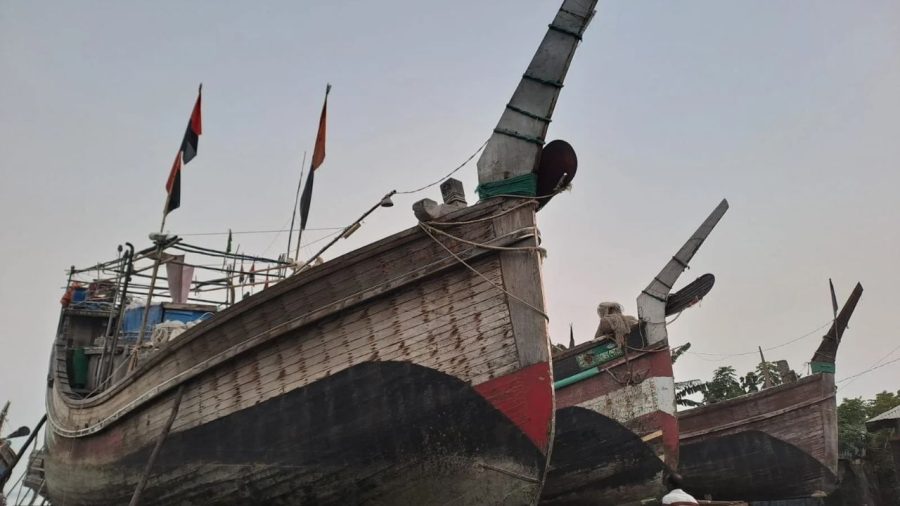



Sohag Boyati once owned fishing nets and a trawler. Today, the fish trader works as a labourer on someone else’s vessel after repeated losses forced him to sell both to repay debts of nearly Tk20 lakh. Even after losing his means of livelihood, he still owes Tk5 lakh.
Sohrab Talukder suffered a similar fate. Once a trawler owner employing eight to 10 fishermen, he accumulated nearly Tk15 lakh in debt after successive losses. He sold his nets and trawler at low prices and became a labourer but still owes Tk7 lakh.
Fish trader Aminur Hawlader went further, selling his family home for Tk40 lakh to settle his debts. When the proceeds proved insufficient, he was forced to leave the area under mounting pressure from creditors.
Their stories reflect a deepening financial crisis gripping thousands of fishermen, trawler owners and fish traders in Bagerhat’s Sarankhola and other coastal communities.
Some have abandoned fishing, others have lost their possessions, while many have fled their villages to escape debt. Those who remain struggle to feed their families as dwindling catches turn hopes of repaying loans into nightmares.
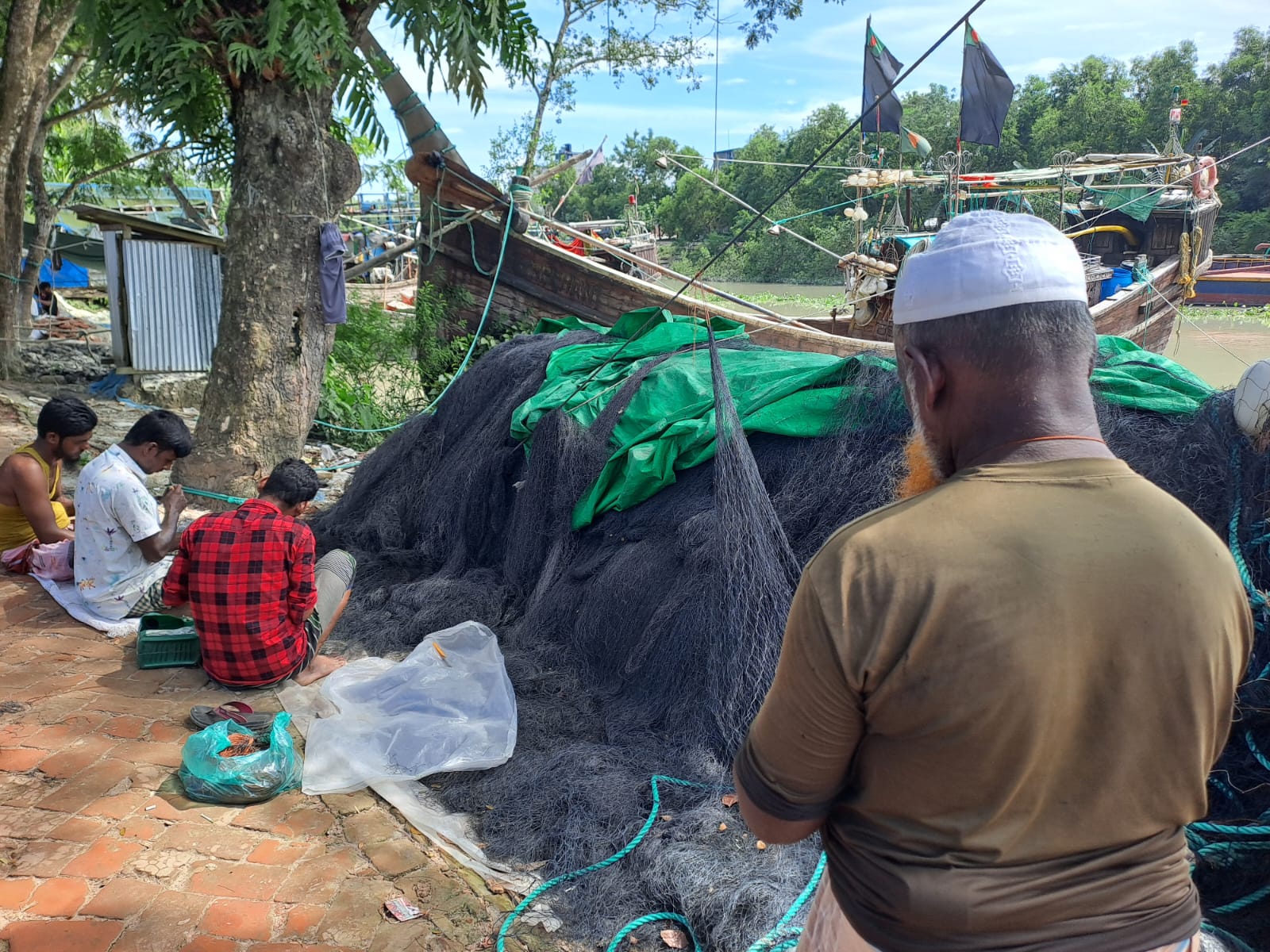
Interviews with coastal fishing communities reveal a cycle of poor catches, mounting operating costs, repeated borrowing and growing uncertainty.
Shaheen Talukder, a fisherman from Chalrayenda village, has spent nearly 15 years catching hilsa aboard other people’s trawlers under a share-based arrangement.
This season, he earned just Tk32,000 over four months, making it difficult to support his five-member family for the year.
“I borrowed Tk80,000 from a boat owner and another Tk1 lakh from local moneylenders who charge interest. Poor catches have left me unable to repay either loan,” he told TIMES.
According to the Bagerhat District Fisheries Department, the district has 39,627 fishermen, including around 10,500 registered deep-sea fishermen who receive food and other assistance for varying periods under fisheries development programmes.

Fisheries sources identify banned trawling and uncontrolled shrimp-net fishing as major reasons for hilsa catches falling short of expectations.
Small-mesh trawling and shrimp nets sweep up fish fry, fish of all sizes and other marine life from the surface to the seabed. The dominance of these operations often prevents traditional fishermen from casting their nets.

Trawlers engaged in Kath Bori trawling have also expanded into shallow waters, further damaging traditional fishing operations.
Repeated fishing bans, frequent natural disasters and threats from forest and sea pirates compound the crisis, leaving fishermen unable to operate safely or secure adequate catches.
To support their families, they borrow money and return to sea despite the risks. But disappointing catches bring further losses, pushing them deeper into debt.
Across Sarankhola and neighbouring coastal areas, fishermen carry debts ranging from Tk1 lakh or Tk2 lakh to Tk7 lakh or Tk8 lakh, while some trawler owners owe as much as Tk30 lakh.
Even year-round fishing fails to reduce their debts, forcing many to borrow again to cover household expenses and finance further trips.




Jamal Talukder of Rajeshwar village and Omar Faruk of Tafalbari each owe Tk1 lakh, while Rafiqul Khan of Taltali owes Tk2 lakh.
Sajib Hawlader of Khaulia village in Bagerhat’s Morrelganj upazila and Alamin Sikder of Tushkhali in Pirojpur’s Mathbaria upazila face similar hardships.
Both depend on their shares of fishing proceeds to support their families throughout the year. When catches are poor, borrowing becomes unavoidable.
After a particularly poor season, they have accumulated debts of Tk1 lakh and Tk1.5 lakh respectively.
Fishing ban deepens hardship
The peak hilsa breeding season has brought another challenge: a 22-day ban on fishing in rivers and the sea from 8 to 29 October.
Although the ban is important for protecting hilsa breeding and increasing production, it has left thousands of fishermen without work or income.
For families that struggle to afford food after even a day without fishing, 22 consecutive days of unemployment intensify their hardship. Household expenses, children’s education costs, medical bills and loan repayments continue regardless.
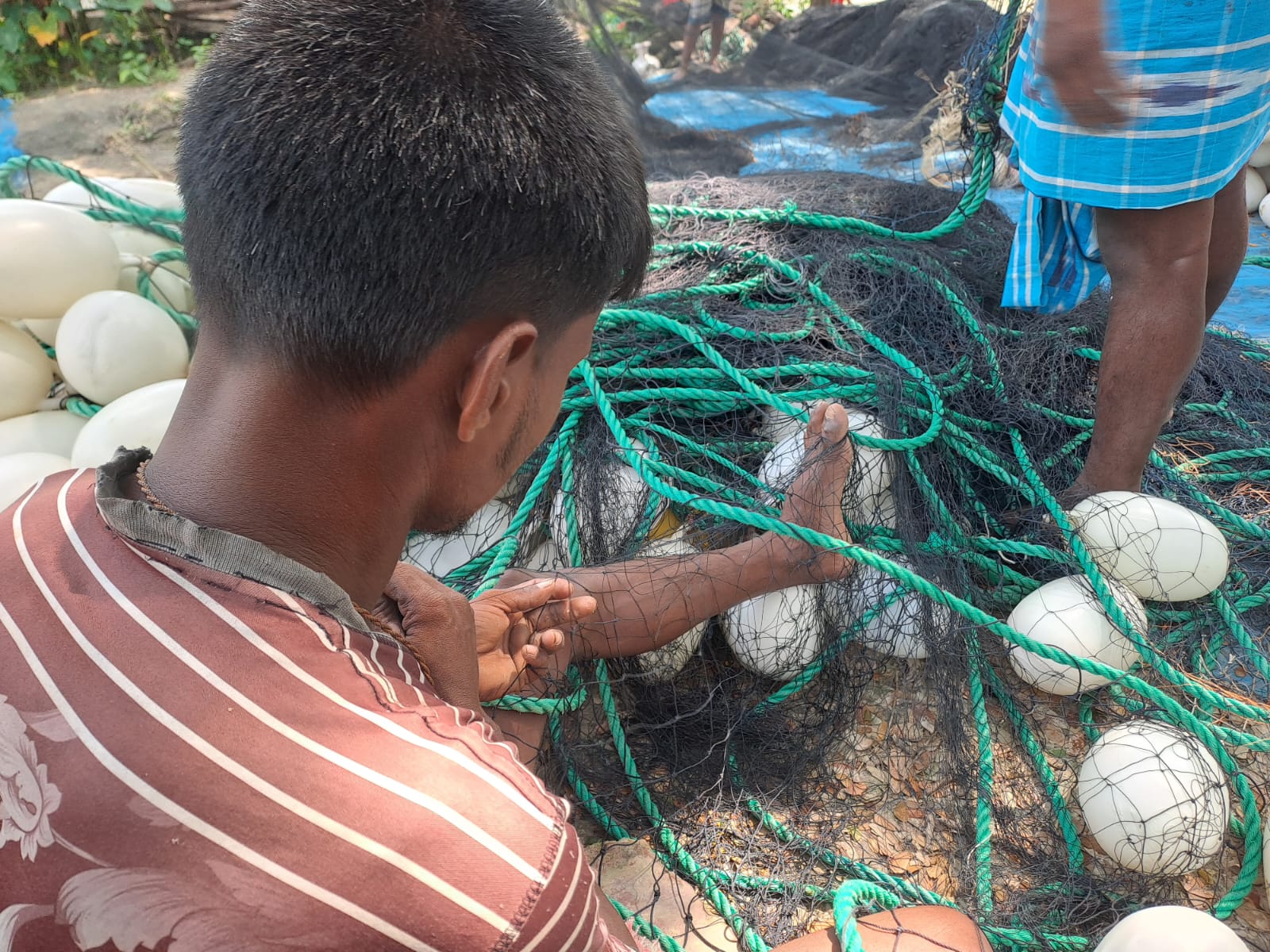
Some fishermen are repairing boat owners’ nets, others are searching for daily wage work, while many are borrowing simply to survive.
Those already in debt face the greatest pressure. Poor seasonal earnings had forced many to borrow even before the ban, and the suspension of fishing has further reduced their ability to repay loans.
The financial strain also extends to trawler owners and fish traders, who must invest heavily in fuel, food, ice and other supplies before sending vessels to sea.
When catches are poor, recovering those expenses becomes difficult.
Halim Boyati, a fish trader and trawler owner from Sharankhola, said, “My final trip before the ban cost Tk3 lakh, while fish sales brought in Tk4.5 lakh. Each of the 18 fishermen aboard received Tk3,200 as their share.” Yet after covering all expenses and payments, Boyati said he made no profit.
Another trawler owner, Belayet Khan, invested Tk3 lakh in his last trip but said he lost his entire investment because catches were inadequate.
Shahidul Islam invested Tk8 lakh during the season without making a profit, while fellow trawler owner Rafiqul Hawlader is burdened with Tk30 lakh in debt.
Affected owners said a single fishing trip typically requires an investment of Tk3 lakh to Tk4 lakh. Without sufficient catches, they struggle to recover even their capital.
Repeated losses force them to borrow from fish commission agents and non-governmental organisations to finance further trips. When those trips also fail to yield sufficient catches, selling nets, trawlers or family homes often becomes their only option.
Banned trawling threatens fish resources
Fishermen and trawler owners argue that repeated fishing bans will achieve little unless banned trawling and shrimp-net operations are stopped.
They allege that these methods indiscriminately destroy fish eggs, juvenile fish and other aquatic life, undermining natural reproduction and threatening marine resources.
Traditional fishing operations also suffer direct financial losses.
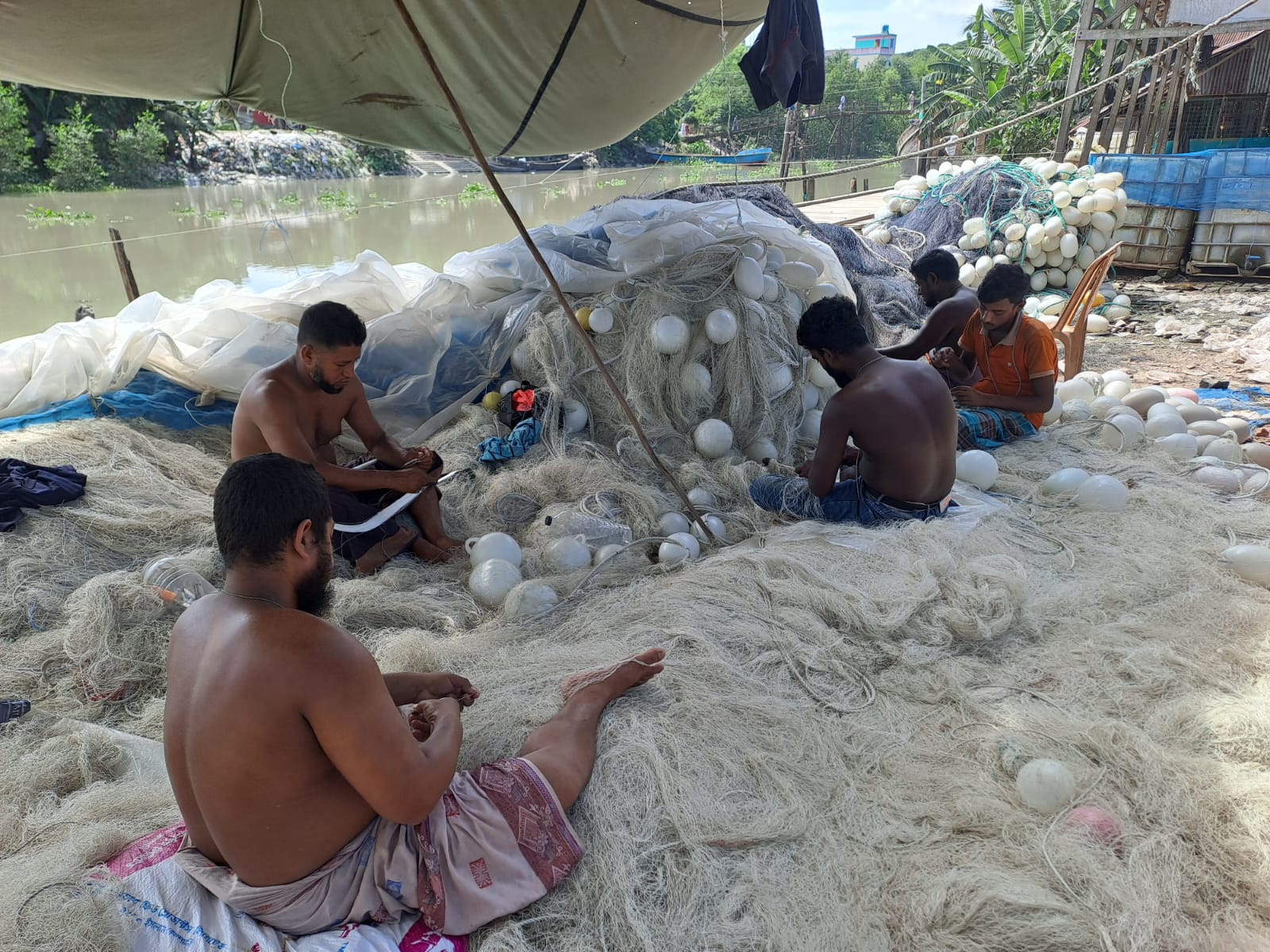
According to fishermen, trawling vessels drag their nets across fishing grounds where traditional fishermen have already laid theirs, damaging equipment worth lakhs of taka every year.
The threat prevents traditional fishermen from keeping their nets in the water, further reducing catches.
Coastal fishing communities say they must contend with natural disasters, piracy, banned trawling and fishing restrictions lasting nearly three months in total during the season.
Unable to fish safely or at the appropriate times, many are pushed into further financial distress. With few alternative employment opportunities, borrowing remains their only means of survival.
Fishermen have demanded adequate support during fishing bans, loans on easy terms, alternative livelihoods and stronger protection at sea.
They have also urged the government to stop banned trawling operations and the use of illegal fishing nets, including the production and sale of small-mesh nets, to protect breeding grounds and increase natural fish production.
Sarankhola Senior Fisheries Officer Anjan Biswas said the current 22-day ban was intended to increase hilsa production. “Registered fishermen would receive 25 kilograms of rice each as food assistance during the fishing restriction.”
However, decisions on providing loans on easy terms and creating alternative employment opportunities would depend on higher authorities, he added.