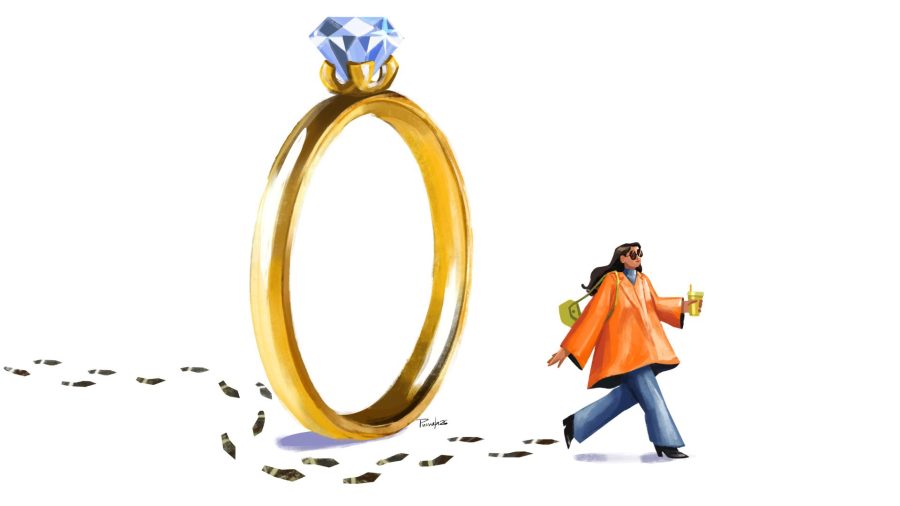



In the past, marriage was considered one of the most predictable milestones in a Bangladeshi woman’s life. Go to school, go to university, get a job, and eventually marry. For many young women these days, however, it is not just a question of when, rather than if, they will marry. It is increasingly about whether they are prepared, whether they have a picture of what they want in marriage, and whether they have a picture of their life, and whether marriage fits into that picture.
Marriage is not a priority for Oyshi, a 22-year-old university student who does not feel pressured by her peers to marry. She says she wants to complete her studies and get a clear idea of what she wants from her career before she does.
“Marriage is significant, but I don’t believe that it should be the primary focus,” she says.
Her thinking reflects a shift in the attitudes of some young Bangladeshi women toward relationships. Marriage remains a great concern, but education, careers, financial independence, and personal compatibility have increasingly entered the marriage discussion.
For some, deferring marriage is not a rejection of marriage. Rather, it is a way of ensuring that the choice is the correct one, made for the right reasons and at the right time.
Young professional Faiza says the concept of being financially independent has altered her perspective on marriage. “As soon as you’re on your own money, and making something that you want to have, you’re more aware of what you want to do with your life,” she says. “I don’t want to get married just because all of a sudden I want to put my dreams on the back burner.”
Faiza is not alone. For women like her, a career is not always about the choice of work versus family. It is about the idea of being a partner, not a dependent; it is about being in a marriage on an equal footing.

Future husbands are also expected to have different expectations. Young women are paying greater attention to attributes beyond family background or a stable income. Willingness to share responsibilities, communication, respect for others, and emotional maturity can be just as important.
“If I choose to marry, I will want someone who respects my choices and who knows that marriage should be a partnership,” Faiza says.
This transition may also help make the selection of a partner more considered. Some women are not sure whether a potential relationship can provide them the life they desire, rather than a marriage they are destined for.
Mehzabin, a woman married in her 20s, has a different opinion: for her, the choice was not one of age.




“Before I got married, I thought I knew what marriage would be like,” she says. “However, when you are in the actual relationship, you realise that you need to communicate and understand more than you ever did before marriage.”
Her experience is just one of the growing number of reasons young women are considering marriage more carefully: they know that marriage is just the first step.
The questions are not limited to the ceremonies and the celebrations. Who does the household duties? Will both partners be able to pursue their careers? How will financial decisions be made? What are the limits of extended families’ involvement? Can both people remain individuals and still have a life together? And, most importantly, can both become individuals who can build a life together?
These questions have woven their way into conversations that previous generations may not have been at liberty to have openly.
Parents, relatives, neighbours, and even family friends can ask about marriage in Bangladesh. The same questions are asked of the same woman, in her twenties, at numerous weddings, family reunions, and social events.
A traditional notion about the appropriate age range for marriage is slowly becoming dubious because of the shifting attitudes of younger women and families, says Asma, who has seen these attitudes change.
“Today’s young women have more opportunities to learn, to work, to make their own choices,” Asma adds. “Of course, it can certainly affect their outlook on marriage, and parents must realise that postponing marriage doesn’t necessarily mean that they are rejecting marriage.”
Asma says it is time to stop the debate about age. Rather than question a girl or young woman about why she has not gotten married, families need to ask if she feels ready and if she has met someone she can have a healthy relationship with.
That distinction matters. One woman’s choice to marry at 23, another’s to wait until 30, and another’s to decide not to get married at the moment does not mean she is rejecting family or relationships. It is merely a choice. But do we have a different definition of “ready”?
Being ready may mean many different things to today’s young women. It can mean finishing a degree, finding employment, becoming financially stable, achieving emotional maturity, or simply feeling confident in the individual they are dating.
Social media has also introduced young people to new concepts of relationships and marriage, dual careers, independent living for women, and sharing household tasks. But traditional expectations have not been extinguished.
This makes it difficult to strike a balance. It is not as if young Bangladeshi women have a clear choice between marriage and independence. There are those who want to picture a marriage in which the two can live in harmony.
Oyshi says she does not consider marriage to be something bad. She just wants it to happen when she is ready. “People say I should get married, but I don’t,” she says. “When I am married, I want to be for someone I have selected and for a life I have chosen.”
Perhaps that is the biggest shift in the discussion: more and more focus on choice.
Marriage is still a significant aspect of Bangladeshi society, but it is not as automatic a process for a new generation of women. They are questioning more, holding their ground, and investing more time to determine what future they want.
Maybe the query should no longer be “When will she wed?” But instead, “What kind of life does she want, and what role does marriage play in that life?”