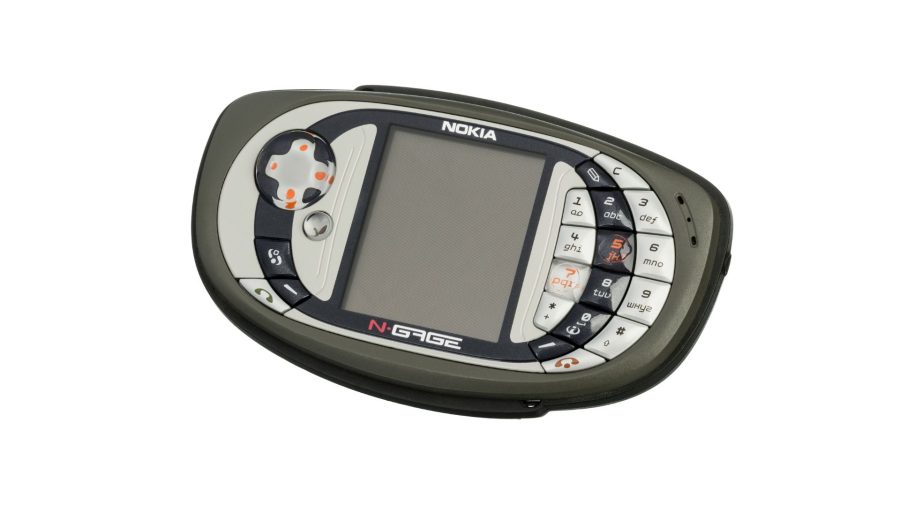



A crescent-shaped chassis rests in a user’s hand, bridging the gap between a cellular phone and a dedicated gaming console. A familiar numeric keypad flanks the vertical, portrait-oriented color display. With a distinct click of the directional pad, the user bypasses the texting menu entirely, and a digital startup sound chimes as a fully rendered 3D world boots up. On the screen, a bold N-Gage logo pops up; for many, this device might be just another gadget that became obsolete over the years, but for a person living in 2003, this was revolutionary, as for them it was an all-in-one digital hub in terms of pocket technology.
Nokia’s N-Gage remains one of the most ambitious and infamous experiments in mobile technology history. Developed during the “era of convergence,” the device was part of a desperate race to capture an emerging generation of tech-savvy youth. It was driven by the idea of eliminating the two-device pocket dilemma, where consumers were tired of carrying two separate devices such as a mobile phone and a handheld game console.
In its taco-shaped frame, the N-Gage packed an ambitious array of features to justify its status as a premium hybrid. At its core, it ran on the flexible Symbian OS, allowing it to function as a full-fledged smartphone with email, calendar apps, and web browsing alongside standard cellular functions such as calling and texting.

For gamers, its advanced 3D graphics capabilities were the true selling point, which allowed users to run impressive ports of major console franchises on its 2.1-inch backlit color screen. Furthermore, it was a pioneer in wireless connectivity, featuring Bluetooth and GPRS to enable wireless, close-range multiplayer gaming and online leaderboard tracking via the “N-Gage Arena” platform.
Finally, it doubled as a portable multimedia device with a built-in MP3 player and an FM radio; it utilised expandable MMC memory cards to store games and music.




Though the Nokia N-Gage debuted as a bold, revolutionary vision of future pocket devices, its severe design flaws and inability to compete with seasoned gaming giants caused its own downfall. Priced at a steep $299, the N-Gage suffered a disastrous launch, with Nintendo’s cheaper Game Boy Advance outselling it 100-to-1 in the first few weeks in the U.S.
Mainstream users were deeply alienated by its awkward ergonomics, most notably by the infamous “side-talking” design, which required users to hold the phone’s edge to the face. Its clunky system forced players to remove the battery just to swap game cartridges.
After sitting awkwardly in the middle of the market as a subpar phone and a mediocre handheld console for years, the device only achieved 3 million units in sales worldwide. By 2005, any chance of a late-stage recovery was crushed with the arrival of both the Nintendo DS and the Sony PSP in 2004. The superior dedicated systems left Nokia’s clunky, port-heavy device completely obsolete and forced the company to abandon its gaming ambitions.
Today, the Nokia N-Gage is mostly known for its legacy as a failure; the device did correctly predict the future of gaming. While the physical hardware was quickly forgotten and relegated to the status of a retro gaming joke, its core concept fundamentally altered the tech landscape. By proving that consumers desired mobile, connected multiplayer experiences, it paved the way for the multi-billion-dollar mobile gaming industry in the App Store era. By arriving a decade too early, Nokia’s ambitious taco-shaped hybrid may have lost the handheld war of the 2000’s, but it successfully drafted the blueprint for modern smartphones