
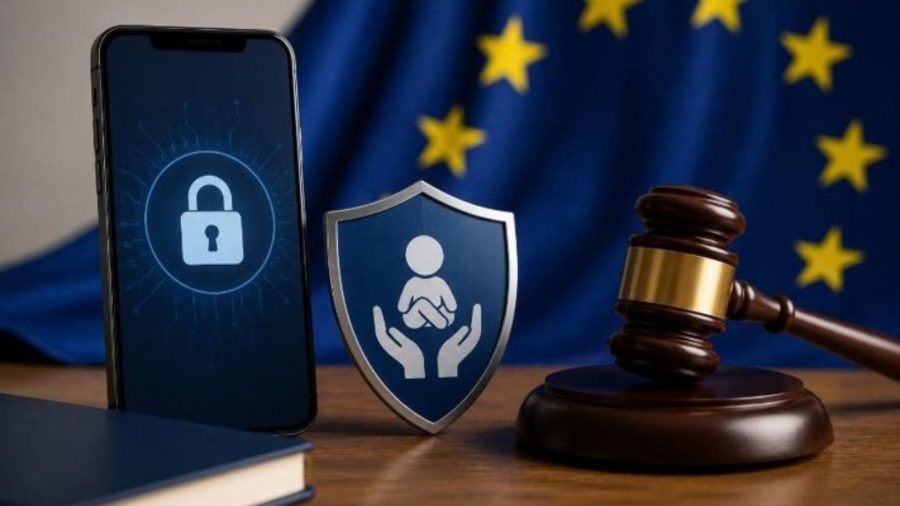



Europe is preparing to rewrite the rules of the digital world, and not everyone is happy. Under the European Commission’s newly proposed EU KIDS Act, tech giants and video game studios may soon face the legal burden of proving their platforms are entirely safe for minors. It is a bold, aggressive crusade aimed at dismantling the psychological hooks that keep a generation glued to their screens, and at shielding young users from the dangers of the online world.
But its noble intentions are being overshadowed by intense criticism. Critics and advocates argue that the proposal’s aggressive demands will create an unprecedented surveillance apparatus, one that may punish everyday internet users while crushing small businesses unable to afford compliance.
Proposed on 17 September 2026, the act represents a dramatic shift in how digital spaces are governed, introducing a uniform, continent-wide regulation designed to enforce child safety across all 27 member states. Rather than forcing public authorities to police harmful content, the law flips the burden of proof onto the tech industry itself. It legally requires tech and game developers to prove their platforms and services are structurally harmless before any minor can access them.

At its core, the proposal mandates a rigid, tiered age-gate system: children under 13 would be completely banned from social media, while older children would face digital restrictions and parental supervision until the age of 18.
To make this work, the proposal outlaws simple birthdate entry pop-ups, noting that children easily bypass them by lying about their age. Instead, it mandates rigorous, zero-knowledge age verification – such as secure, government-backed digital IDs or credit card checks – while enforcing a sweeping prohibition on “addictive architecture.” Platforms would be required to permanently strip away engagement-trapping mechanisms like infinite scrolling, social streaks, and late-night push notifications for minor accounts.




The proposal has drawn backlash primarily from a profound anxiety over digital privacy. Advocacy groups such as the Electronic Frontier Foundation (EFF) warn that the mandatory shift away from simple birthdate fields will inadvertently build an omnipresent surveillance apparatus. To satisfy the demand for “un-fakeable” age verification, every internet user (adults and minors alike) would likely be forced to link highly sensitive biometric data, passport scans, or official government digital IDs to their web browsers.
Critics argue that compiling and processing this volume of data across various websites creates an irresistible honeypot for hackers and intelligence agencies, effectively destroying the right to online anonymity under the guise of child safety.
Simultaneously, the economic reality of the act has triggered panic across the gaming and open-source ecosystems. Consumer advocacy groups and game preservation initiatives, most notably the Stop Killing Games movement, have dubbed parts of the proposal a “war on gaming.” They warn that its retroactive nature forces companies to either retrofit at a cost or completely pull legacy multiplayer games and private servers from the European market.
Because compliance costs can climb into hundreds of thousands of dollars, opponents argue the mandates financially choke out independent developers, crushing small businesses while cementing a digital landscape controlled entirely by deep-pocketed tech monopolies.
Despite the promises and the backlash, the EU KIDS Act currently sits as a written proposal on a legislative drafting table. Before it can be enforced, it must pass through a long gauntlet of political debates, rewrites, and intense lobbying in both the European Parliament and the European Council.
Yet even as a mere proposal, it has already forced a global reckoning. Europe has made one thing clear: the era of unregulated tech is over. The coming months will decide whether keeping the next generation safe means fundamentally changing how the internet works for everyone.