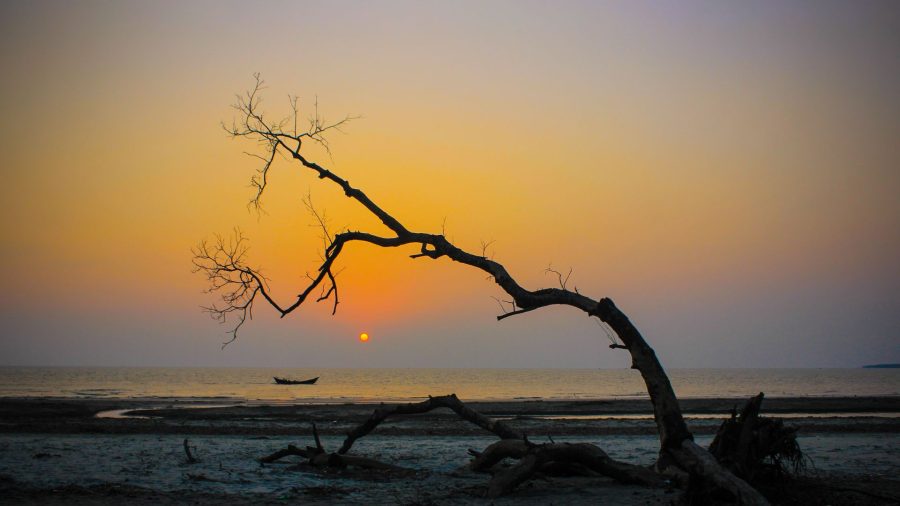



At Kuakata’s Zero Point, there is a crowd of tourists. Some watch the waves, some walk on the sandy beach, and some capture the sea glistening in the sunlight on camera. Moving just a little away from the noise of the tourists changes the scene. Heading east along the embankment marks the beginning of Latachapli Union. There, on the banks of several canals connected to the sea, another life comes into view.
The canals experience regular tides. The water rises with the tide, and when it recedes at low tide, muddy chars emerge. For local people, these waterways are not just part of nature; they are also an important means of livelihood. Many trawlers that go out to sea to fish begin their journeys from the banks of these canals.
During preparations to go to sea, activity increases along the canal banks. Beside some trawlers, fishermen sit repairing nets. Elsewhere, engines are being tested. Some are loading ice, fuel, food, and necessary equipment onto the trawlers. These tasks must be completed before a sea voyage of a few hours or a few days. So the preparations move in rhythm with the tidal water.

Fisherman Amir Hossain was sitting with his team on the canal bank beside the embankment, repairing nets. “When the tide comes in, the canal water rises. Then our trawlers float up in the water. This makes it easy to go from the canal to the sea,” he says. “During low tide, these trawlers remain stuck here. We have to run our routine according to the rise and fall of the canal water.”
Kuakata is one of the country’s most well-known tourist destinations. People come here every day to see the sunrise and sunset. Around Zero Point, various tourism-related businesses have grown, including hotels, restaurants, and shops. But right beside this tourism world, the lives of sea-dependent people move at a different pace.


Many people in Latachapli build their livelihoods around fishing. Some are fishermen, some are trawler workers. Others are involved in fish preservation, transport, net-making, or repair. When fishing at sea is halted, their income decreases. When the weather is bad or there are restrictions on going to sea, the lives of these families are also affected.
Amir Hossain says, “We don’t get as much fish in the sea as before. Besides, going out on a trawler for several days to fish now costs a lot of money. So, if we don’t catch enough fish, we make a loss.”
Standing on the banks of these canals in Kuakata, the tourism area can be seen differently. Here, the sea is not only about beauty; it is also a source of livelihood. The same sea that brings joy to tourists with its waves is the main support for the income of fishermen’s families. Their households survive day after day depending on that sea.
When tourists at Zero Point take pictures of the sea in the sunlight, perhaps on the nearby canal bank a fisherman is making the final preparations for his trawler. In someone’s hand is a net, in another’s a rope, and someone is busy with an engine. A little later, when the tide rises, the trawler will cross the canal and head toward the sea.
In the same place, two lives of Kuakata exist side by side: one comes to see the sea, the other lives depending on the sea. This other life of Kuakata, bright in the light of tourism, is therefore rarely noticed, but to understand the reality of the coast, it is important to look toward it.