A parliamentary watchdog has cast serious doubt over the government’s ambitious target to add 4,000 megawatts of rooftop solar power to the national grid by February next year, uncovering a stark reality where only 60MW of capacity was integrated over the past month.
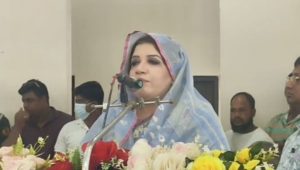
At its maiden meeting at the Jatiya Sangsad Bhaban on Saturday, the Parliamentary Standing Committee on the Ministry of Power, Energy and Mineral Resources demanded a comprehensive account of monthly progress, project expenditure, and letters of credit opened for solar panel and inverter imports.
Speaking to reporters after the meeting, committee member Hasnat Abdullah revealed that at the current rate of addition, the initiative would generate a mere 720MW by the February deadline, falling drastically short of official projections.
The committee also raised red flags over severe cost discrepancies in solar infrastructure procurement.

While a standard 50MW rooftop solar project typically costs around Tk150 crore, the Power Division submitted estimates exceeding Tk350 crore for projects of equivalent capacity. In response to these inflated figures, Hasnat Abdullah called for an immediate forensic audit into the Tk2.89 lakh crore paid out in capacity charges under the controversial Speedy Supply of Power and Energy (Special Provisions) Act 2010.
He highlighted that despite holding an installed generation capacity of 29,000MW, national output hovers around just 14,125MW, leaving massive idle capacity funded by public subsidies.




Widespread fuel shortages and operational inefficiencies further illustrate the gap between national capacity and actual generation.
According to data presented to the committee, gas-fired plants have an installed capacity of 12,022MW but produce between 4,000MW and 5,000MW due to supply constraints. Coal-fired generation capacity stands at 6,927MW with actual output ranging from 5,000MW to 6,000MW, while liquid-fuel-based plants hold 6,409MW of capacity but generate only 2,500MW to 3,000MW.
Meanwhile, the committee was informed that consumers installing rooftop solar systems by 28 February 2027 would receive Tk10.50 per unit for surplus electricity supplied to the national grid until 2030.
Beyond power generation, the parliamentary panel exposed critical vulnerabilities across the broader energy landscape.
Current national diesel stocks are sufficient for only 31 days, posing an immediate threat to rural agriculture, transport, and economic stability. Furthermore, weak government oversight has allowed liquefied petroleum gas (LPG) prices to skyrocket to Tk2,500-2,600 per cylinder, vastly exceeding the official state-sanctioned rate of approximately Tk1,800. Committee member Nazibur Rahman noted that Section 34 of the 2003 Bangladesh Energy Regulatory Commission (BERC) law, requiring public hearings and formal regulations for energy price determinations, has remained unfulfilled for 23 years, while Hasnat Abdullah cited instances of extreme utility billing errors where some consumers received erratic bills ranging from Tk3 crore to Tk7 crore.
Nazibur Rahman added that ministry officials acknowledged widespread mismanagement, lack of long-term planning, and systemic corruption as root causes of the ongoing energy crisis, yet failed to present updates on judicial inquiry recommendations regarding capacity payments.
The committee has instructed the ministry to submit detailed projections for 2030 power generation, a concrete timeline for decommissioning idle oil-fired plants, and a breakdown of recent gas well drilling operations ahead of its next session.
Chaired by Mia Nuruddin Ahmed Apu, the meeting was attended by Power, Energy and Mineral Resources Minister Iqbal Hassan Mahmood and State Minister Aninda Islam Amit. The panel reiterated that its primary objective is to enforce strict ministerial accountability and restore parliamentary oversight across the power and energy sector.