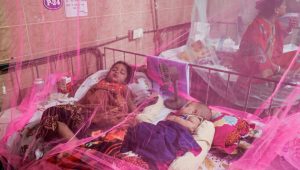
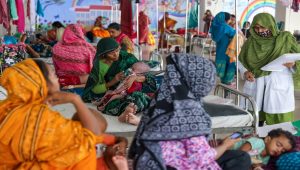
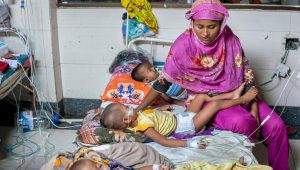
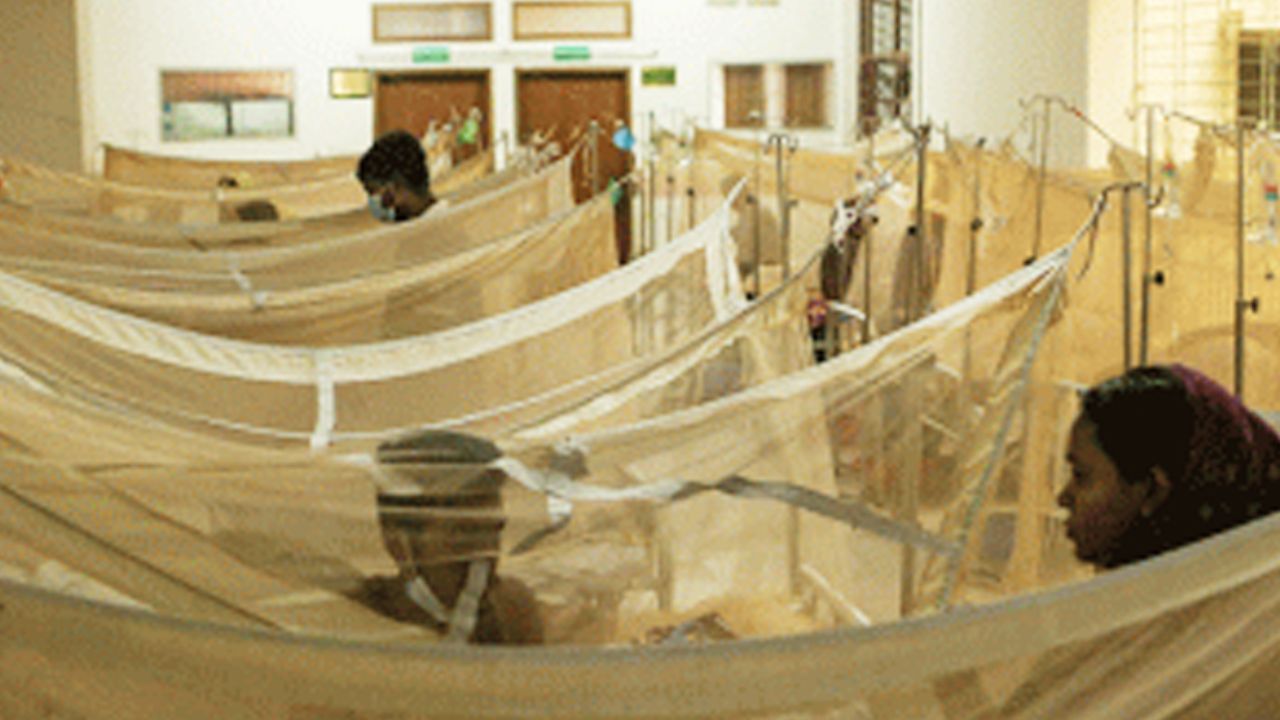
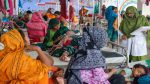
Bangladesh is facing a worsening public health crisis after measles-related deaths rose to a record 17 in a single day on Monday, raising alarm among health experts.
Specialists say the surge points to a deeper breakdown in the country’s immunisation system, with failures in planning and delivery leaving gaps in vaccine coverage.
Public health experts have blamed both the previous interim administration and the current government, saying the crisis reflects a “structural collapse” of the immunisation framework.
They warn that poor coordination in resource allocation and vaccine procurement has compounded the situation, allowing infections to spread more rapidly.
Experts have called for the immediate declaration of a national emergency to contain the outbreak and restore vaccination efforts.
They say urgent action is needed to rebuild trust in immunisation programmes and prevent further loss of life.
Professor Be-Nazir Ahmed, a public health expert, said the situation must be treated with the urgency of a public health emergency. He pointed the finger at the political transitions of the past year for the current scale of the tragedy.
“Both the interim and current governments bear responsibility for the rising deaths, and it must be taken seriously as a health emergency,” Prof Ahmed said. “No death is acceptable, and 17 deaths in a single day is deeply concerning and damaging for the government.”

He called for emergency funding and rapid mobilisation of resources, including specialised training for frontline medical staff, to prevent further loss of life.
The outbreak, which began in January this year in Rohingya refugee camps before spreading to 58 of the country’s 64 districts, follows a period of significant administrative upheaval.
According to the Directorate General of Health Services (DGHS), deaths from confirmed and suspected measles have risen to 311 since 15 March.
To date, there have been 5,467 confirmed cases and over 41,000 suspected infections nationwide.
The World Health Organization (WHO) has warned of a “high risk” of the outbreak spreading to neighbouring Myanmar and India, describing the situation as a “reversal” of Bangladesh’s previous immunization successes.


Policy shifts and procurement row blamed
A series of policy decisions and disputes over vaccine procurement have come under scrutiny as the measles crisis deepens.
On 19 March, the interim government scrapped the Fifth Health, Population and Nutrition Sector Programme, a Tk1.06 lakh crore initiative that had shaped the country’s sector-wide healthcare approach for nearly three decades.
It was replaced with a project-based system, a move critics say created fragmentation without addressing the transition gap.
Concerns have also been raised over changes to vaccine procurement.
According to a report by Science.org on 30 April, the interim administration in September 2025 halted vaccine purchases through Unicef and moved to an open tender system, where suppliers bid competitively for contracts.
Unicef opposed the shift, warning it could disrupt immunisation efforts and increase the risk of outbreaks.
Rana Flowers, Unicef Representative in Bangladesh, told Science.org that she had repeatedly cautioned Health Adviser Nurjahan Begum about the potential consequences.
However, Prof Sayedur Rahman, special assistant to the Chief Adviser, said in a Facebook post on 1 May that no vaccines under the Expanded Programme on Immunization (EPI) were procured through any altered method during the interim period.
Despite the conflicting accounts, experts say the impact has been structural.
In September 2025, several key leadership roles within the vaccine programme, including line directors and programme managers, were abolished, leaving field-level services without clear direction.
In response to the rising death toll, the High Court has intervened. On 27 April, a bench led by Justice Razik Al Jalil directed Health Ministry investigation committee to submit a report within two weeks regarding allegations of negligence and mismanagement.
The court also questioned why action should not be taken against those responsible for the decline in vaccination activities over the last two years.
Along with the previous interim government, current BNP government is to bear the responsibility of these deaths, according to experts.
Mohammad Mushtuq Husain, former principal scientific officer, IEDCR, criticised the current government’s handling of the measles situation, arguing that response measures have been delayed and insufficient given the scale of the outbreak.
He said the system lacks a strong emergency framework, which is slowing coordination and resource mobilisation.
He pointed to gaps in planning and execution, including delays in strengthening EPI capacity and underuse of experienced former health workers. In his view, without declaring a health emergency and improving coordination across ministries, the situation will remain difficult to control and prevent further deaths.
As a nationwide special vaccination campaign continues, pressure is mounting on the BNP-led government to move beyond routine measures and adopt an emergency response framework that experts say is essential to halt rising deaths.
Health specialists warn that without rapid, coordinated intervention, the outbreak could worsen despite ongoing immunisation efforts.
Health and Family Welfare Minister Sardar Md Sakhawat Hossain said at a programme that the government is working to expand intensive care unit services to all district hospitals to ease pressure on central facilities.
He blamed the previous administration for existing shortages, but said the situation was expected to improve following the arrival of a large shipment of vaccines on Wednesday.