




On paper, the port city’s battle against dengue looks relentless.
Every morning, municipal workers apply larvicide into drainage channels; every afternoon, smoke-spewing fogging machines roll through high-risk neighbourhoods.
Mobile courts issue fines, whilst municipal crash programmes clear public spaces.
Yet, Chattogram recorded a staggering 2,037 dengue cases in the first 26 days of September alone, surpassing August’s total by 835, raising a glaring question: why is the outbreak spiralling despite all-out vector control efforts?

The answer lies beneath the surface. A recent health department survey revealed that Aedes mosquito larvae were present in nearly 27 per cent of households across 18 of the city’s 41 wards, almost five times the critical threshold.
The alarming finding underscores a fatal flaw in the city’s strategy: whilst civic authorities spend millions fogging adult mosquitoes in open streets, hidden breeding sites in stagnant water remain virtually untouched inside private properties.
Despite daily municipal drives, Aedes breeding grounds thrive in rooftop gardens, discarded flowerpots, construction sites, and blocked household drains.



Crucially, control efforts suffer from reliance on outdated hotspot data. Aedes density is dynamic; shifts in rainfall and rapid urban construction create new water traps overnight. When authorities deploy resources based on historical maps, newly emerging breeding hotspots, including identified risk zones like Halishahar, Bandar, Pahartali, Bakalia, Kotwali, Sadarghat, and Sitakunda, are frequently overlooked.
Research paints a grim picture of this systemic failure. Academic studies show larval density in Chattogram surged from 36 per cent in 2024 to a staggering 75.29 per cent in 2026.
Experts also point to potential chemical resistance, warning that repeatedly spraying identical insecticides year after year allows mosquitoes to develop immunity, rendering fogging campaigns largely theatrical.
Dr Mohammad Omar Faruk Russell, a botanical researcher at Chittagong University, stressed that repeatedly applying the same chemicals without regular research into insecticide resistance is ineffective in the long term, adding that sustainable results are impossible unless building owners and local communities actively clean domestic water pockets.
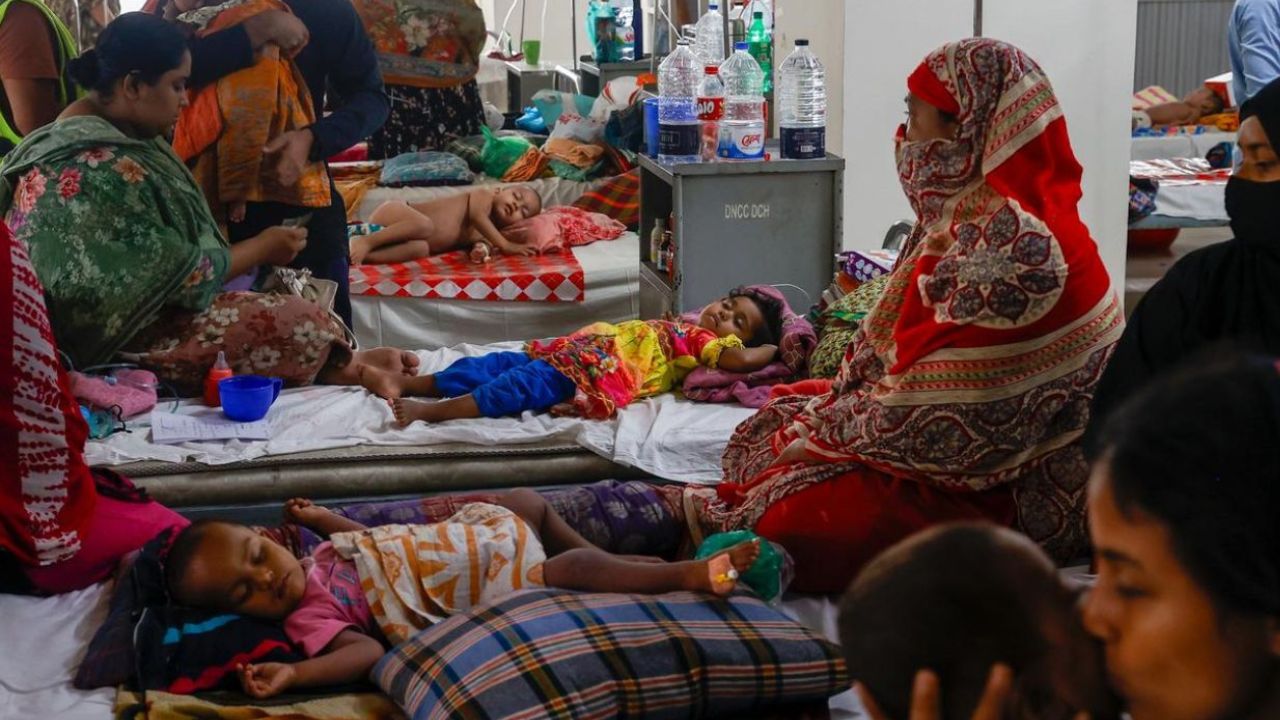
The vector control failure is taking a devastating toll on healthcare infrastructure. Chattogram has recorded 4,067 hospitalisations and 19 deaths this year, including five children, with 14 of those fatalities occurring in September alone.
The surge is putting extreme pressure on medical facilities, with the dedicated 40-bed dengue unit at Chattogram Medical College Hospital recently forced to accommodate 71 patients simultaneously, leaving many receiving treatment on floor mattresses.
Chattogram Civil Surgeon Dr Mohammad Sajedur Rahman warned that the infection wave could persist well into October.
Whilst the city corporation touts litres of chemicals sprayed and wards covered, health experts argue that success must be measured by declining larval density rather than operational volume. Until municipal authorities shift from cosmetic street-fogging to rigorous, science-backed larval suppression and community-led source reduction, Chattogram’s cycle of infection will remain unbroken.