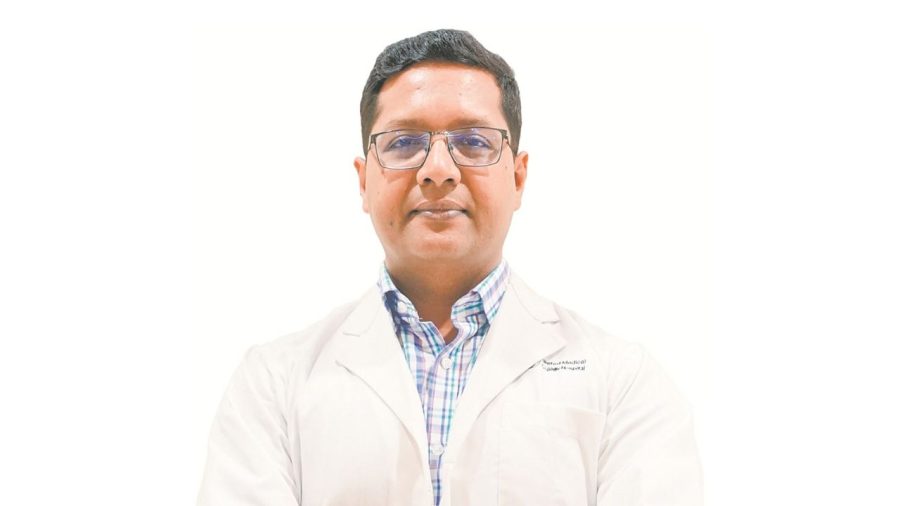



Heart disease is increasingly being detected at younger ages, with sedentary lifestyles, unhealthy dietary habits and tobacco, alcohol and drug use contributing to the early development of coronary artery disease, according to Dr Debashish Debnath, associate consultant at the Department of Cardiology, United Medical College Hospital.
In an interview with TIMES ahead of World Heart Day, Dr Debnath said reduced physical activity had become a growing concern as more people lead desk-based lives.
“First of all, the tendency of heart attacks among people is increasing as time goes by. Earlier, people used to do much more physical work, which people do not do now. As time goes by, we are becoming more table-bound. Most people do desk jobs,” he said.
He said having a desk job should not prevent people from exercising, but motivation often remains a barrier.
“Even alongside a desk job, physical exercise can be done. It is not that it cannot be done. What is needed is motivation. That motivation is lacking among us to exercise,” he said.
According to Debnath, prolonged inactivity can contribute to cholesterol buildup and blockages in blood vessels.
Unhealthy diets, smoking, alcohol and drug use can also contribute to the early development of coronary artery disease, he said.
“Another major issue is our dietary habits. Our food pattern is not good. There is also adulterated food all around us, and these foods also contribute to the development of diseases,” he said.
“Smoking, alcohol and drugs also contribute to the early coronary artery disease we are seeing,” he added.

Debnath said cardiovascular diseases were now being detected at ages when people previously did not expect them.
“These are diseases that people previously did not even think could happen before the ages of 40, 45 or 50. But we are now finding these diseases very early,” he said.
Lack of awareness delays treatment
Lack of awareness about cardiac symptoms can also delay treatment, Debnath said, as many people initially mistake chest discomfort or shortness of breath for gastric problems.
“Most of us, whether in villages or elsewhere, have a first impression that if there is chest pain or shortness of breath, it is a gastric problem. They will take gastric medicine for two or four days,” he said.
“As a result, many patients cannot reach us in time. Before they arrive, their condition deteriorates, or when they come to us, they arrive in a very poor condition,” he added.
He urged people to take symptoms such as chest pressure or discomfort while walking or climbing stairs, unusual fatigue and chest pain extending to the arm or jaw seriously, particularly when the discomfort improves with rest.




“These typical symptoms are often considered a gastric problem because of the lack of awareness. As a result, the disease sometimes reaches us at a very advanced stage,” he said.
While awareness about exercise is increasing, Debnath said greater attention was still needed on prevention and lifestyle changes.
“There is no alternative to increasing awareness, physical activities, changing dietary habits and lifestyle modification,” he said.
24-hour cardiac emergency care
Debnath said United Medical College Hospital has a 24-hour cardiac care system involving its emergency department and coronary care unit.
Junior doctors, specialists and consultants are involved in the system, with consultants working under individual rosters, he said.
When a patient arrives with a suspected cardiac problem, doctors assess the patient and conduct an ECG when indicated.
If the ECG suggests a serious cardiac condition, the information is communicated to the coronary care unit and relevant specialists.
“If this is acute coronary syndrome or a heart attack, we initiate treatment immediately,” he said.
Initial treatment may include loading doses of medicines, oxygen when oxygen levels are low and sublingual medication for pain, followed by monitoring and transfer to the coronary care unit, he said.
If intervention is required, consultants are contacted.
The hospital can provide procedures to identify and treat coronary blockages when clinically appropriate and financially feasible for the patient, Debnath said.
“Our consultants will not all be present at the hospital 24 hours a day, but everyone stays nearby. Each has an individual roster, and whoever is scheduled remains alert that they may have to go to the hospital at any time,” he said.
If the scheduled consultant cannot be reached, another consultant can be contacted, he said.
“This system operates 24 hours a day, 365 days a year. There is no opportunity for the system to break down. If one consultant cannot be reached for any reason, the call automatically goes to another consultant,” he said.
Taking responsibility for tomorrow
Debnath said maintaining heart health ultimately requires people to take responsibility for their daily habits.
“I always tell my patients one thing: there is no alternative to lifestyle change,” he said.
He recalled a patient who presented with chest pain and was found to have triple-vessel disease.
According to Debnath, the blockages were not suitable for stenting and bypass surgery was required.
The patient told him that he had exercised throughout his life and maintained a balanced diet but still developed the disease at 50.
Debnath said those habits may have delayed the disease.
“If he had not maintained this disciplined lifestyle and had not eaten a balanced diet, the disease would have occurred perhaps 20 years earlier. Because he did these things, he got that backup until the age of 50,” he said.
He called for greater public awareness through mass media, social media and other channels.
“Ultimately, the point is that awareness has to increase. There is no alternative to it,” he said.
“I never want any of my patients to go through these things. I would never want any of my relatives to go through these things. So why should it happen to you?” he added.