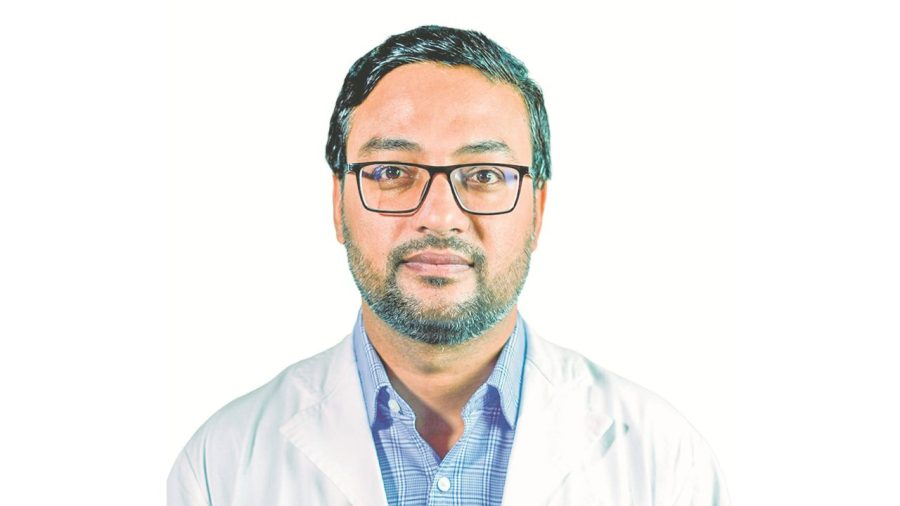



United Medical College Hospital is strengthening its cardiac care services by combining specialised interventional procedures with clinical expertise and plans to expand its cardiac imaging capabilities, according to Dr Md Owashak Faysal, assistant professor and associate consultant of cardiology at the hospital.
Speaking to TIMES ahead of World Heart Day, Dr Faysal said the hospital provides round-the-clock cardiac services and access to procedures including rotational atherectomy, intravascular lithotripsy and intravascular ultrasound-guided percutaneous coronary intervention.
He said the combination of specialised technology and the expertise of interventional cardiologists is particularly important for patients requiring complex coronary interventions.
One of the technologies he highlighted was intravascular ultrasound, or IVUS, which provides cross-sectional images from inside a coronary artery and helps physicians assess the characteristics and dimensions of a coronary lesion.
“With IVUS, we can get the exact size of the lesion and determine how much to dilate it, what length and diameter of stent is required, and after stenting we can use IVUS to see whether the stent has been properly opposed to the vessel wall,” he said.
IVUS can be used before and after coronary intervention to assess lesion and vessel dimensions, guide stent selection and evaluate the position and expansion of a stent after implantation.
Faysal said the hospital is preparing to acquire its own IVUS machine.

“We are bringing a separate machine for ourselves soon,” he said.
The hospital also provides rotational atherectomy and intravascular lithotripsy, techniques used in selected patients with heavily calcified coronary lesions.
Rotational atherectomy uses a specialised rotating burr to modify heavily calcified plaque within a coronary artery, helping prepare the lesion for subsequent intervention.
Intravascular lithotripsy uses acoustic pressure waves to modify calcium within the vessel wall, facilitating expansion of the artery during coronary intervention.




The focus on advanced cardiac intervention comes amid concerns about cardiovascular risk factors among younger people, Faysal said.
“Age can no longer be used to differentiate the risk of heart disease. There is no specific age for it, although the risk increases with age,” he said.
He attributed the changing pattern partly to lifestyle factors, including physical inactivity, unhealthy dietary habits, smoking and stress.
“Before, we used to play sports and walk. Now that is largely absent. People mostly sit around, either using mobile phones or spending time with friends, but regular physical activity has decreased significantly,” he said.
Faysal stressed that advanced cardiac intervention is only one part of managing cardiovascular disease, with prevention and early identification of risk factors remaining essential.
“The most effective medicine for keeping the heart healthy is not a prescription. It is a change in lifestyle,” he said.
He recommended 150 to 300 minutes of moderate-intensity physical activity each week, such as brisk walking or swimming, along with muscle-strengthening activities at least twice a week.
He also advised people to reduce their intake of salt and excess sugar and eat more vegetables, fruits, whole grains, pulses, fish and nuts.
Processed foods and sugary drinks should be limited.
On tobacco use, his message was direct: “Smoking means no.”
Faysal also stressed the importance of monitoring cardiovascular risk factors.
He recommended regular checks of blood pressure, blood sugar and cholesterol, particularly for people over 40, and advised those with a family history of hypertension, diabetes or cardiovascular disease to undergo cardiovascular risk assessment.
He urged people not to ignore symptoms that could indicate a cardiac problem, including chest pain or heaviness, shortness of breath, unusual sweating, a tendency to faint or unexplained weakness.
World Heart Day highlights the importance of preventing cardiovascular disease and ensuring access to appropriate diagnosis and treatment.
While advances in cardiac imaging and intervention have expanded the tools available to physicians, Faysal said maintaining heart health ultimately depends heavily on lifestyle and early attention to risk factors.
“Keeping the heart healthy, the most important thing is lifestyle modification,” he said.