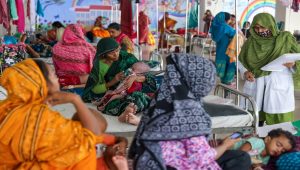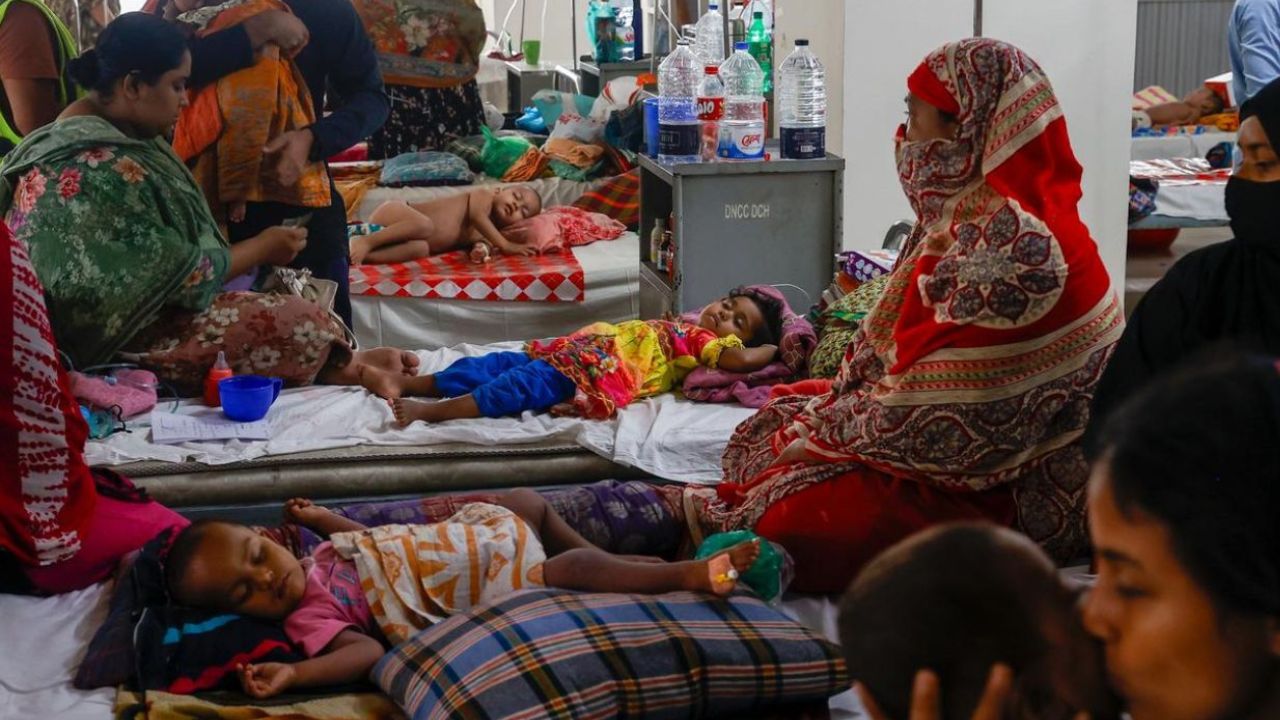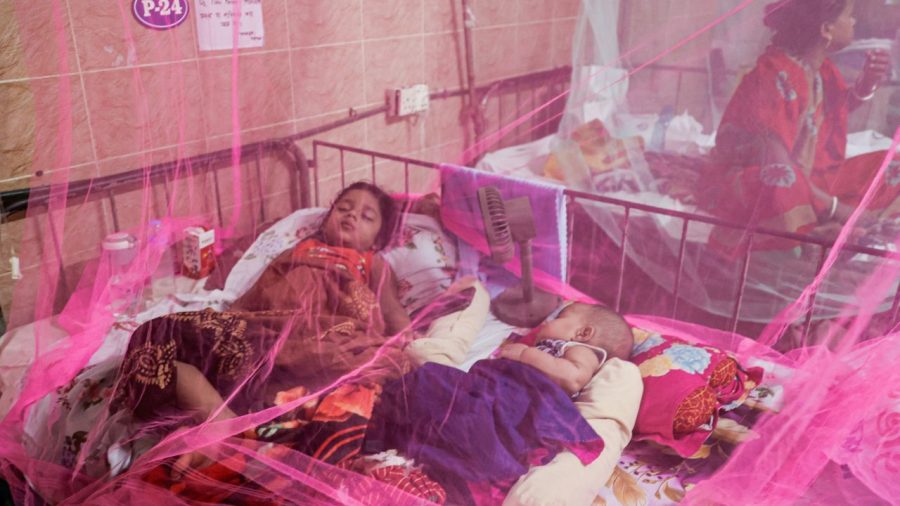



September has emerged as the deadliest month of the year for dengue in Bangladesh, accounting for more than half of all hospitalisations and nearly three-fifths of all fatalities recorded so far, according to official figures released on Wednesday.
Data published by the Directorate General of Health Services (DGHS) on Wednesday revealed that 43,774 dengue patients were admitted to hospitals during the month, representing 55 per cent of all recorded admissions across the first nine months of the year.
The month also claimed 148 lives, accounting for 60.4 per cent of the country’s cumulative toll of 245 deaths this year.
The alarming figures translate into a daily average of 1,459 hospitalisations and nearly five deaths throughout September.

Public health experts and entomologists warn that transmission could persist well into early November, calling for a swift pivot from hospital-centred care towards community-level surveillance, early diagnosis, and aggressive vector control.
The September spike follows a sharp upward trajectory that began in mid-summer. Hospitalisations rose from 2,907 in July to 20,536 in August, before soaring to 43,774 in September.
September’s admissions were 113 per cent higher than August’s and roughly 15 times those of July.
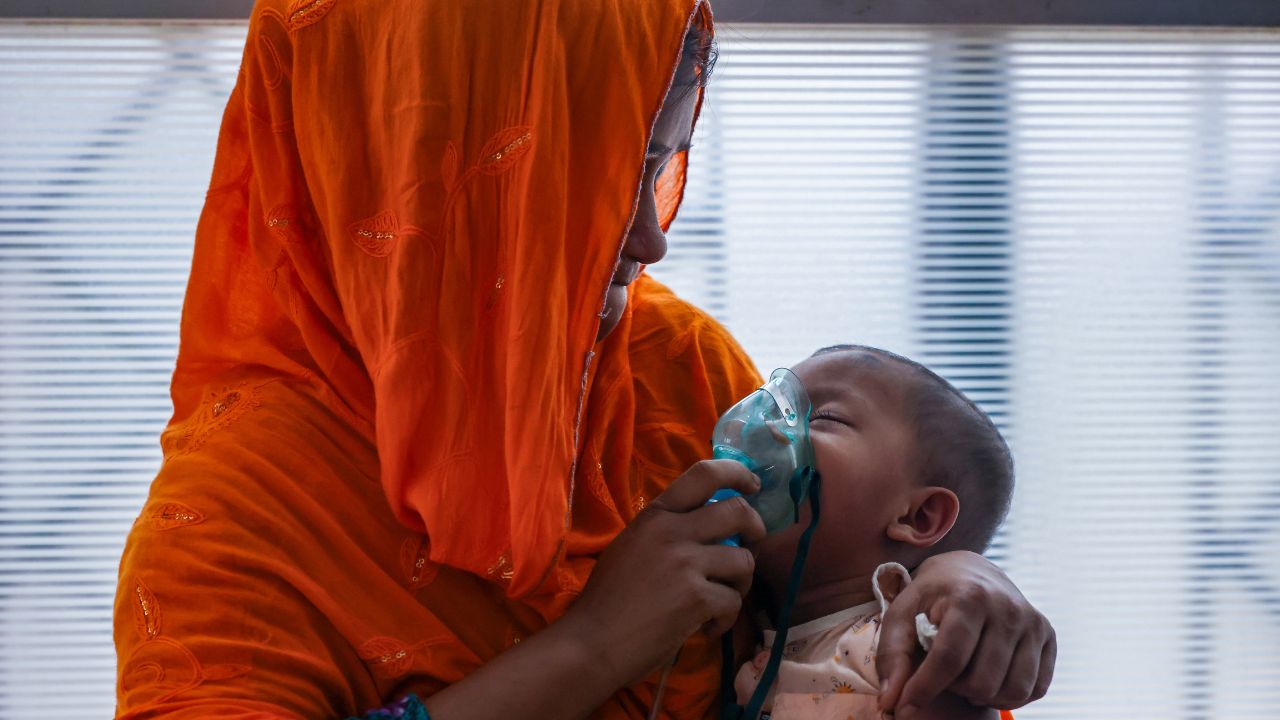



Fatalities mirrored this steep decline: rising from 36 in July and 43 in August to 148 in September, a 244 per cent month-on-month increase in deaths.
The concentration of cases over late summer is particularly stark. A total of 64,310 patients were hospitalised in August and September combined, representing roughly 81 per cent of all dengue cases recorded this year.
Prolonged risk into autumn
With persistent atmospheric moisture and unseasonable rainfall providing ideal breeding conditions, entomologists fear transmission will remain high through October and into early November.
Kabirul Bashar, professor of medical entomology at Jahangirnagar University, warned that delay in vector suppression allows outbreaks to explode exponentially. “Once dengue begins spreading in a locality, infections increase geometrically unless control measures are enforced at the very outset,” he said, urging citizens to take ownership of mosquito control within their own homes and gardens.
Outbreaks surge beyond the capital
A major concern for health authorities this year is the widespread geographical dispersal of the disease beyond Dhaka, straining healthcare infrastructure in regional divisions where municipal vector-control resources remain chronically understaffed.
Public health expert Dr Mushtuq Husain emphasised that relying solely on hospital beds and intensive care units will fail to stem the death toll.
“We must identify patients much earlier at the community level,” Husain explained. “Individuals presenting with fever should be screened immediately using NS1 antigen tests, and patients educated on critical warning signs so they seek emergency care before shock sets in.”
Husain urged local authorities to recruit and deploy trained volunteer networks, overseen by entomologists and public health specialists, to inspect breeding sites and conduct neighbourhood fever sweeps across rural upazilas and district municipalities.