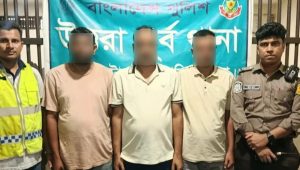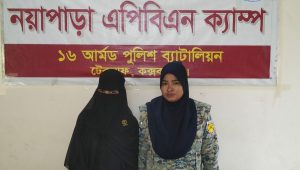




Amid growing criticism over the law and order situation, the government has launched special drives against teenage gangs, with hundreds of juveniles being detained across several districts.
However, experts say arrests alone are unlikely to resolve the problem unless authorities address the deeper causes behind the rise of juvenile crime.
Although large numbers of teenagers are being detained, legal restrictions mean most cannot be kept in custody for long. Under the law, individuals below the age of 18 cannot be held in regular prisons, while the country’s juvenile correction centres have limited capacity and are already overcrowded.
As in previous crackdowns, many detained teenagers are being released into the custody of their guardians after obtaining written undertakings.
Crime experts say another major challenge is the failure to identify and prosecute the people who control and finance teenage gangs. They argue that many juveniles involved in crimes are often used by older criminals, political figures and influential local actors.
Md Tawohidul Haque, associate professor at Dhaka University’s Institute of Social Welfare and Research and a crime expert, told the TIMES that the “big brothers”, patrons, financiers and law enforcement members involved with teenage gangs must be brought under legal action.
“Alongside legal measures, families, educational institutions, local administrations and society must take action. Otherwise, the problem will not be solved,” he said.
Following the killing of 13-year-old student Ishayat Shahriar Apratim by teenage criminals in Cumilla on 18 September, police have started reviewing measures to curb juvenile crimes. Police headquarters assigned a DIG to coordinate proposals on the issue and held meetings with officials from Dhaka Metropolitan Police’s crime zones and Detective Branch.

Authorities have also started updating the list of teenage gangs and launched special drives in several districts.
In Cumilla, 1,672 people were detained within four days, but 1,300 were later released into their families’ custody. In Chandpur, 370 people were detained during operations across eight upazilas, with 355 released after undertakings. In Lakshmipur, 266 were detained, while 214 were handed over to guardians.
In Noakhali, all 160 detained teenagers were released to their families.
Dhaka Metropolitan Police Joint Commissioner (Crime) Mohammad Faruk Hossain said those without previous criminal records were being warned and released to their guardians after detention.
Hundreds of gangs across the country
Police have information about 118 teenage gang groups operating across the capital’s 50 police stations. Most members are reportedly aged between 14 and 20.
The Mirpur division has 32 active gangs, while Tejgaon has 26, according to police data. Experts say many such groups operate under the influence of local criminals, political leaders and powerful individuals.




The problem has spread beyond Dhaka, reaching districts and even upazila levels.
In Kishoreganj, local resident Ujjwal Sarker described teenage gangs as a “hornet’s nest”.
“They respond when one person calls. They do not respect elders in the area. Everyone is disturbed because of them,” he told TIMES.
Even in Dhaka, where police presence is comparatively higher, teenage criminals have been linked to crimes including robbery, extortion, murder, attacks and land grabbing.
In Keraniganj’s Arshinagar area on 15 September, several criminals entered a salon, fired indiscriminately and hacked an opponent to death with machetes. The name of the Arman-Shahrukh group emerged in the investigation. Police later arrested Sabuj Hossain Arman, who allegedly had previous cases involving rioting, theft, attempted murder and intimidation.
Earlier, on 12 April, Emon Hossain alias Alex Emon, leader of the Alex Group in Mohammadpur, was killed by rivals. The Arman-Shahrukh group was also named in connection with the incident.
Correction centres struggle
Bangladesh has three government juvenile correction centres, but overcrowding has created serious challenges.
The Tongi Child Development Centre (Boys) in Gazipur has a capacity of 300, but around 700 juveniles are staying there. The Pulherhat Child Development Centre (Boys) in Jashore has 150 seats but houses more than 300 juveniles.
Experts say overcrowding makes it difficult to provide proper counselling, education, healthcare, recreation and individual care.
They also warn that placing juveniles accused of different levels of crimes together can create negative influences instead of rehabilitation. Some may have committed minor offences for the first time, while others may be involved in serious crimes.
A DMP official said many juveniles return to crime after leaving correction centres or being released on bail. Some revive old gangs under new names, while others form new groups.
He said family counselling, education, skills development and rehabilitation programmes are essential but receive insufficient attention.
DMP Joint Commissioner (Crime) Faruk Hossain emphasised on family supervision as it plays a crucial role.
“If families can properly control and monitor teenagers, many of them will not become involved in teenage gangs,” he said.
Experts say changes in social structures have also contributed to the problem, including the decline of joint families, parents staying away from home for work and weak community monitoring due to migration.
‘Big brothers’ behind gangs
Crime analysts and law enforcement officials repeatedly point to the role of older criminals and influential figures behind teenage gangs.
SRB-2 Commander Naimul Hasan said law enforcement agencies were working not only to arrest gang members but also to identify masterminds behind criminal groups.
He said short-term solutions would not bring the desired outcome.
Faruk Hossain said authorities were trying to identify people linked to teenage gangs and those supporting them.
However, crime experts say similar statements have been made in the past without successfully reaching the root causes.
Tawohidul Haque said teenagers are often used for extortion, land grabbing, political conflicts, drug trade and as musclemen in business disputes.
“A large number of these teenagers come from fragile family and economic backgrounds. Many are not involved in education or employment. Those without legitimate opportunities are often used by crime patrons,” he said.