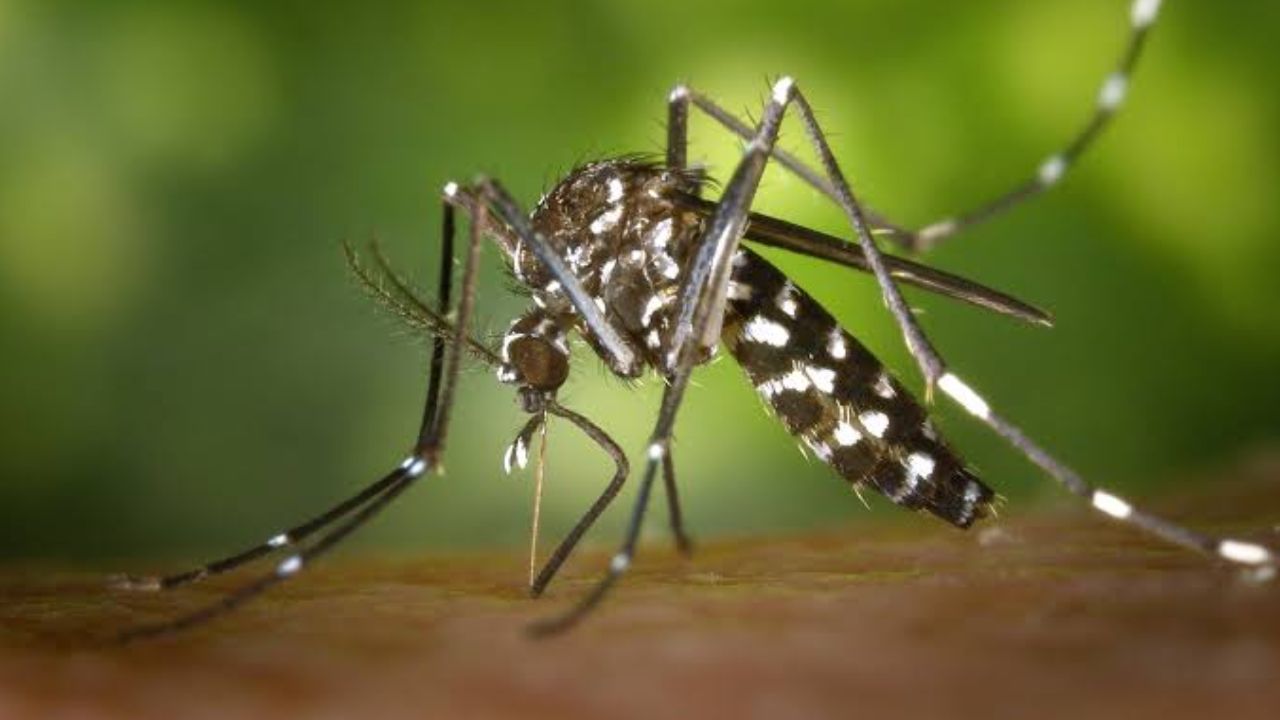

The dengue outbreak in Chattogram division has taken an alarming turn, with infections rising sharply across Chattogram city and Cox’s Bazar. Authorities are struggling to contain the spread despite increased expenditure on vector control.
In Chattogram district alone, 1,012 people were infected and eight died in the first 15 days of September. Meanwhile, Cox’s Bazar has reported 3,879 cases this year, including six deaths among Rohingya refugees in local camps.
Residents have expressed growing despair over the persistent public health hazard. Nasrin Akter, a resident of Aturar Depot in Chattogram, lamented that living in constant fear of the disease has become unbearable. Her primary-school-aged niece, Ruhita Nawal, developed a fever on Sunday and was sent for a dengue screening following medical advice.
The outbreak also claimed the life of 26-year-old Arpita Dash, who was just one month away from giving birth to her first child. Diagnosed with dengue on 6 September after falling ill early in the month, she died during treatment at Chattogram Medical College Hospital on 11 September, whilst her unborn child also perished.

Spiking infection and mortality rates
According to the Chattogram Civil Surgeon’s Office, 3,048 people contracted dengue in the district between January and mid-September. Monthly case numbers tracked a steep trajectory, moving from 68 in January to 122 in June, before jumping to 536 in July and reaching 1,202 in August.
The first half of September alone accounted for 1,012 cases, representing nearly 84 per cent of August’s total. Daily average admissions climbed from around four patients per day in June to 17 in July, 39 in August, and approximately 67 through mid-September.
Mortality rates have spiked alongside cases. Following a single death in February and two each in July and August, eight fatalities were recorded in the first fortnight of September. Full-month case counts for September in 2024 and 2025 stood at 935 and 907, with 11 and four deaths respectively, figures this year’s outbreak surpassed within just 15 days.




Hospital overhead and infrastructure risks
A site visit to the dengue ward at Chattogram Medical College Hospital revealed patients lying without mosquito nets despite complaints of active mosquito activity in the ward. Doctors noted that if an Aedes mosquito feeds on an infected patient and subsequently bites a healthy individual, intra-facility transmission can occur. Families reported a shortage of hospital-provided bed nets, forcing some to source their own protection.
Of the 1,012 September cases, 432 were recorded in Chattogram city, 482 in surrounding upazilas, and 98 from adjacent districts. The overall district death toll for the year stands at 13, comprising seven in upazilas, five in metropolitan areas, and one from an external district. On 15 September, 86 new patients were admitted in a single day, leaving 185 individuals under care across public and private hospitals, with Chattogram Medical College Hospital accounting for 1,360 admissions this year.
Financial allocation vs field efficacy
Rising case figures have drawn scrutiny towards Chattogram City Corporation’s vector management performance. The corporation’s mosquito control budget was increased from Tk3.80 crore in the 2024–25 fiscal year to Tk5.38 crore for the current period. Since 2000, the corporation has expended nearly Tk46.96 crore on control efforts, including approximately Tk25 crore over the past decade.
Despite these outlays, larval density remains elevated. A Directorate General of Health Services survey in June identified Aedes larvae in 26.76 per cent of sampled households across 18 of the corporation’s 41 wards, while larvae were present in roughly 33 per cent of inspected water containers.
Chattogram City Corporation Chief Conservancy Officer Captain Ikhtiar Uddin Ahmed Chowdhury stated that larval elimination drives, insecticide spraying, and public awareness campaigns are ongoing, adding that additional funding would be allocated if required. Chattogram Civil Surgeon Dr Mohammad Sajedur Rahman attributed the mid-September spike to post-rainfall breeding activity, noting that joint intervention efforts are scheduled to continue into October.
Humanitarian camps in Cox’s Bazar
The outbreak extends to Cox’s Bazar, particularly across 36 Rohingya refugee camps in Ukhia and Teknaf upazilas. District health data indicates 3,879 total infections this year, with 3,694 patients requiring hospitalisation. Rohingya refugees account for 2,510 of these cases and six recorded deaths.
Teknaf Upazila recorded the highest infection count among local residents, with 332 cases up to 13 September, followed by Maheshkhali with 271, Chakaria with 268, and Ukhia with 195. Additional cases were logged in Cox’s Bazar Sadar with 102, Eidgaon with 59, Ramu with 54, Pekua and Kutubdia with 14 each, and Cox’s Bazar Municipality with 17.
Cox’s Bazar Civil Surgeon Dr Mohammad Shaber highlighted that high population density, drainage bottlenecks, and stagnant rainwater within the camp infrastructure provide optimal breeding conditions for Aedes mosquitoes. While infection rates among local residents are showing signs of stabilisation, camp transmission remains an active concern.