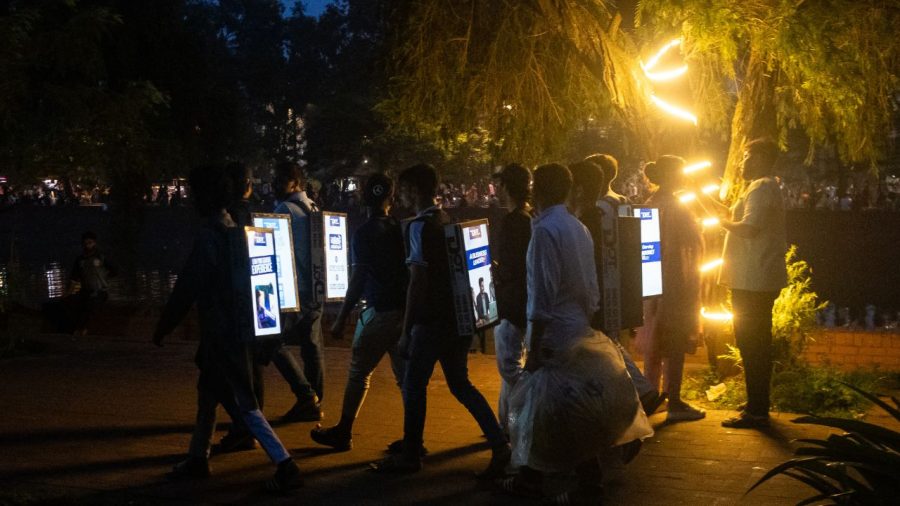

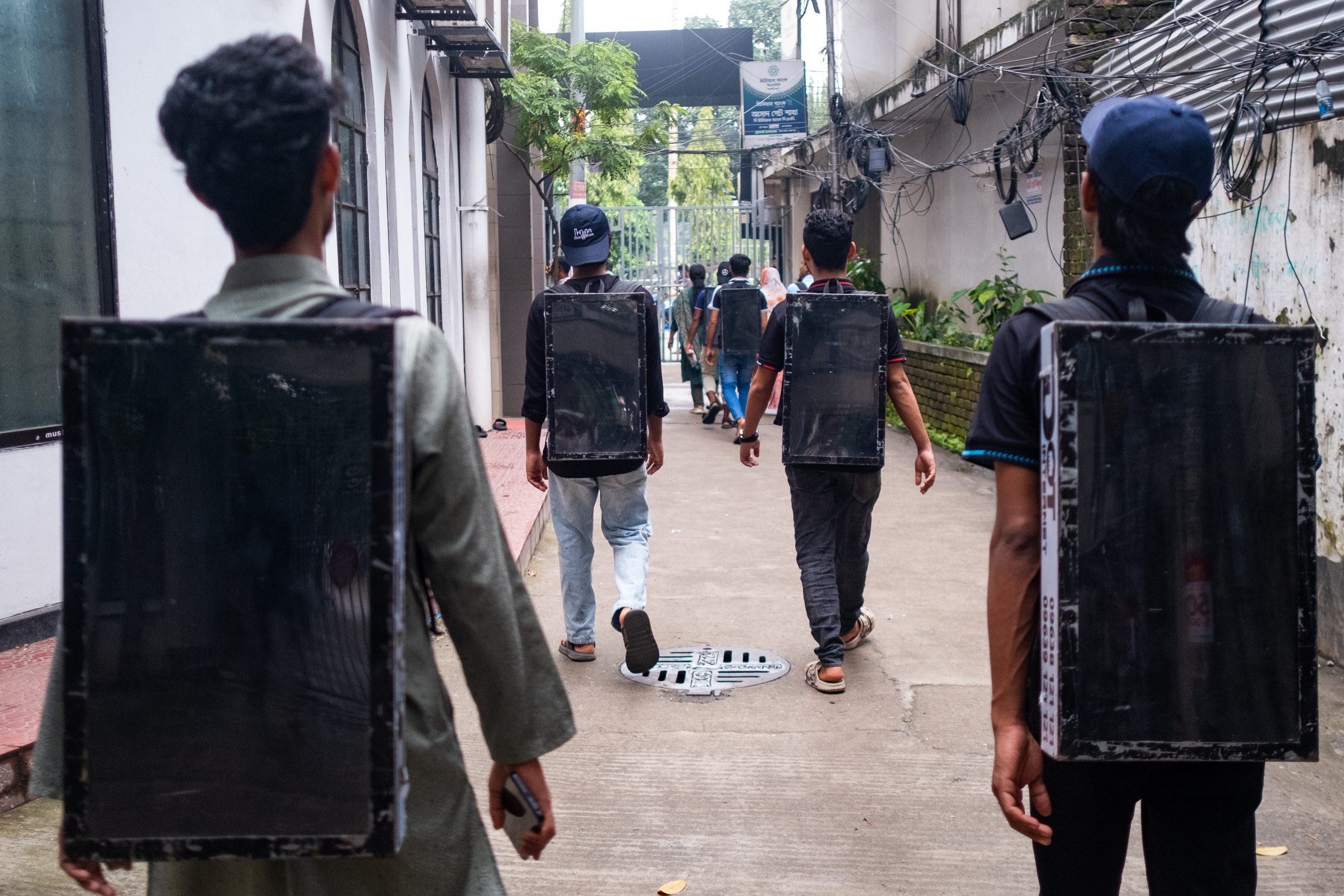
At 6pm, as the day’s harsh light softens over Dhaka, a strange transformation takes place on the streets. A handful of young people, mostly university students on a part-time gig, hoist heavy black backpacks onto their shoulders.
Within minutes, they are no longer commuters. They become walking human screens, carrying an LED screen on their backs. In Dhaka, the body itself is becoming ad space.
The idea is not entirely new. Long before LEDs, people walked city streets wearing sandwich boards. It was one of the earliest forms of advertising that didn’t wait for people to walk past; it walked toward them. Over the decades, the boards got smaller, then digital, then wireless.
Somewhere along that long, quiet evolution, a wooden plank became a glowing screen. The instinct behind it never changed: if people won’t look at an ad, send the ad to walk beside them.

Wearable digital billboards have already shown up in cities like Dubai, Lagos, and parts of urban India, usually pitched the same way: as a low-cost workaround in places where static ad space is expensive or heavily regulated. Dhaka’s version follows that same playbook, arriving a little later but growing fast in a city just as starved for open advertising space.
Dhaka’s static billboards have lost their power. City authorities restrict where traditional billboards can go, and commuters who pass the same signs every day have learned to look straight through them. Marketers call it banner blindness.




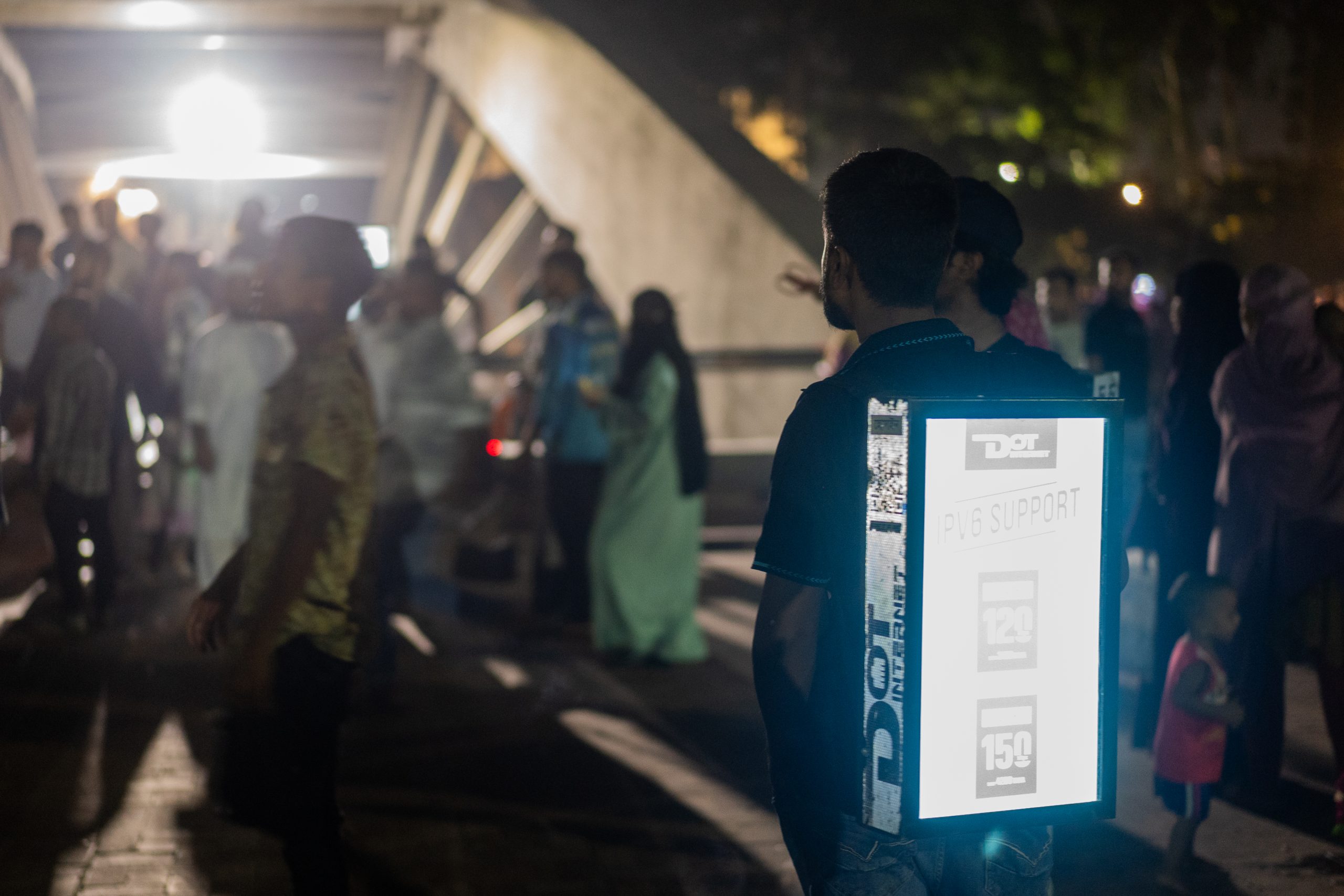
Against that fatigue, a screen that moves, worn by someone who can smile back, cuts through in a way a pole-mounted board never could. It is also cheap. Agencies reportedly pay around Tk30,000 to run one screen for a week, a fraction of what a premium static site in Gulshan would cost for a month.
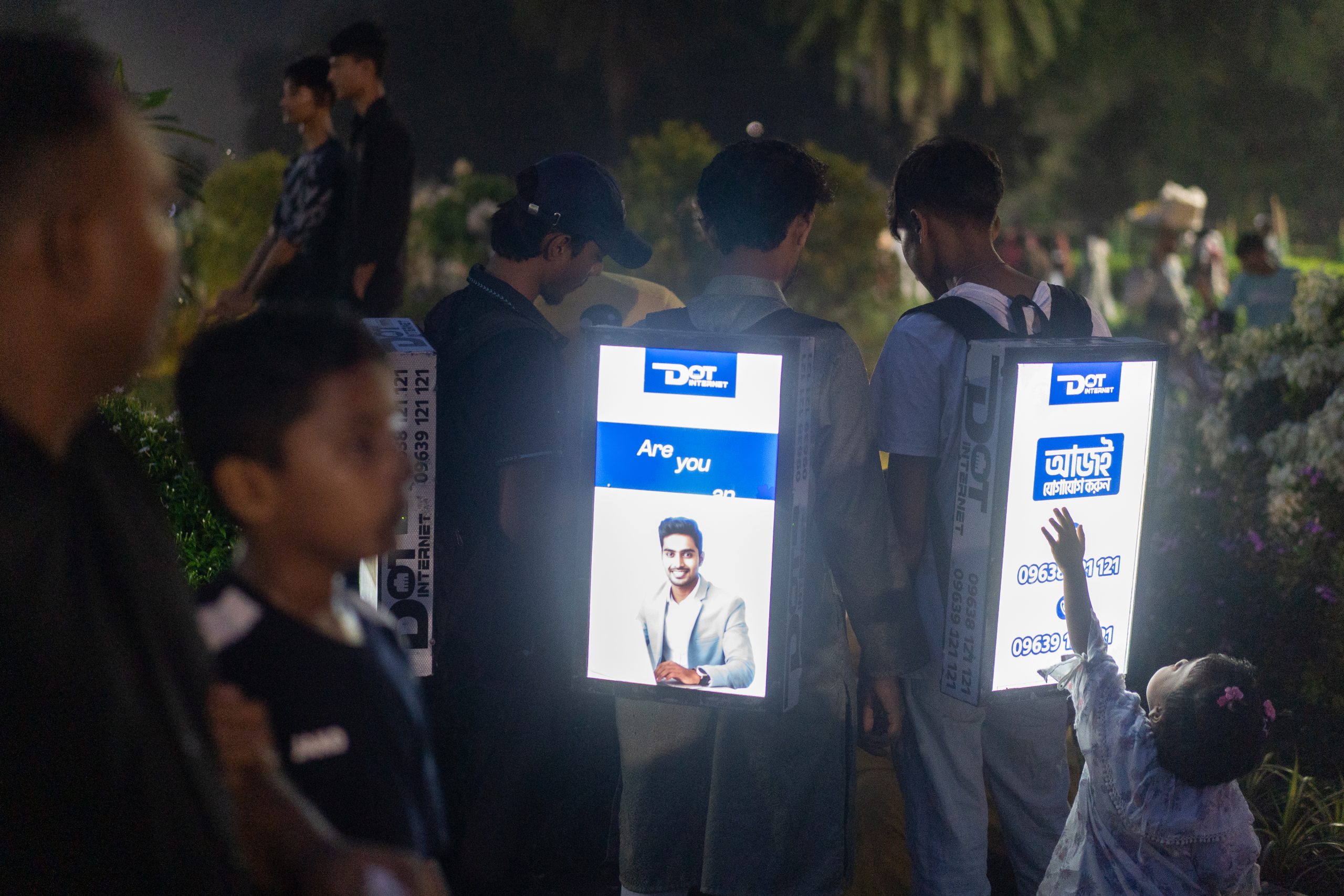
The mechanics are almost theatrical. A young promoter walks into a crowded intersection, screen lit, and exists there. They pause at a tea stall, answering a stranger’s question or letting a phone camera catch the glow. Within a few hours, that curiosity has drawn hundreds of glances, with a scattering of QR scans.
The shift runs roughly from 4pm to 9pm, timed deliberately for the evening rush, when footpaths fill, and the sky turns the color that makes a glowing screen impossible to ignore.
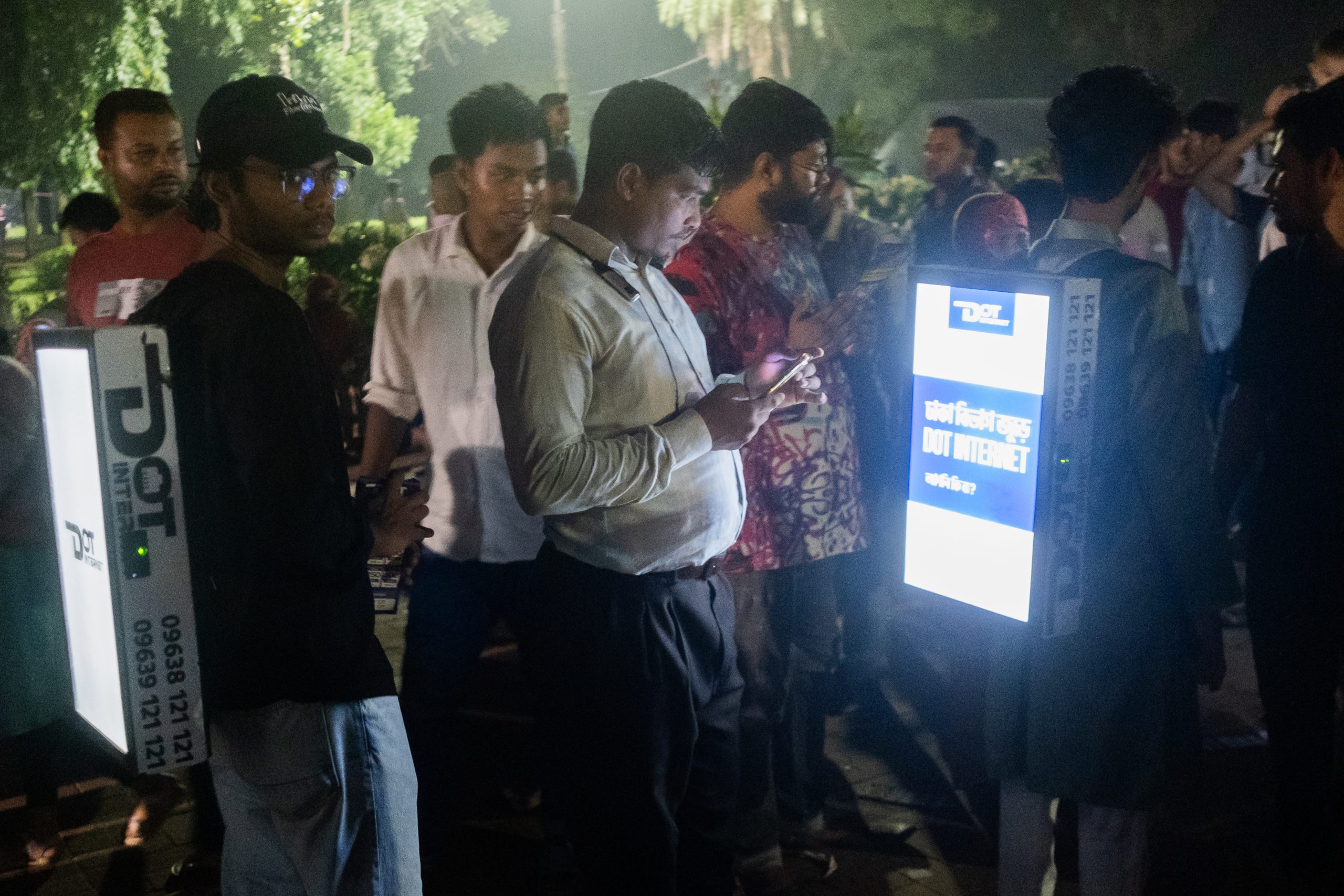
For the young workers themselves, it reads as an ordinary hustle: flexible hours, decent pocket money, a bit of street theatre. They chat with rickshaw-pullers, humor curious teenagers, and occasionally wait for people to experience the advertisement.
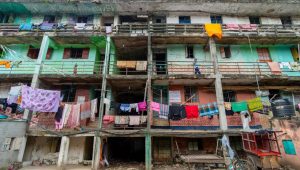
Watch it long enough, and the street starts to feel like a film set. A rickshaw creaks past, wheels older than the phones filming it. Beside it walks a screen strapped to someone’s spine, glowing brighter than anything else on the block. Two versions of Dhaka pass each other on the same strip of pavement. One is analog and worn.
The other one is digital and immaculate. For a second, it feels like a scene lifted straight out of Blade Runner 2049, except the neon isn’t bolted to a building. It’s breathing, it’s tired, and it has a bus to catch home. A quiet, uncomfortable question lies beneath it. In a city where physical space is this contested, the human body itself has become the last billboard left to rent.
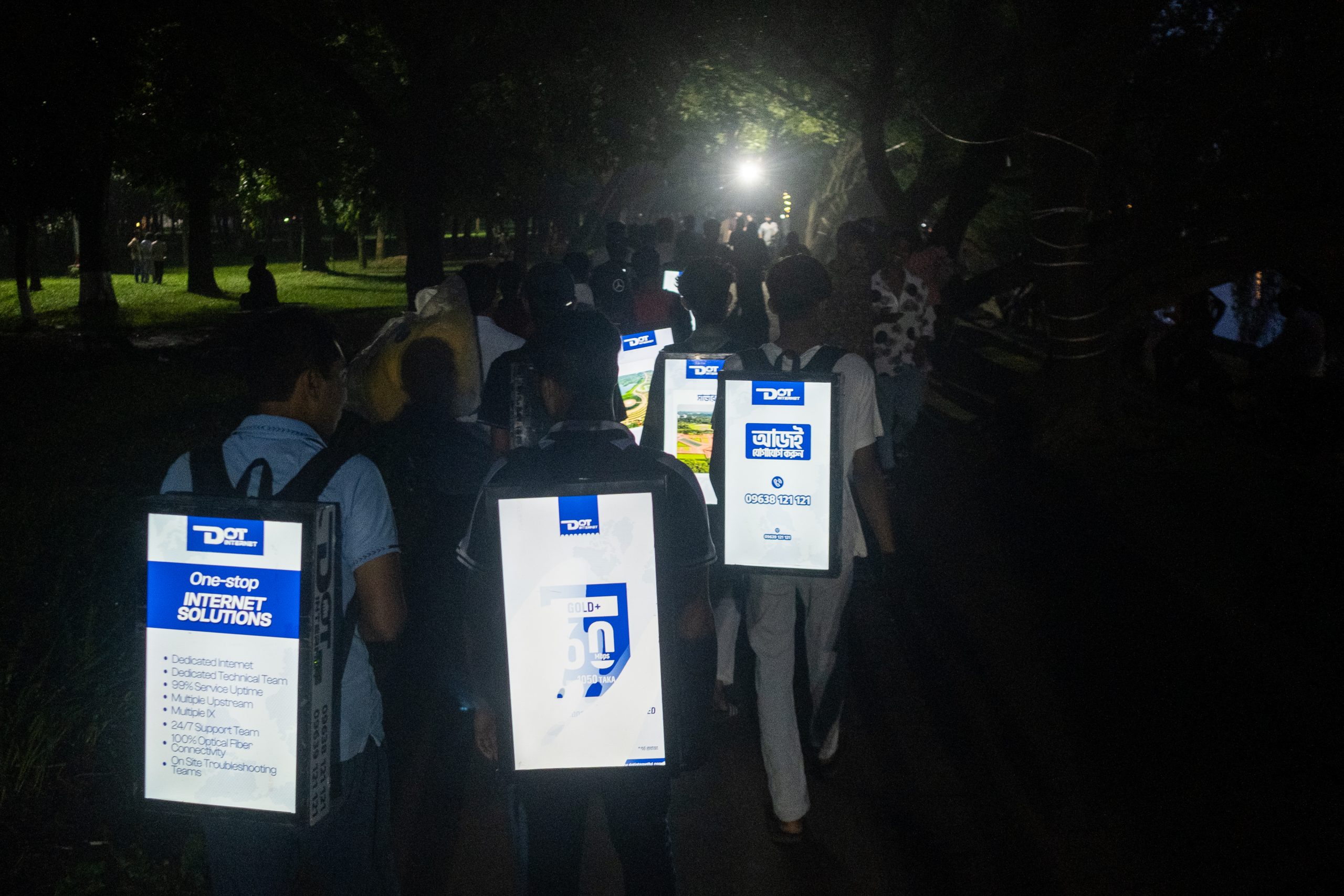
Nothing sinister in any single moment of it can be observed here. No one is coerced. The money is real, the work is legal, the audience is genuinely entertained. But step back, and the picture shifts.
The backpack, the smile, the loop of video running five hours a day on someone’s back. It sits somewhere between innovation and a colder, more modern demand. The kind where a person doesn’t just do a job anymore. They become the infrastructure.
By then the crowds have thinned, the glow has faded from the intersections, and the students walk home carrying nothing but their own shadows. Tomorrow at four, the screens will switch back on, and the city will watch itself being sold, one walking advertisement at a time.