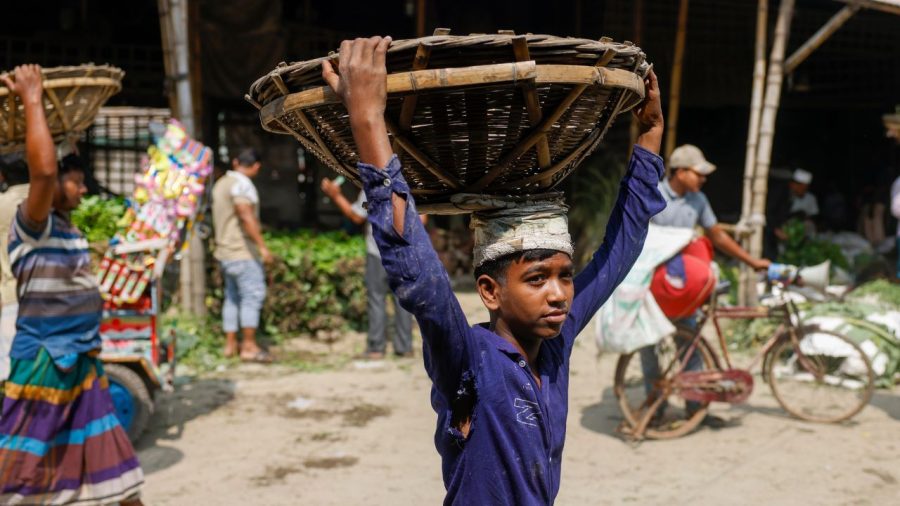



Bangladesh’s cities run on the labour of thousands of people.
Hidden within this workforce are children too.
For many city dwellers, seeing these children at work has become a familiar sight.
But these are the years they were supposed to be spending in classrooms, playing with friends, and growing up without worry.
Instead, many are forced to work to help their families survive.
This reality is reflected in the lives of 10-year-old Ali Hasan and his 12-year-old brother Amin.
With their family struggling to make ends meet, their day begins early each morning.
Wearing faded, dust-covered clothes, they head out carrying face masks and other items to sell.
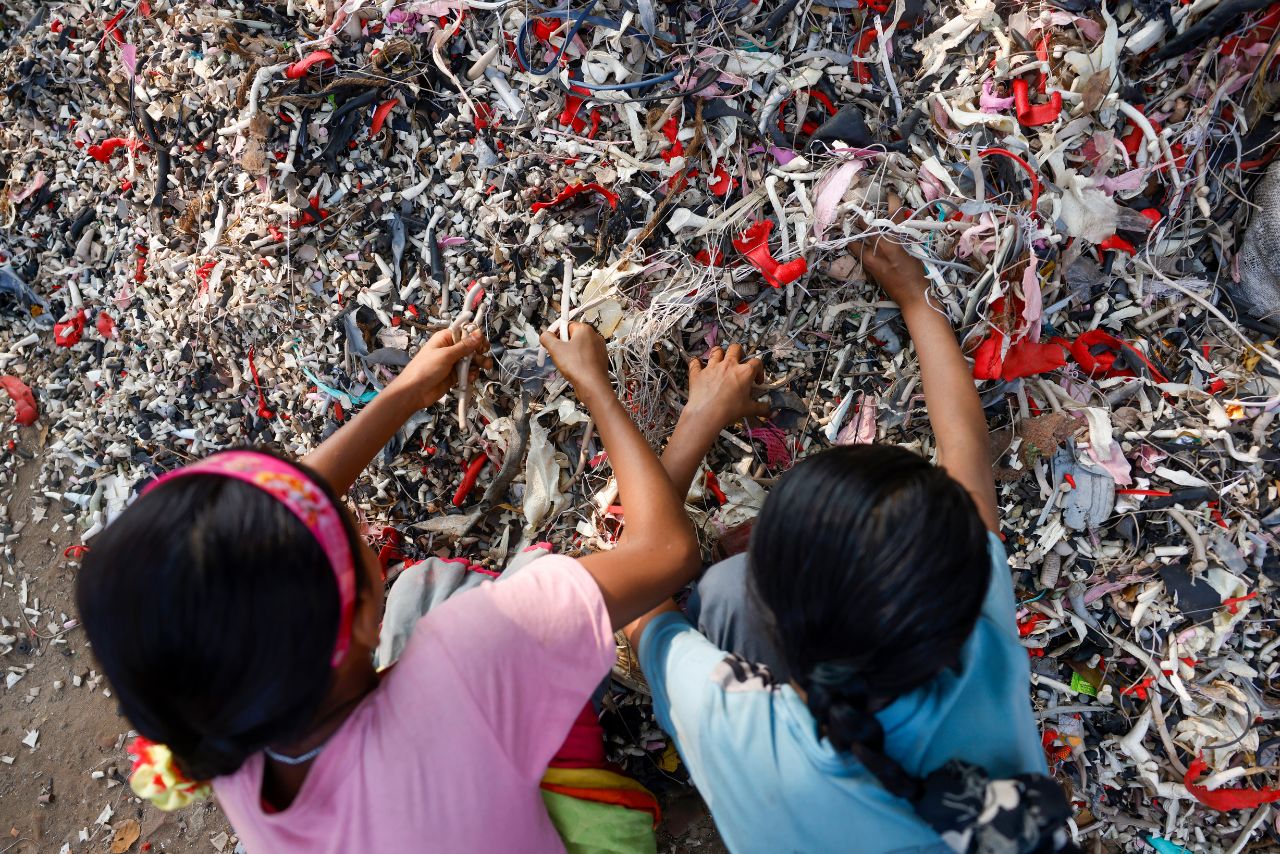
At an age when they should be thinking only about school and play, they are already caught up in the struggle to earn a living.

Their story reflects a much wider reality across Bangladesh.
A survey published by the Bangladesh Bureau of Statistics (BBS) in 2024 found that 3,536,927 children aged five to 17 are engaged in work across the country.
Nearly half of these children are directly involved in child labour.
The others are engaged in work that falls outside the formal definition.
Much of this work takes place in the informal sector, where children often remain out of sight.
The recycling trade is one such example.
Eleven-year-old Ashamani and 10-year-old Rijamani spend their days sorting discarded rubber and plastic sandals, which then become a source of income.




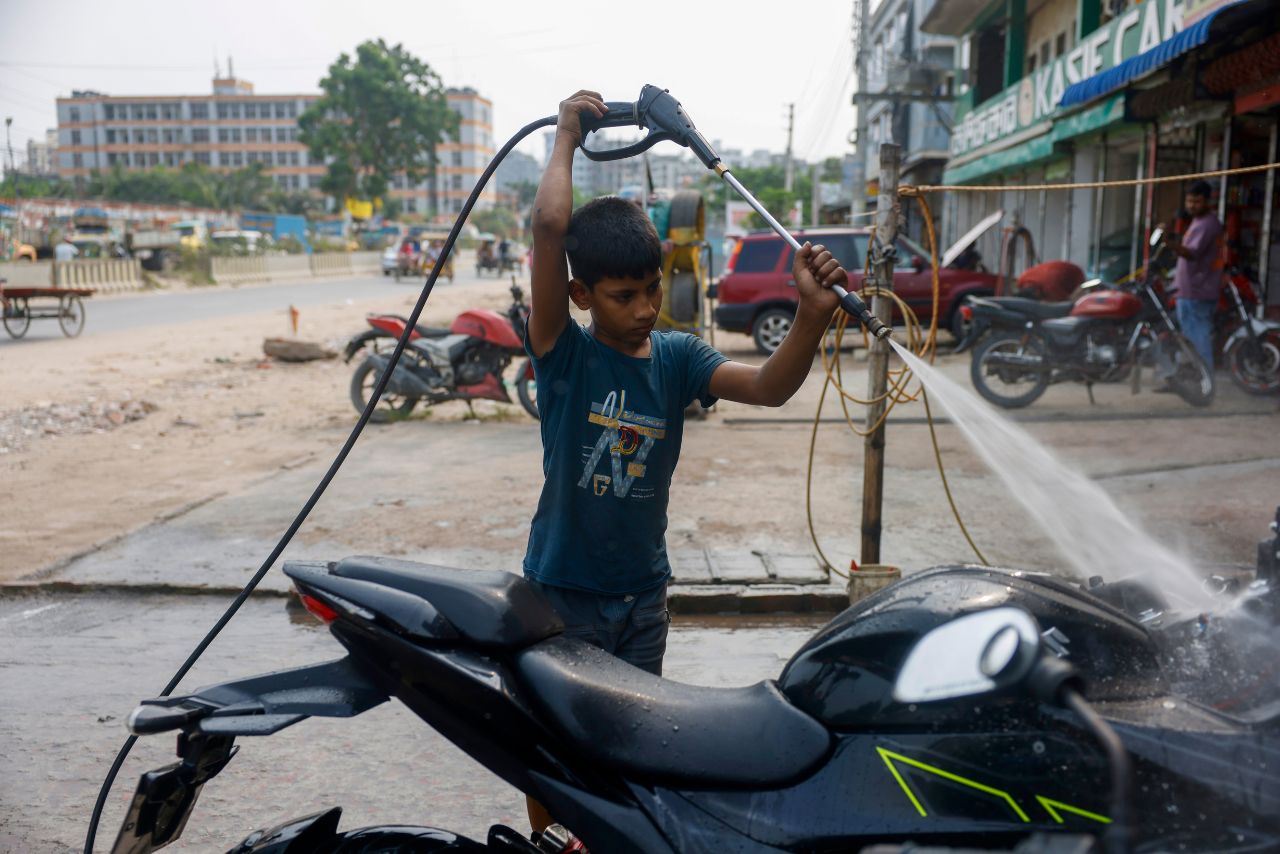
What others throw away becomes something of value, but for these two young girls, handling waste is part of everyday life.
Their work also raises questions about the laws meant to protect children.
Under the National Child Labour Elimination Policy 2010, children aged 12 to 17 can work up to 42 hours a week in non-hazardous jobs.
For children aged 5 to 11, any form of work is considered child labour.
Yet, for families struggling to survive, the need to earn money often takes priority over these legal protections.
A recent survey by BBS and UNICEF found that around 37.8 per cent of these children had to leave home because of poverty and hunger.
For another 15.4 per cent, their parents’ migration to cities was a contributing factor.
Behind these figures are families struggling to survive and children who often have little choice but to work.
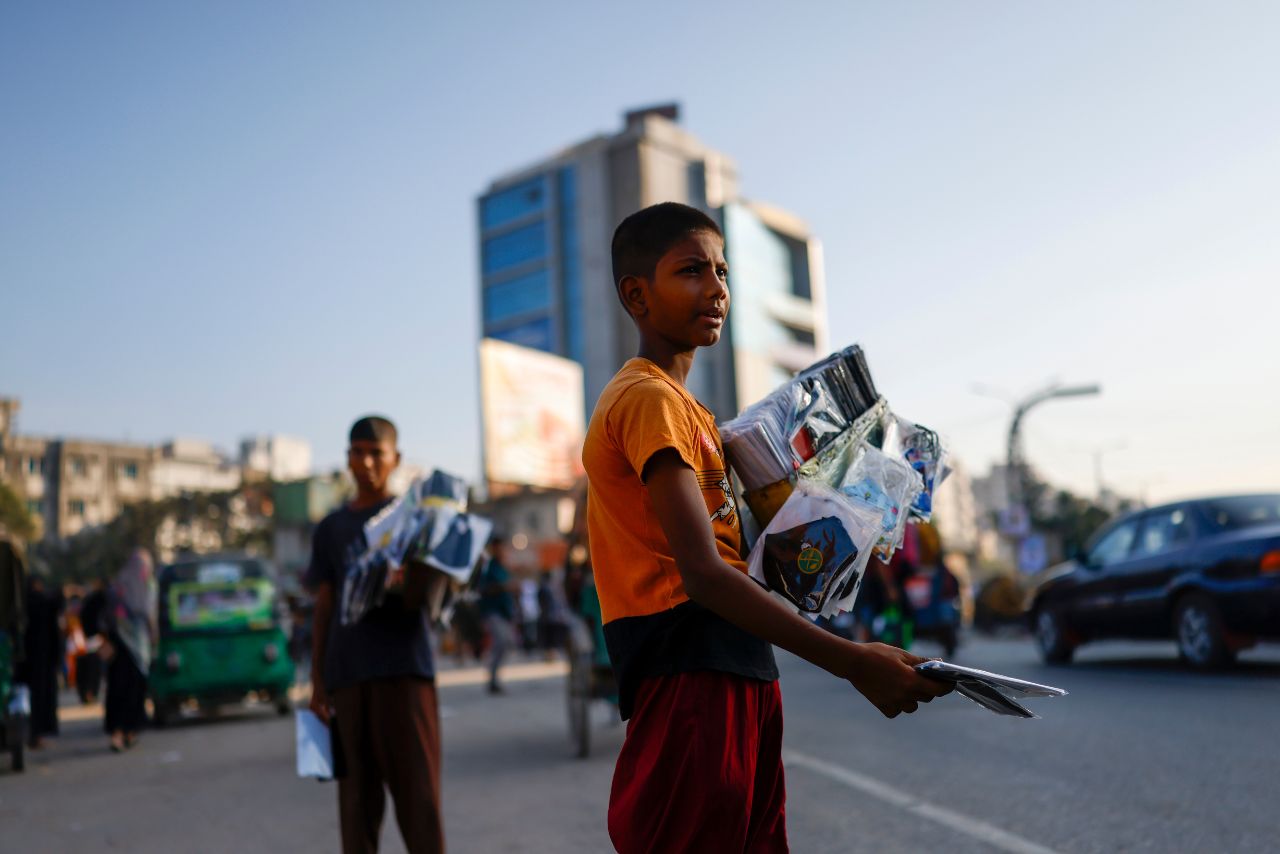
Explaining the cost, public health expert Dr Lelin Chowdhury told TIMES that, alongside the physical strain, working children miss out on the normal joys and leisure of childhood, which can have long-term effects on their mental health too.
In 2022, Bangladesh ratified the International Labour Organization’s (ILO) Minimum Age Convention, alongside existing laws and policies aimed at protecting children.
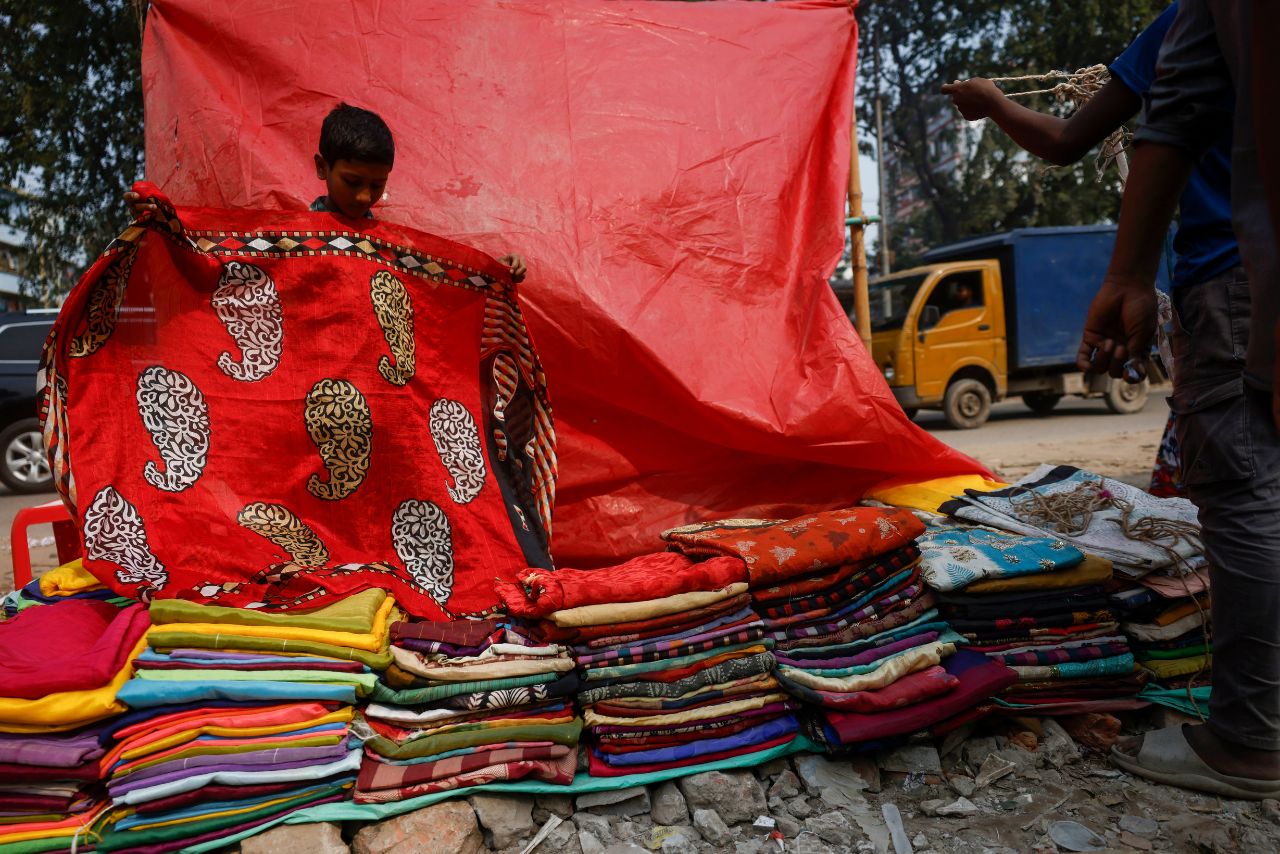
Yet, child labour continues to be a common sight on the streets, in local markets, and across informal workplaces.
This raises a critical question: why do so many children still have to work despite these efforts?

For human rights activist and lawyer Manzill Murshid, the gap between the law and its enforcement is a major reason the problem persists.
“In this country, many laws remain confined to paper,” he said.
“They are not properly enforced in practice.”
He also pointed to a troubling contradiction: “Many of those who make the laws have child workers in their own homes.”
Addressing these issues, however, requires more than laws and enforcement.
Child rights activist Abdullah Al Mamun said the problem must be tackled from several sides at once.
“We cannot limit efforts to eliminate child labour to law enforcement alone. Education, social protection, and the financial capacity of families must also be considered together,” he said.
For now, the reality remains unchanged for many children.
As cities continue to move and grow, young hands that have not yet passed eighteen springs keep them running, at the cost of childhood itself.
The laws exist.
The policies have been written.
The commitments have been made.
But until those commitments are matched by enforcement, by education, by social protection, and by the financial capacity of families, children will continue to work. And childhood, for them, will remain a luxury they can ill afford.