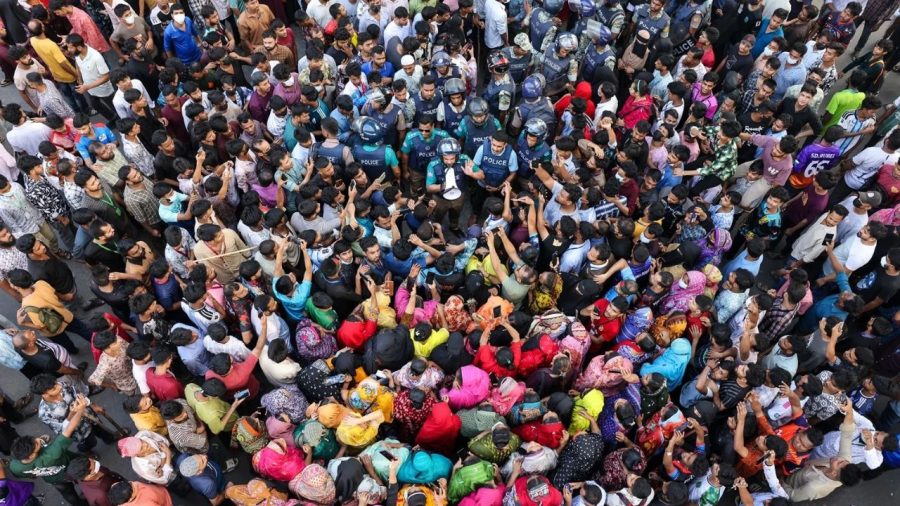



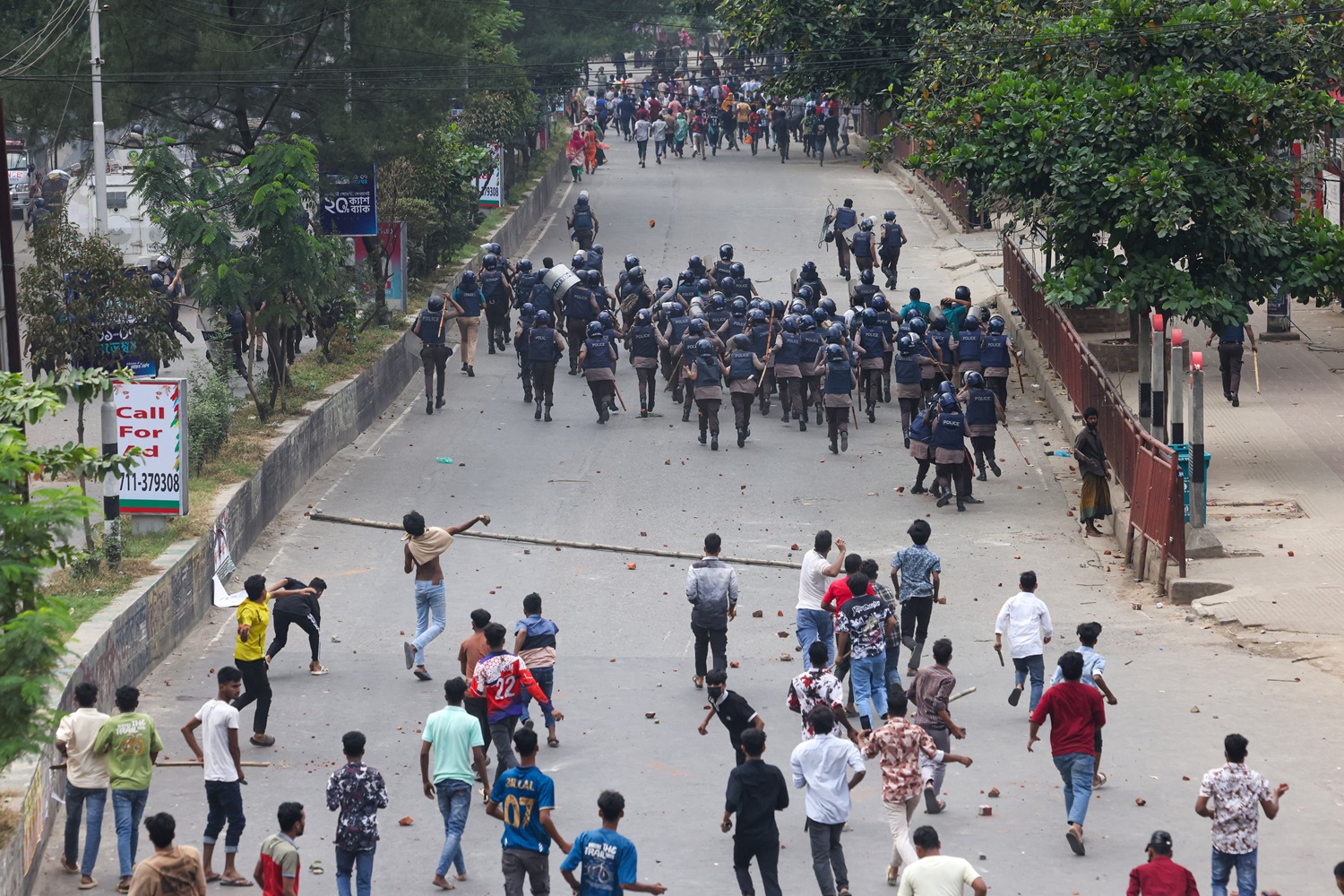
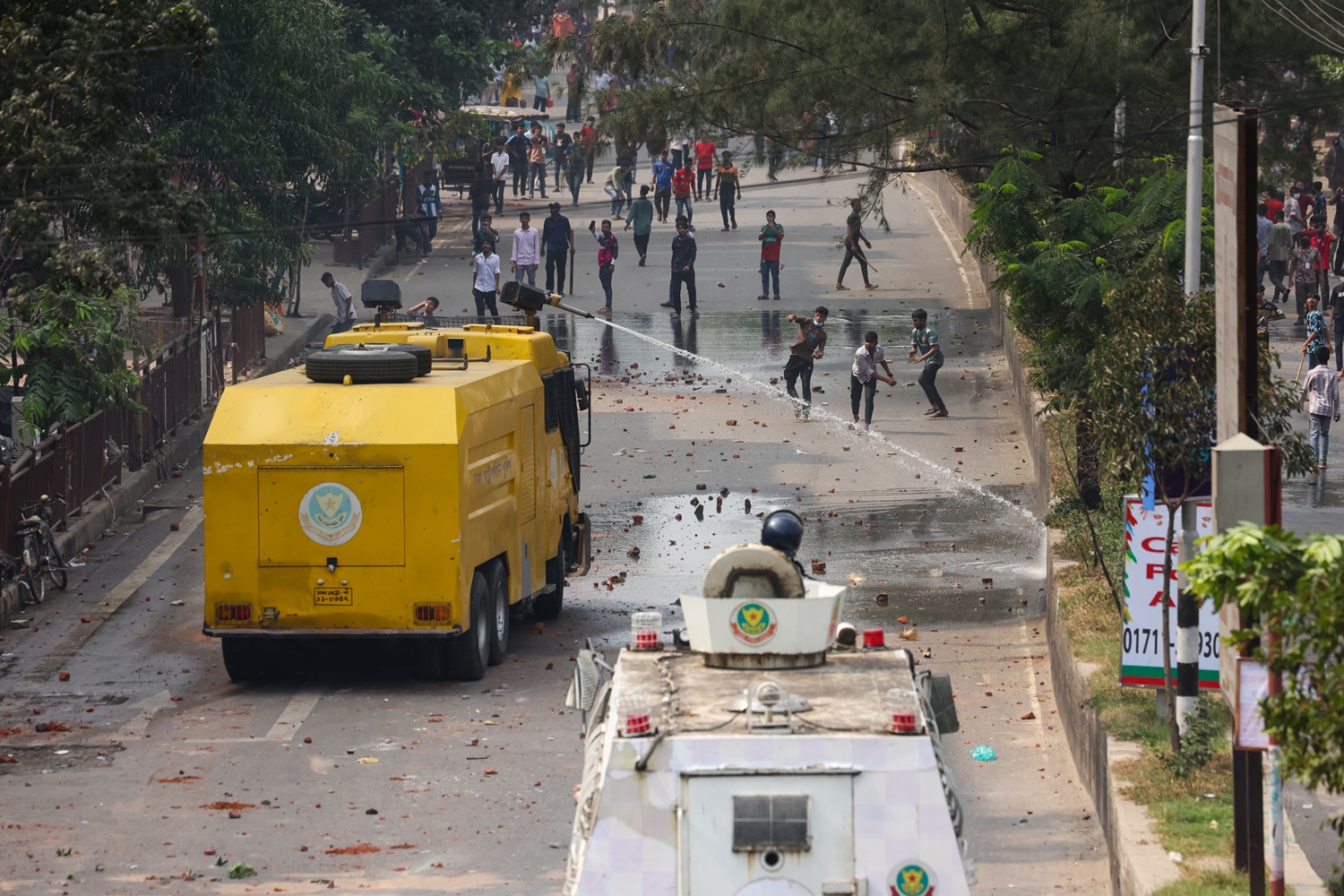
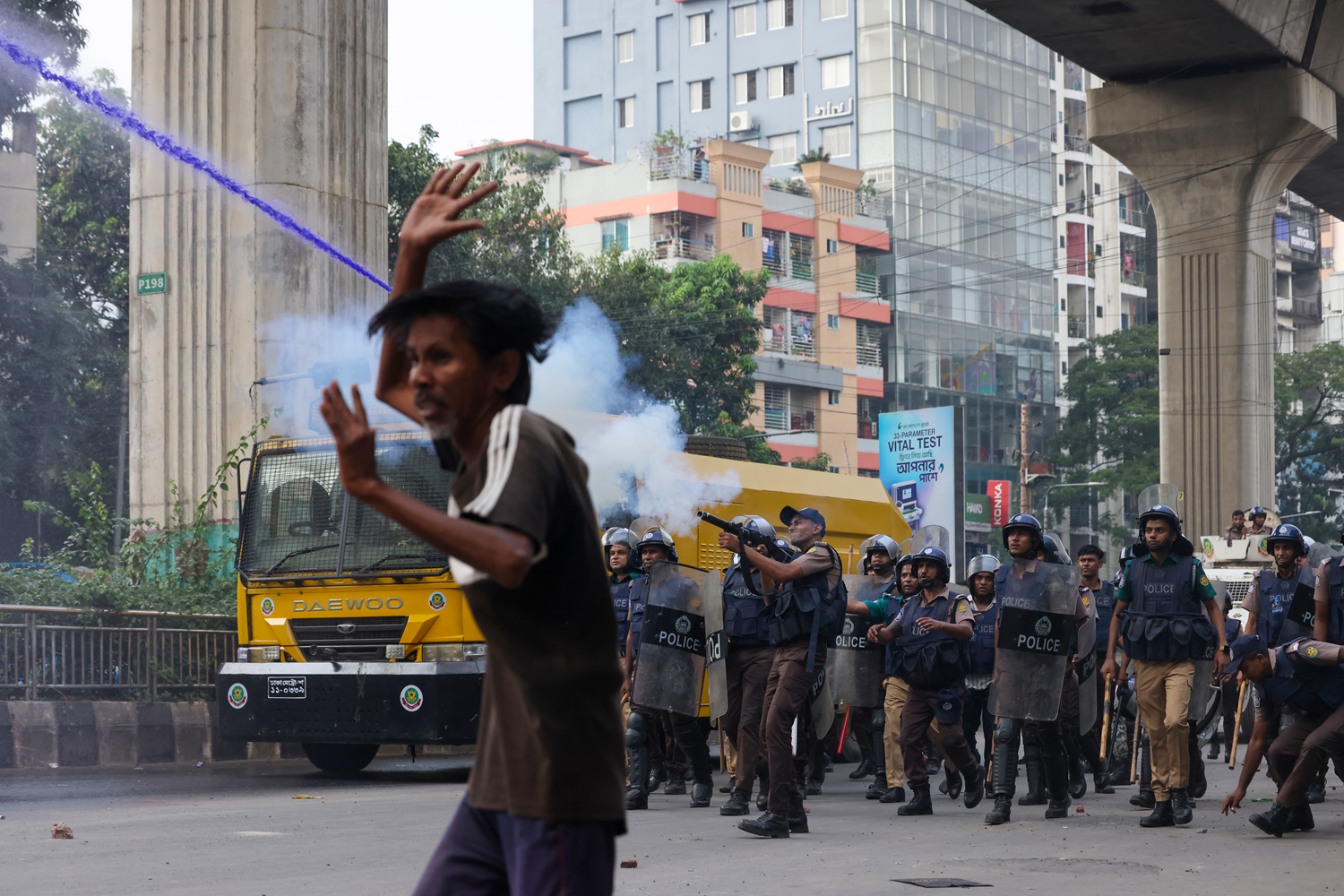
On Sunday morning, the bustling urban sprawl of Dhaka’s Mirpur transformed into a tense arena of tear gas, flying brickbats, and burning metal.
What began around 9am as a road blockade at the Mirpur-10 roundabout by garment workers demanding a minimum monthly wage of Tk30,000 rapidly spread across the industrial hub.
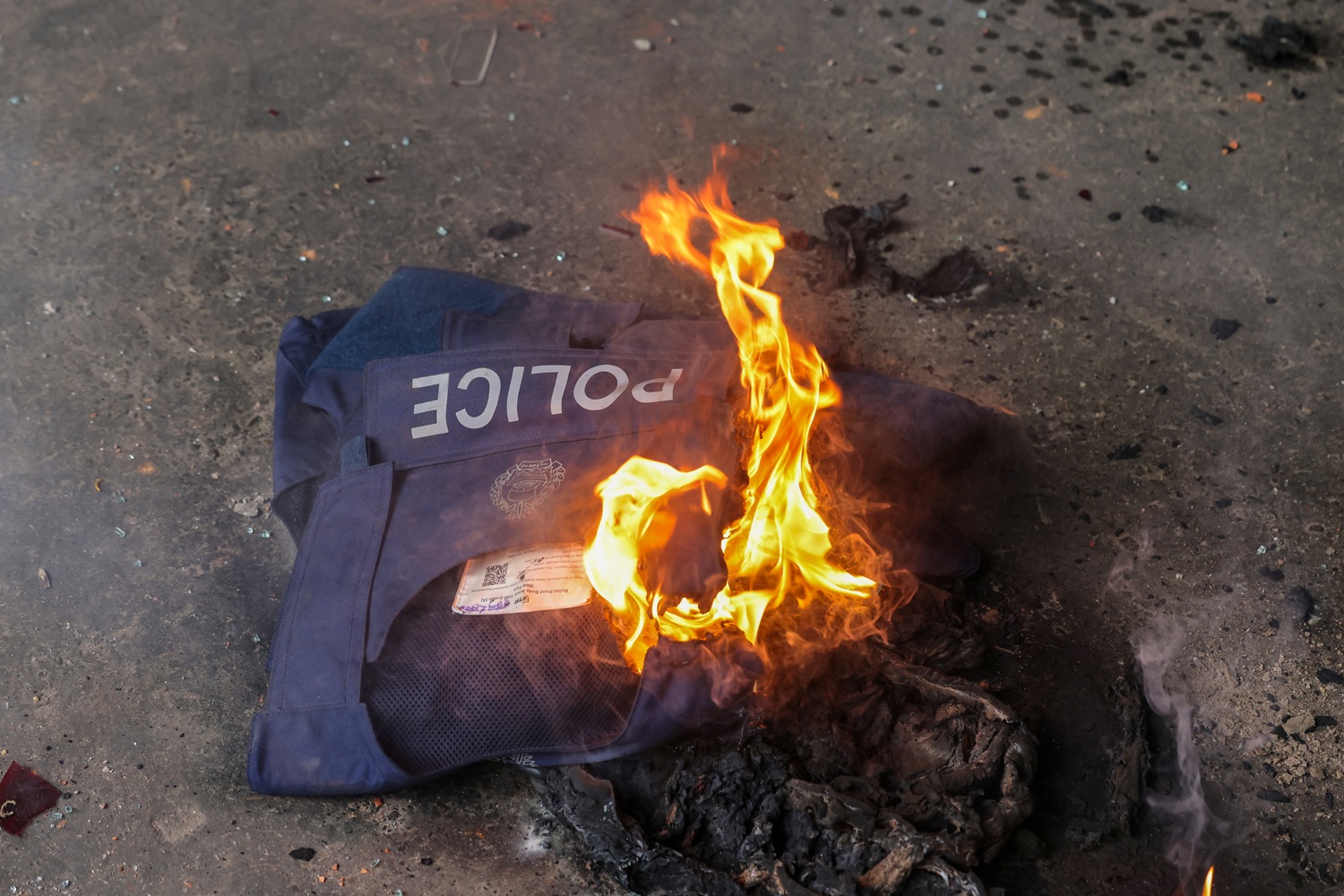
By noon, a police vehicle was set ablaze near Mirpur-11, sending thick smoke into the sky before two fire engines put out the blaze.
The unrest forced authorities to temporarily shut down three key metro rail stations – Mirpur-10, Mirpur-11, and Pallabi – stranding thousands of commuters and bringing traffic across Mirpur, Kalshi, and Proshika Mor to a complete standstill.

Behind the charred vehicle and choked arterial roads lies a deepening struggle for basic survival among Bangladesh’s garment workforce.
For many in the sector, balancing daily household expenses has become an unmanageable ordeal.
For experienced veterans, earning Tk18,000 to Tk20,000 per month including extensive overtime, with Tk8,000 spent on house rent alone, leaves barely Tk10,000 to Tk12,000 for food and essentials.



With overall inflation recorded at 8.34 per cent in September 2026 and food inflation above 7 per cent, rising living costs have severely eroded real purchasing power.
Labour representatives note that house rents for basic accommodations have tripled from Tk2,500 to Tk7,500 in recent years, pushing workers to perform gruelling 15-to-16-hour shifts just to make ends meet.
As demonstrations flared across Gazipur and Savar’s Ashulia – where protesters set fire to a police box in Konabari and five platoons of Border Guard Bangladesh (BGB) were deployed – the widespread unrest forced dozens of garment factories to declare holidays.
In response, Labour and Employment Minister Ariful Haque Choudhury announced the formation of a six-member minimum wage board, chaired by Senior District and Sessions Judge Sheikh Ashfakur Rahman.

While the minister urged workers to return to factories and claimed political groups were instigating instability, protesting workers insisted they would maintain their movement until a wage hike is officially gazetted.
Meanwhile, factory owners point to soaring energy tariffs, raw material costs, and aggressive pricing pressure from international buyers, who frequently refuse to absorb minimum-wage increases.
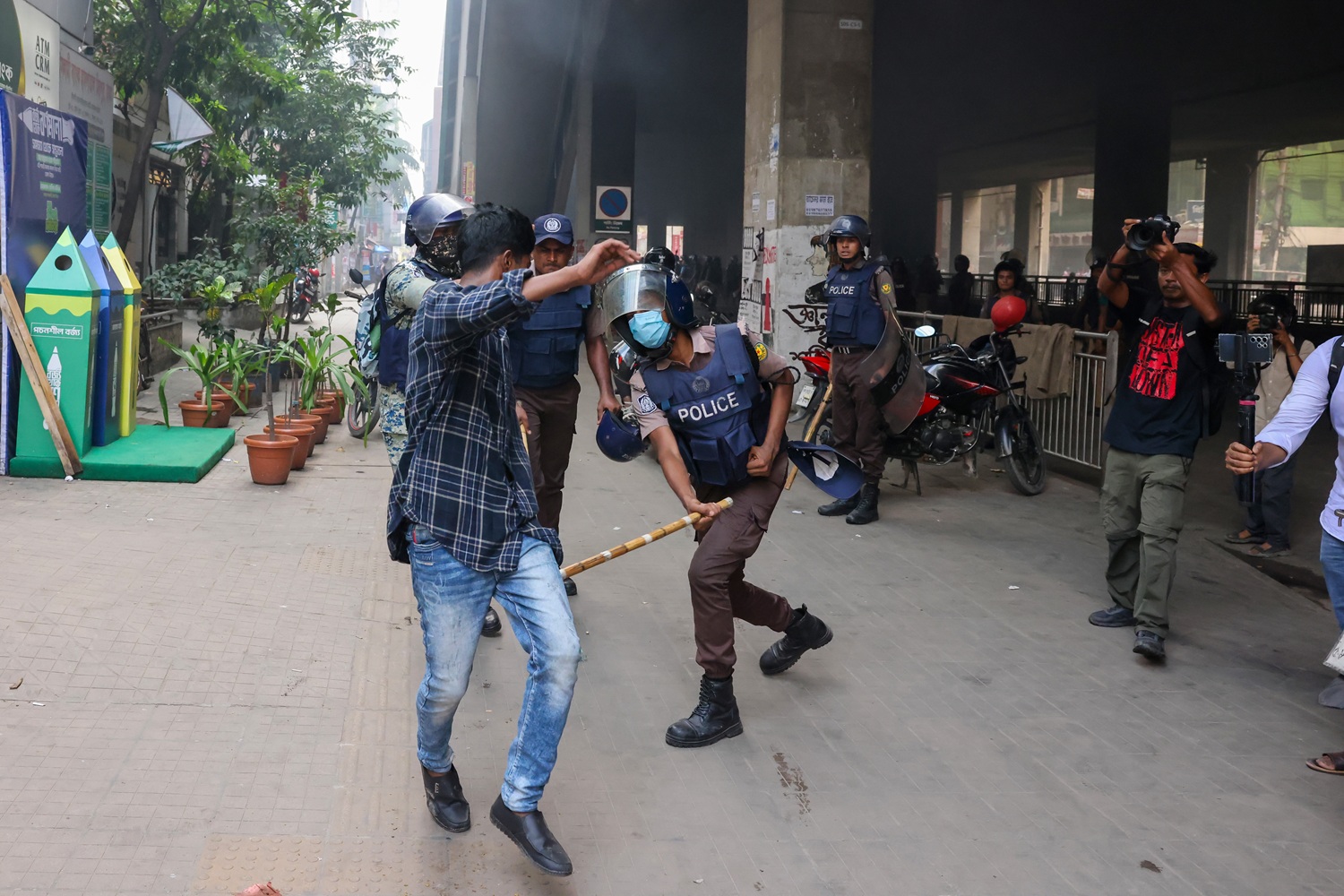
Although law enforcers cleared the roads using batons, tear gas, and sound grenades – allowing metro operations and traffic to resume by late afternoon – the core economic grievances on the factory floors remain unaddressed.
Until policy interventions bridge the gap between stagnant wages and spiralling inflation, quiet desperation in the garment belts threatens to erupt onto the streets again.