

Although environmental pollution affects the lives of people in Bangladesh and constrains the country’s economic potential, architect Iqbal Habib believes the issue receives insufficient attention in the national budget. He hopes this will change in the coming cycle.
Habib, a prominent member of the Bangladesh Environmental Movement (Bapa), has long worked on urban planning, environmental protection, river and waterbody conservation, public space preservation, and sustainable development.
Ahead of the upcoming budget, he spoke to Shahariar Mahi of TIMES of Bangladesh about the conflict between development and the environment, limitations of urban planning, and strategies for sustainable development.
How much importance should the budget give to the conflict between economic growth and environmental protection?
The conflict is real. Our tendency to view everything together often leads us to overlook environmental assessments.
While we enjoy the benefits of development projects, the environmental costs are frequently borne by affected communities. Climate-induced migrants, who relocate involuntarily, require special planning for housing, healthcare, and social protection.
The budget should also allocate funds for infrastructure to withstand cyclones, floods, salinity, and other climate-related shocks in coastal areas. Likewise, the widespread damage to air, water, rivers, and land caused by urbanisation demands dedicated funding for restoration.

The budget should therefore cover not only new development projects but also include a separate allocation for environmental and neighbourhood recovery and redevelopment.
How effective are the government’s annual climate budget reports?
If the reports were truly effective, we would not have to approach international climate funds each year only to hear that we failed to present proper projects, economic assessments, and damage calculations. Our project plans and analyses on the global stage remain inadequate, preventing us from securing the funding we deserve. The root of the problem lies in the insufficient quality of our reporting, surveys, and projections.
Is accountability still a major challenge in the Climate Trust Fund and international climate financing?
Certainly. We should be receiving far more than we actually do, but we cannot justify the amounts we receive. Moreover, the funds that do come are not properly reported. As a result, securing future financing will remain a challenge, highlighting that this sector still does not receive the attention it deserves.
Environmental pollution causes significant economic losses every year. In this context, what is your main expectation from the budget?
I will highlight three points. First, alongside halting ongoing environmental and neighbourhood damage, the budget should include a dedicated allocation to restore them to a sustainable condition.



Second, a special allocation is needed to ensure a healthy, sustainable, and environmentally just life for people affected by climate change, climate migrants, and marginal urban residents.
Third, sufficient funds should be set aside to prepare survey-based, data-driven reports suitable for presentation on the international stage.
If these three measures are ensured, the budget would represent an important step towards environmental accountability.
Despite talk of combating climate change, massive investments continue to flow into fossil-fuel-based infrastructure. This reliance on fossil fuels—driven by convenience and short-term savings—remains a major conflict.
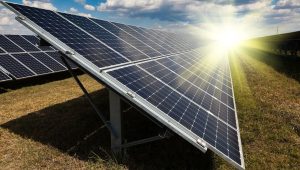
Many countries, particularly China, are now shifting heavily towards solar, wind, and clean energy. Had the state implemented strict policies and offered incentives for renewable energy, Bangladesh could have gained long-term economic benefits while reducing environmental damage and pressure on future generations.
Does the budget allocate enough for strengthening the Department of Environment and related institutions?
No, not at all. The Department of Environment must be built into a robust institution with magisterial powers, adequate manpower, and modern technology. Similarly, the River Commission requires substantial strengthening.
If the Department of Environment, the River Commission, and the Bangladesh Standards and Testing Institution (BSTI) were reinforced, we could begin a new chapter of sustainable, healthy, and environmentally responsible development. Keeping these institutions weak, as is the case currently, is effectively suicidal.
Is more investment required for research and monitoring for evidence-based environmental policy?
Absolutely. The government is not giving sufficient priority to manpower, funding, or legal authority in this area. In the name of development, sustainable practices are being neglected. Consequently, systems for environmental data collection, research, and monitoring are being overlooked rather than strengthened.
What lesson should be learned from the crisis in the leather industry and environmental management?
This has been a rigged system. The domestic leather industry has been pushed to the brink of collapse, and the relocation process from Hazaribagh to Savar ultimately turned into a deception.
Pollution in the Buriganga River was supposed to be addressed; instead, the Dhaleshwari River became contaminated, followed by damage to the Banshi River. In other words, existing environmental problems were not resolved, and new ones were created. In my view, a combination of domestic and foreign interest groups contributed to weakening the local leather industry.
What should be the most important step for environmental and ecosystem protection in this year’s budget?
I emphasise one key measure—a dedicated Recovery Fund is essential. Separate allocations should be made to restore damage to water, land, air, and rivers to sustainable conditions.
In the leather industry, the budget must provide for reinvestment in effluent treatment plants and waste management. Similarly, other sectors should implement survey-based recovery plans. To date, these critical areas have received little to no allocation in the budget.
In view of rising sea levels and coastal risks, what kind of budgetary preparation is needed?
Barishal has already emerged as one of the worst-affected regions due to polder-based development systems. In many areas, land within the polders has subsided below the riverbed, making rainwater drainage increasingly difficult.
In the future, polders alone will not suffice to protect these areas. Large-scale recovery and rehabilitation projects are urgently needed for Barishal, Patuakhali, Jhalokathi, and other vulnerable coastal districts. At present, I believe the budget is still being prepared without adequately addressing these looming challenges.