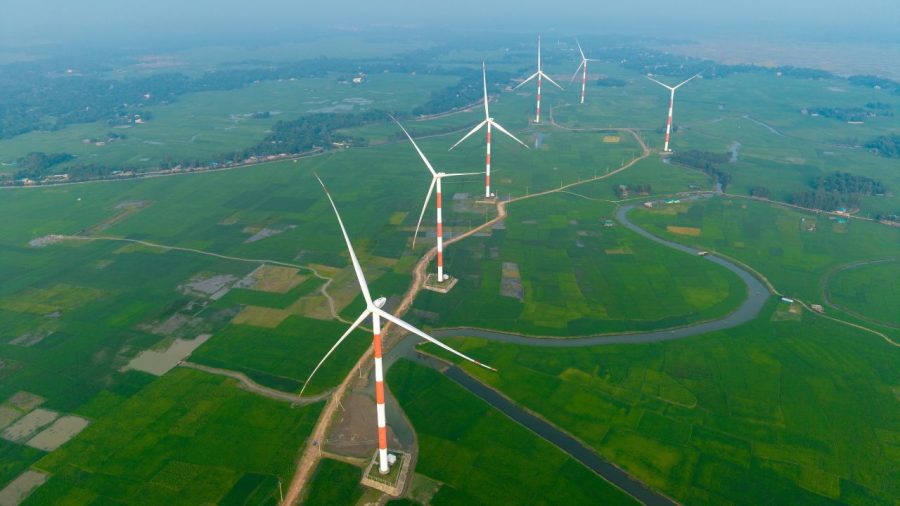



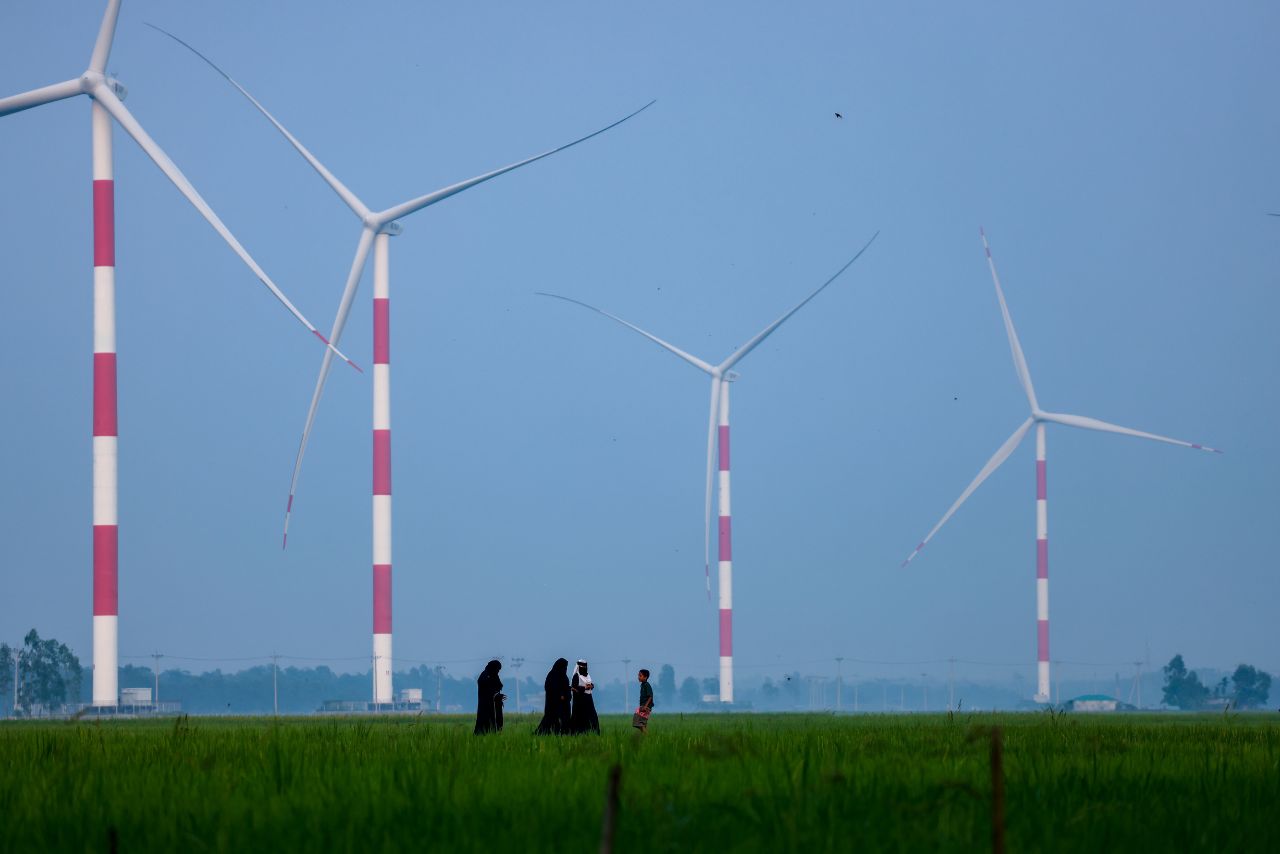
A major wind power project has been established in an open area of Khurushkul in Cox’s Bazar Sadar upazila, marking a significant step forward in Bangladesh’s renewable energy ambitions.
A total of 23 wind turbines have been installed across four unions – Khurushkul, Pokkhali, PM Khali and Chowfaldandi – and the plant is now fully operational.
Each turbine starts generating electricity when wind speeds exceed 3 metres per second.
With a capacity of 60 megawatts, the Khurushkul plant is currently the largest wind power project in Bangladesh.
Bangladesh’s wind power generation began in 2005, when the Bangladesh Power Development Board (BPDB) installed a 0.9-megawatt wind power plant near a dam on the Muhuri River in Feni.

Three years later, in 2008, a 1-megawatt wind power plant was built in Kutubdia.
Those early projects were modest, experiments in a country better known for its solar home systems than its wind farms.
Two decades later, Khurushkul represents a leap forward in scale and ambition.



The Chinese-built wind power plant in Khurushkul is expected to supply Bangladesh with about 145 million kilowatt-hours of clean electricity annually, according to Wuling Power Corporation.
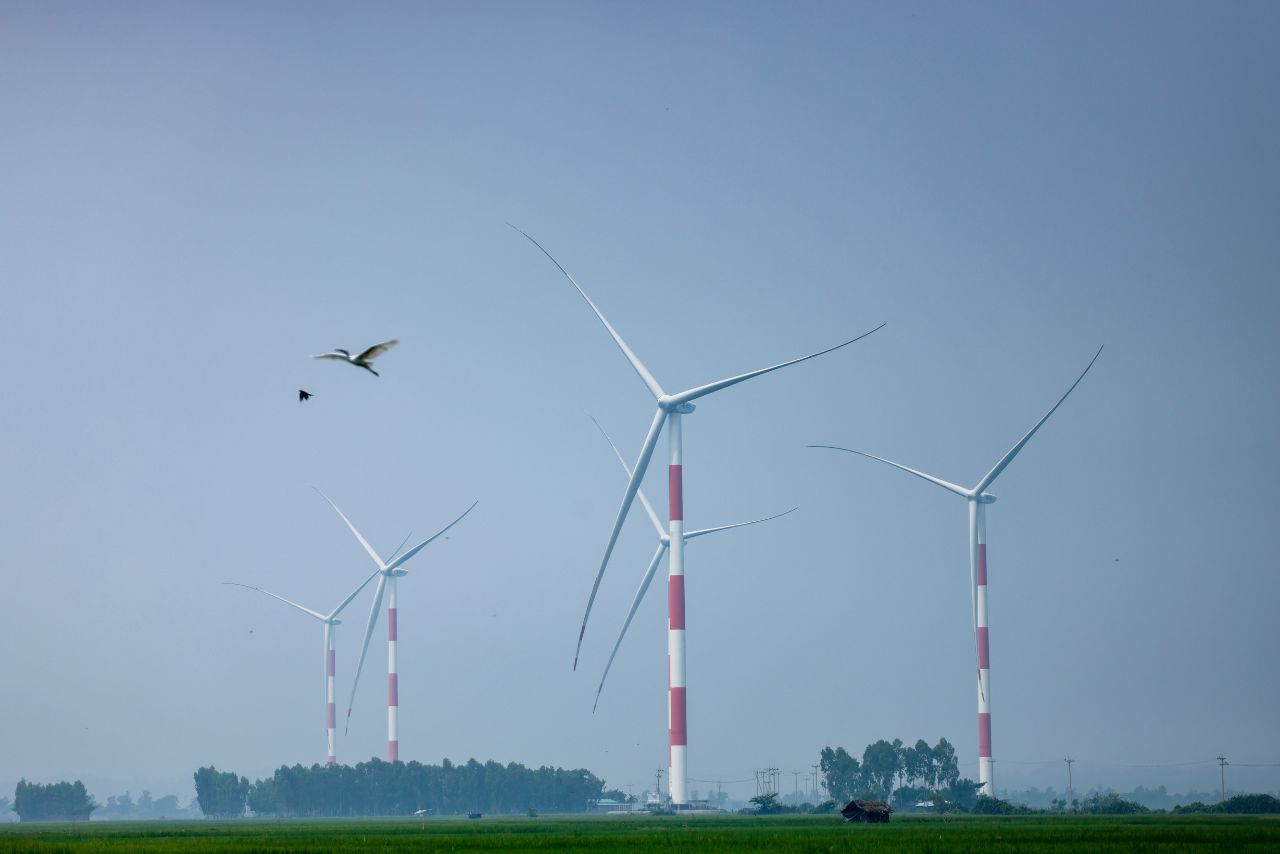
The project is also expected to reduce annual coal consumption by about 44,600 tonnes and cut carbon dioxide emissions by 109,200 tonnes.
Wuling Power Corporation is a subsidiary of China’s State Power Investment Corporation (SPIC).
For a country that has long relied on fossil fuels to meet its growing energy demands, the Khurushkul plant offers a glimpse of a cleaner future.
It also demonstrates that wind power, once dismissed as unviable in Bangladesh’s low-wind conditions, can be harnessed at scale with the right technology and investment.
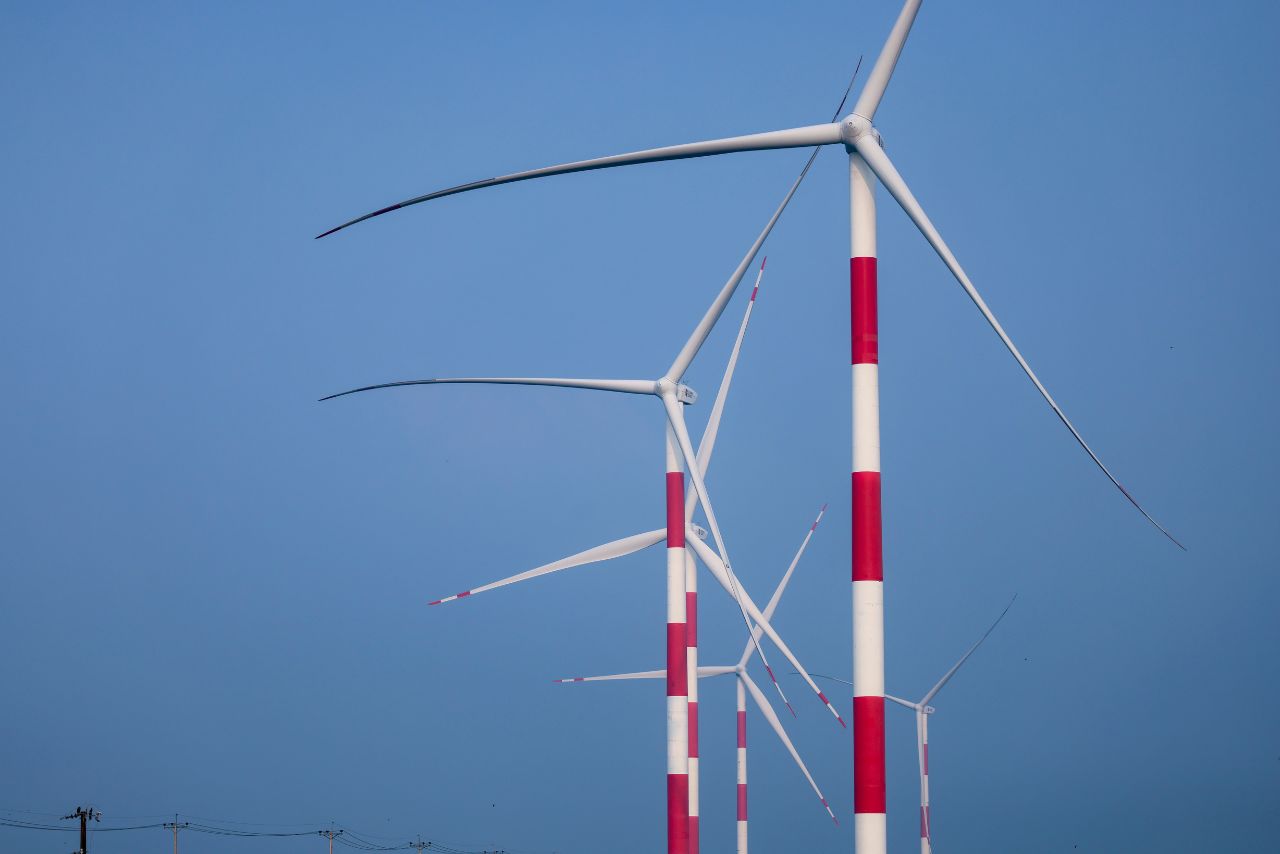
The 23 turbines spinning along the Cox’s Bazar coast are more than just infrastructure.
They represent a shift in how Bangladesh thinks about its energy future: away from imported coal and toward the renewable resources that surround it.
The wind that sweeps across the Bay of Bengal has long been a part of life in Cox’s Bazar.
Now, it is also a source of power.
Whether Khurushkul becomes a model for further wind projects or remains an isolated success depends on policy, investment, and the willingness to pursue clean energy at scale.
But for now, the turbines are turning, and with them, the possibility of a greener Bangladesh.