Questions have emerged over 591 additional shop allocations in the new 10-storey Bangabazar Complex being constructed at a cost of Tk365 crore in Dhaka.
The multi-storey project was designed to rehabilitate traders devastated by a colossal fire, but the scheme is now embroiled in allegations of bribery, extortion, and systemic corruption.
The inferno swept through Bangabazar in the early hours of 4 April 2023, destroying four separate markets, Fulbaria Adarsha, Mahanagar, Gulistan, and Bangabazar Market.
A Dhaka South City Corporation (DSCC) enquiry committee found that 3,845 traders lost their livelihoods, with total damages estimated at Tk305 crore.
Construction of the new complex, situated on 106.28 kathas in Fulbaria, Gulistan, officially commenced on 25 May 2024.
Contracted to Orpi Engineering, the facility is scheduled for completion in 2028.
According to DSCC records, the blaze destroyed 2,370 physical shops across the four markets.

However, the plan for the new complex provides for 2,961 shop allocations,leaving 591 extra spaces unaccounted for amongst original victims.
The Anti-Corruption Commission (ACC) has opened an investigation into allegations of widespread financial irregularities surrounding these surplus allocations.
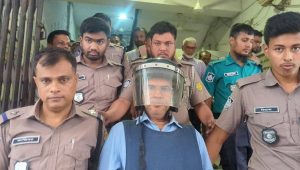
Several prominent figures have been implicated, including former Awami League MP Afzal Hossain (Kishoreganj-5), who is currently imprisoned.
Whilst a formal report concerning Afzal has been submitted to the ACC, investigations into other suspects have dragged on for three years.
Dhaka South City administrator Md Abdus Salam confirmed that corruption allegations regarding the allocations remain unresolved.




Traders allege that a lucrative illicit trade in shop allocations began as far back as 2012–13.
Affected shopkeepers claim a syndicate deliberately excluded genuine victims, inserting 591 preferred names onto the official register.
These favoured individuals reportedly secured shop rights from the city corporation by paying nominal salami (upfront premiums) before selling the properties on the open market at vastly inflated rates.
While initial official salami payments were set at Tk1 lakh alongside subsequent installments, traders note the actual market value of each unit ranges between Tk70 lakh and Tk80 lakh.
Traders identified Mozammel Haque Maju, the current president of the Bangabazar Complex Shop Owners Association and convener of the Ramganj Upazila BNP in Lakshmipur, as a key figure in drafting the suspect list while serving as general secretary.
The roster allegedly features 48 of Maju’s relatives and close associates, including his daughter, son-in-law, and nephews.
Nur Islam, senior vice-president of the association, claimed that a syndicate comprising Afzal Hossain, Shahabuddin Ahmed, Zahirul Islam, Nazmul Huda, and Maju demanded bribes ranging from Tk10 lakh to Tk25 lakh per slot, heavily favouring individuals from Lakshmipur, Kishoreganj, Noakhali, and Brahmanbaria.
Maju has denied all allegations, asserting that allocations complied fully with official rules and challenging critics to produce proof.
Key figures in the scandal have largely vanished: Nazmul Huda has kept a low profile since securing bail over arson allegations, Zahirul Islam is no longer seen publicly, Shahabuddin’s whereabouts are unknown, and former Dhaka South mayor Fazle Noor Taposh remains in hiding abroad.
Historical precedents complicate the dispute.
Following a previous fire after 2001, under former Dhaka City Corporation mayor Sadeque Hossain Khoka, 2,370 affected traders were allocated shops.
However, after the Awami League assumed power in 2009 and the city corporation split into North and South corporations in 2011, State Minister Jahangir Kabir Nanak formed a three-member scrutiny committee.
That panel, headed by the DSCC chief executive officer, finalised the controversial list of 591 extra shops.
Abdur Rahman Molla, joint general secretary of the shop owners association, defended the move, saying that cancelling the 591 allocations would have thrown the entire reconstruction into uncertainty.
To maintain progress, the DSCC proceeded to collect salami from all listed assignees.
ACC Assistant Director Ariful Islam said that collecting salami remains lawful during ongoing probes as it constitutes public revenue, though further legal action will follow if formal evidence of graft is established.
Despite the controversy, DSCC Superintending Engineer Mohammad Safiullah Siddique Bhuiyan assured that all legitimate, affected owners have been allocated shops.
Once completed, the modern, four-block complex will house 3,213 shops measuring between 80 and 110 square feet.
It will feature 250-square-foot food courts on every floor, eight lifts, dedicated fire-safety systems, and parking for 169 cars and 109 motorcycles.