



A 50kg bag of urea costs Bangladeshi farmers Tk1,350.
In Myanmar, the exact same bag fetches around Tk9,000.
That Tk7,650 price differential has emerged as the primary incentive behind a lucrative fertiliser smuggling network stretching from local dealers and coastal jetties to deep-sea fishing trawlers.
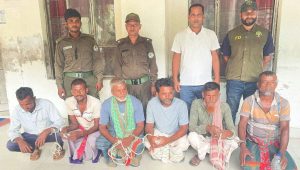
According to the Coast Guard, 255 tonnes of fertiliser were seized between July and September, resulting in 95 arrests and 15 criminal cases.
However, individuals familiar with the trade believe these seizures represent only a fraction of the total volume being moved illicitly across the border.
On 25 September alone, the Coast Guard intercepted 960 bags (48 tonnes) of urea at Ichhakhali Ghat in Mirsharai on suspicion that the cargo was bound for Myanmar.
Four trucks and a fishing boat were impounded during the operation.
The financial incentive explains the trade’s appeal.
A shipment of 1,000 bags is worth approximately Tk13.5 lakh at Bangladesh’s subsidised farmer-level price.

Across the border, the same load can be sold for nearly Tk90 lakh, leaving a nominal market-price margin of Tk76.5 lakh.
Sources involved in the trade say delivering such a shipment to Myanmar costs around Tk20 lakh to Tk22 lakh after accounting for inflated collection prices, boat hire, carrier expenses, transport costs, and funds set aside for legal risks.
Even after these overheads, a successful run yields a massive return for the syndicate.
Industry insiders note that a profit margin exceeding Tk7,000 per bag creates an alarming risk that state-subsidised fertiliser intended for domestic farmers is being diverted before reaching its destination.
Smuggling shifts to the deep sea
Smuggling tactics have evolved significantly.




What was once confined to small land-border consignments is now allegedly moving through coastal jetties in Chattogram and Cox’s Bazar in far larger quantities.
Imported fertiliser is routinely transported from Majhirghat in Chattogram to various regions via cargo boats and lighter vessels.
Sources allege that when these vessels berth at intermediate jetties, portions of the cargo are offloaded onto wooden boats or fishing trawlers before heading to Myanmar via deep-sea routes.
Fertiliser is also reportedly collected from dealers and transported by road to jetties in Sitakunda, Mirsarai, and Noakhali before being loaded onto outbound vessels.
Key transit hubs include Teknaf, Ukhiya, Maheshkhali, and Kutubdia in Cox’s Bazar, alongside the Sitakunda and Mirsarai coastlines in Chattogram.
During a recent operation at Banshbaria Ghat in Sitakunda, the Coast Guard seized 600 bags (30 tonnes) of urea, valued at around Tk21 lakh, while the cargo was being transferred from a lorry to a boat.
Boatmen retained as ‘security’
A young boatman from Banshkhali described how the maritime network operates.
Speaking on condition of anonymity, he recalled travelling with two trawlers carrying fertiliser from Majhirghat to the Mirsarai coast and onward to Myanmar.
Once the cargo was offloaded, the crew returned in one trawler, leaving him behind with the second vessel for over a week.
He later discovered that the smugglers had left both him and the boat behind as collateral after receiving an advance payment for the next shipment.
Sources claim Myanmar-based syndicates pay up to Tk90 lakh in advance for a 1,000-bag consignment, holding an empty vessel and its boatman as security until the subsequent shipment arrives.
Barter trade: Arms and narcotics
The trade is not strictly cash-based.
Law enforcement officials and security analysts report that some transactions involve barter, with illicit drugs and weapons entering Bangladesh in exchange for fertiliser.
Existing cross-border narcotics networks are reportedly being leveraged, elevating the issue from an agricultural supply disruption to a broader transnational crime and national security concern.
Enforcement challenges and supply-chain gaps
Officials involved in “Operation Fertiliser Protection” note that legal enforcement faces significant hurdles.
A Coast Guard official highlighted that suspects detained for smuggling are frequently released on bail or given minor fines.
Following the Mirsharai seizure, three individuals detained with 48 tonnes of fertiliser were released after the upazila administration classified them as casual labourers.
The seized fertiliser was subsequently auctioned, with proceeds deposited into the state treasury.
While the Coast Guard has intensified patrols, intelligence gathering, and vessel searches around coastal jetties, experts stress that sea patrols alone cannot resolve the issue if leakage occurs earlier in the distribution chain.
Mahbubul Alam Khan, general secretary of the Chattogram unit of the Bangladesh Fertilizer Association, stated that imported fertiliser should move directly from importers’ warehouses to dealers under the supervision of the Ministry of Agriculture, yet portions vanish in transit.
Conversely, the Department of Agricultural Extension maintains that its monitoring begins only after stock arrives at dealer outlets.
Mohammad Emran Kabir, monitoring and evaluation officer for the Chattogram region, noted that inspections have revealed no stock discrepancies at dealer premises.