


Police often complain that members of juvenile gangs and suspected muggers return to crime soon after securing bail. But a review of Dhaka’s trial courts suggests a deeper problem: unless a case is high-profile, prosecutors and investigators often make limited efforts to keep the accused in custody.
In contrast, the prosecution is visibly more active in opposing bail in politically sensitive cases.
That disparity means suspects facing multiple cases involving juvenile gangs, mugging, extortion, theft and drugs can often secure bail after only a few court dates.
Prosecution lawyers in each court are paid from public funds through monthly retainers and daily appearance fees. Their role is to represent the state and ensure criminal cases are properly prosecuted on behalf of the public.
But in less-publicised cases, their presence in court is often limited.
Faruk Hossain Faruki, public prosecutor at the Dhaka Metropolitan Court, acknowledged the difference.
“Normally, the prosecution remains present in high-profile cases. It does not remain present in less-publicised cases. Identity or politics is not an issue here. The prosecution’s work mainly begins once a case goes to trial. Whatever we do before that is an additional responsibility,” he told TIMES.
The pattern has drawn renewed attention after a schoolteacher from Bogura died during an attempted mugging in Dhaka on 29 August.

Several suspects arrested after the incident had previously been arrested in other cases.
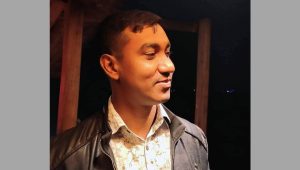
Md Palash, arrested in a case filed with Adabor Police Station over allegations of preparing to commit mugging, had three previous cases against him, according to an investigation report.
He had been out on bail in those cases on a bond of just Tk5,000.
Another suspect, Shafik, arrested over allegations of mugging in Shekhertek, also faced allegations of mugging, fighting and extortion.
Three cases were filed against him with Mohammadpur Police Station in 2015, 2018 and 2019 over allegations including theft, receiving stolen goods, fighting, assault with a weapon, attempted murder and intimidation.




He did not face difficulty securing bail after arrest.
The contrast is particularly visible in politically sensitive cases, where both prosecutors and police appear more active in keeping accused persons in custody.
Even after securing bail in one case, some remain in jail after being shown arrested in another.
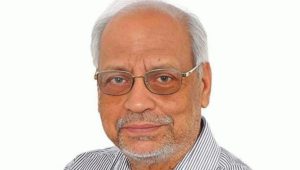
Former Begum Rokeya University Vice-Chancellor Professor Nazmul Ahsan Kalimullah was recently shown arrested in three cases.
He secured bail from the High Court on 14 June.
Dhaka Metropolitan Senior Special Judge Shahjahan Kabir allowed him to submit bail bonds on condition that he furnish a Tk100,000 bond and surrender his passport.
But his release was blocked after he was shown arrested on 30 July in an attempted murder case filed with Uttara West Police Station over the July movement.
He later secured bail in that case as well.
On 10 September, he was again shown arrested in a murder case linked to the July mass uprising.
Prosecution lawyer Muhammad Shamsuddoha Sumon said, “Kalimullah was involved in Awami League politics and was connected with the murder of Rubel.”
Asked why prosecution attention appeared weaker in cases involving mugging, extortion and terrorism, an assistant public prosecutor declined to comment.
“If I comment on this news, it will go against us. It would be suicidal. I cannot comment,” he said.
A senior police official, speaking on condition of anonymity, said police investigate cases, arrest suspects and produce them before court, but the decision on bail rests with judges.
“Police arrest an accused person and send them to court. After that, if the court grants bail, police do not know the reasons behind that decision,” he said.
He added that police had no direct control over whether an accused person was granted bail after being produced in court.
Supreme Court lawyer Manzill Murshid said the imbalance reflected broader weaknesses in the justice system.
“Because the rule of law is weak in the country, discrimination can be seen in the way prosecution lawyers carry out their duties. If the rule of law was stronger, prosecution would perform its duties according to the merits of each case rather than considering political identity or how much publicity a case receives,” he told TIMES.
Murshid also pointed to inadequate financial incentives for state lawyers.
He said many prosecution lawyers lose interest in ordinary criminal cases because they do not receive sufficient financial support from the government.
Some become occupied with other work or focus more on privately conducted cases that offer better earnings, he said.
Murshid called for transparency, qualifications, experience and professional competence to be prioritised over political considerations in the appointment of public prosecutors and assistant public prosecutors.