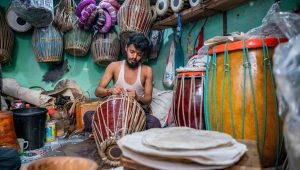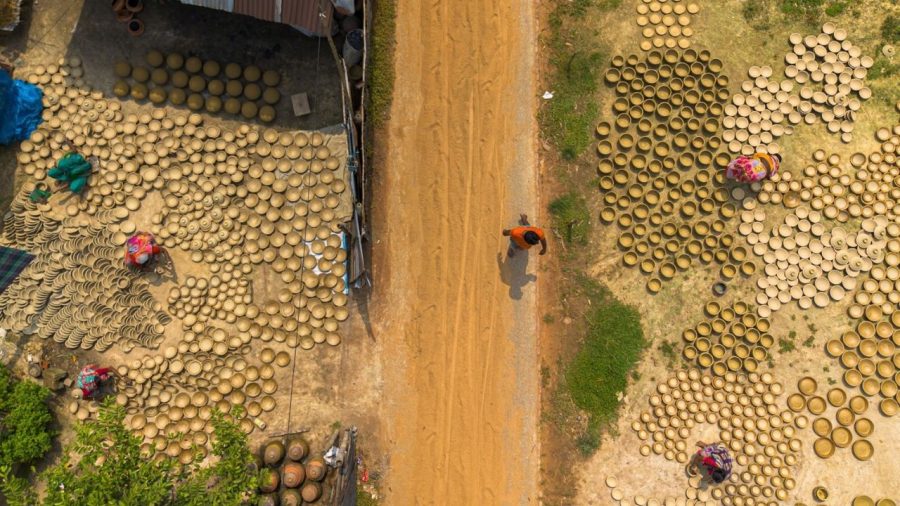



As Durga Puja approaches, activity has increased in the potters’ quarter of Hatkhola village in Khetlal upazila of Joypurhat district, where a small community of artisans continues to practise the traditional craft of pottery.
The potters become particularly busy in the weeks leading up to the festival, when rural fairs are held in connection with Durga Puja.
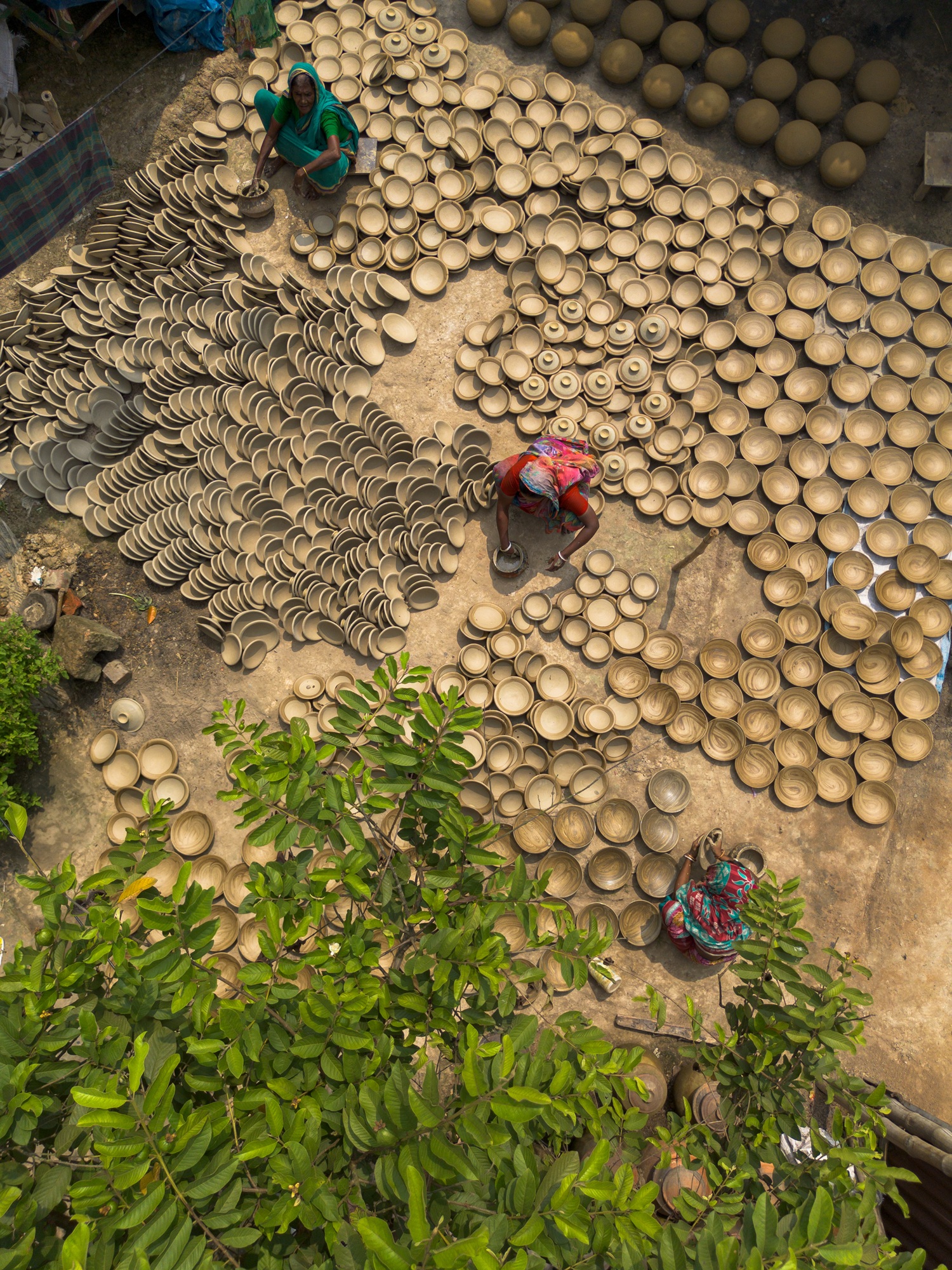
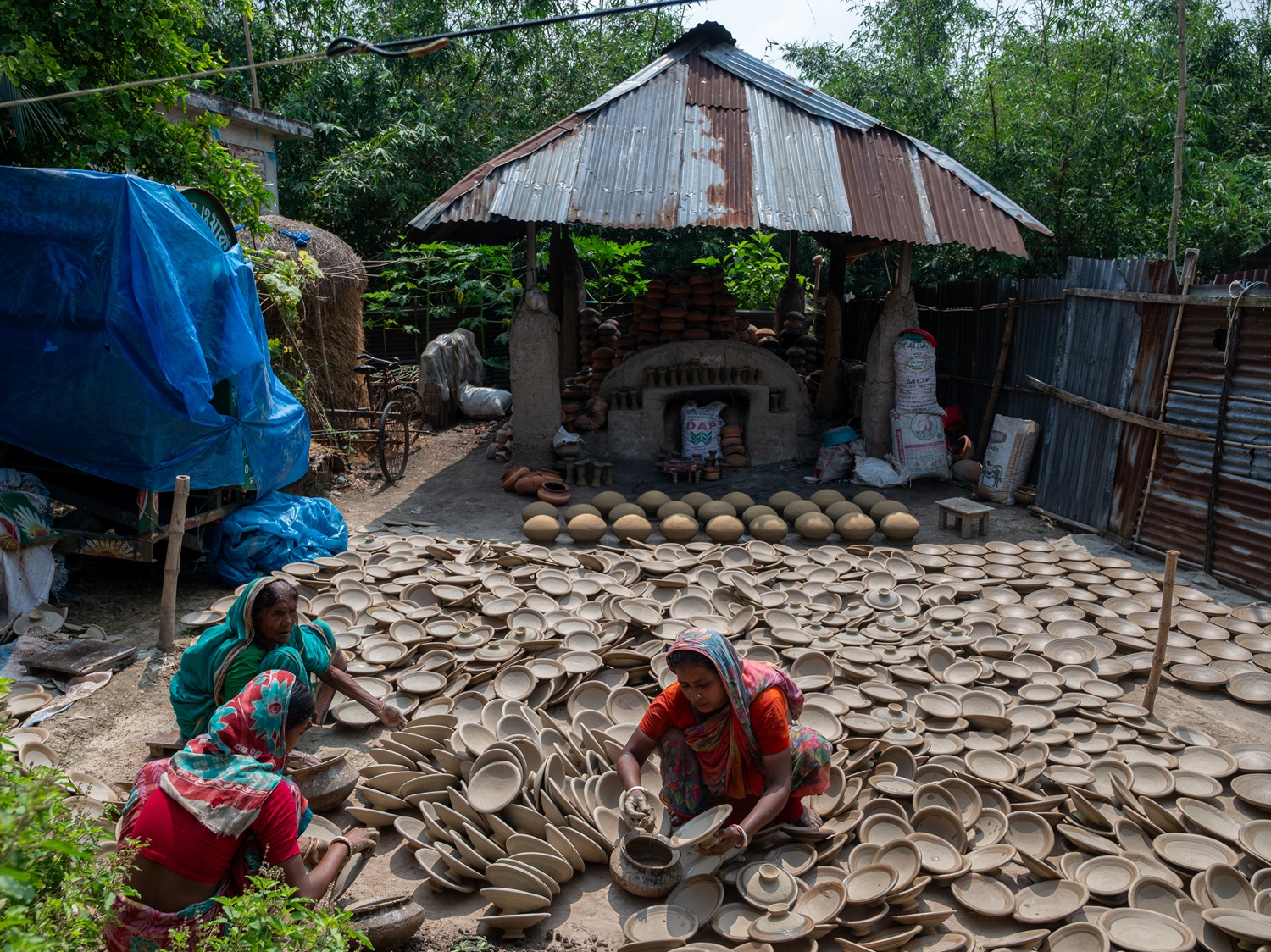
They make clay cooking pots, pitchers, piggy banks, and other household items to sell at the fairs. The rhythmic turn of the wheel and the shaping of wet clay fill the air, as generations-old skills are put to work once more.

The artisans said pottery has been passed down through generations in their families. But many fear they may be among the last generation to continue the occupation, as their children show little interest in taking up the craft.
The work is hard, the returns modest, and the lure of other livelihoods strong.



They also face growing competition from inexpensive plastic products, which have become widely used in households.
As demand for traditional clay products has declined, artisans say it has become increasingly difficult to make a living from pottery throughout the year.
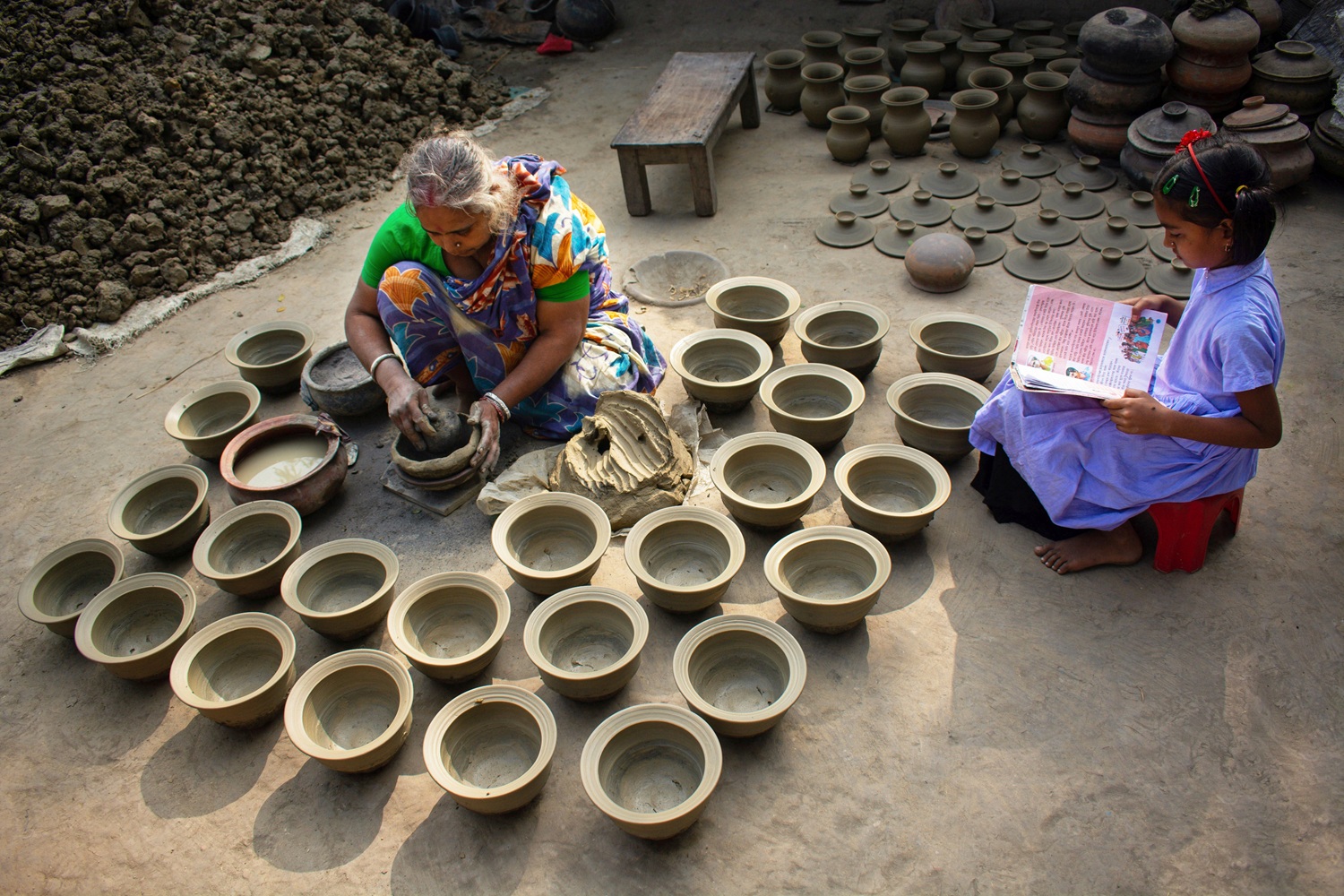
For many, the weeks before Durga Puja now represent the busiest – and most financially important – period of their calendar.
Despite these challenges, the potters continue working with clay, keeping alive a traditional craft that has been part of their families and community for generations.
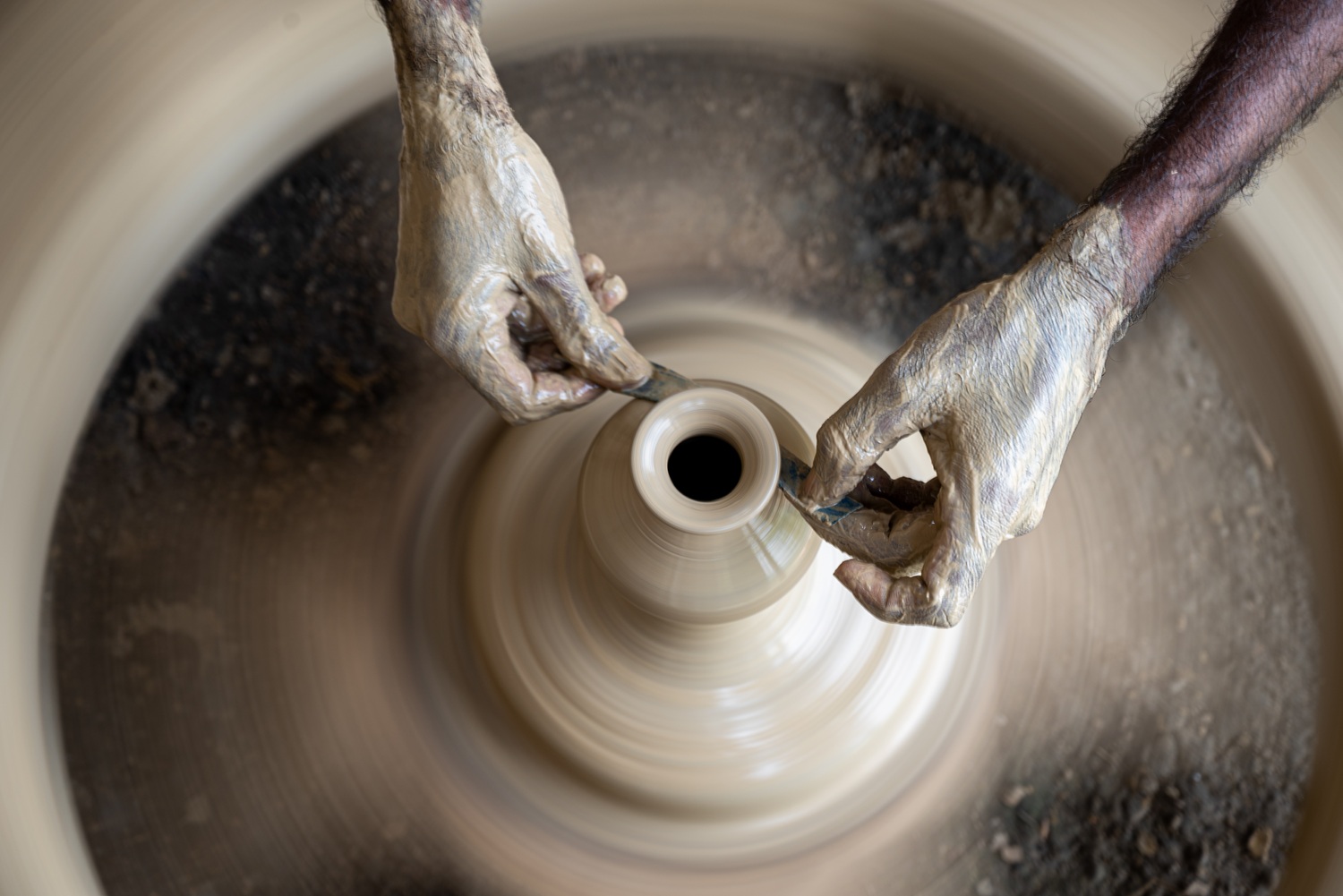
Their hands remember what machines cannot replicate: the patience of a craft learned in childhood, the rhythm of a wheel passed from parent to child, and the quiet dignity of creating something useful by hand.
For now, the kilns are burning and the wheels are turning. But whether the next generation will take up the craft remains uncertain, and with it, the future of a tradition that has shaped Hatkhola for generations.