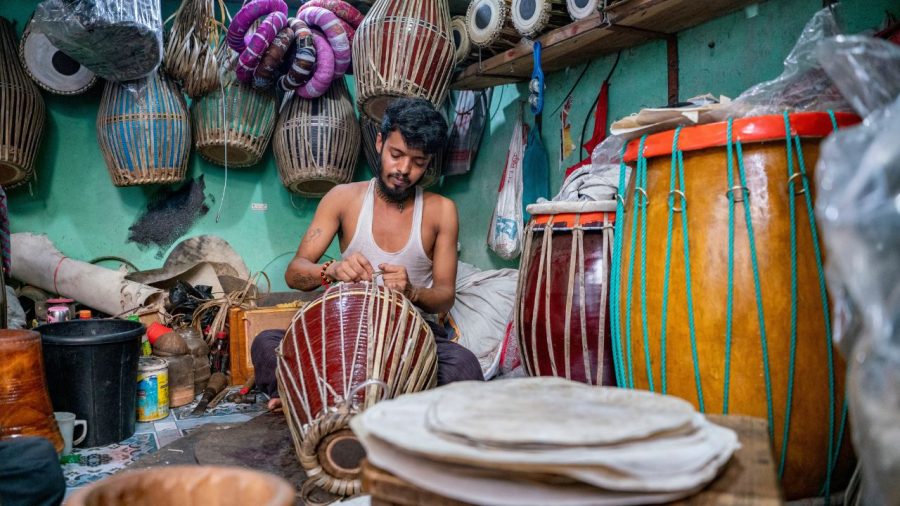



Patharghata in Chattogram city has a long-standing relationship with culture, folk music, and traditional religious rituals.
Particularly around Satish Babu Lane and Kalibari, a traditional hub of musical instrument making and repair has grown up.
Alongside making various leather instruments such as tablas, dhols, dhaks, khols, and dhamsas, the artisans here also repair old instruments.
According to local traders, the history of this leather musical instrument business in Patharghata spans nearly a hundred years.
Several hereditary families have been involved in this profession since the British era and before Partition.
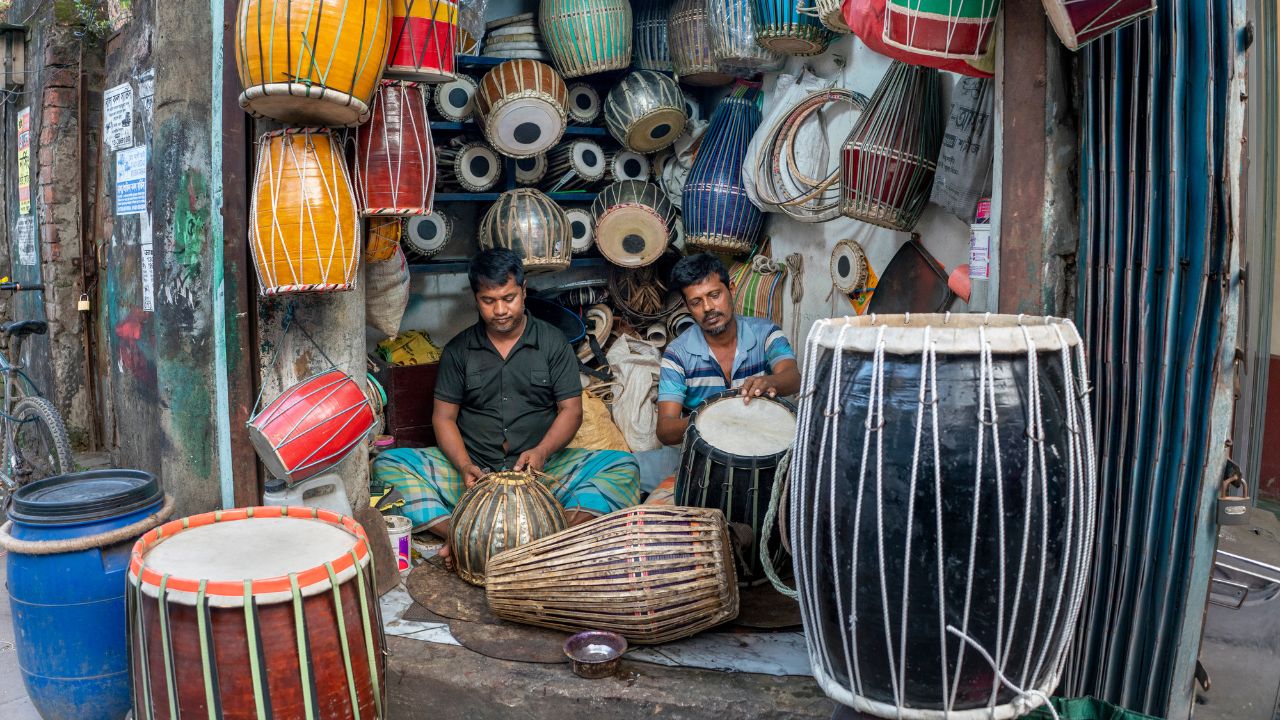
Generation after generation, the artisanal knowledge of making musical instruments has survived through their hands.
Many of the artisans learnt this work from their fathers or grandfathers.

Some have been making and repairing tablas, dhols, or khols with their own hands for four to five decades.
As a result, this business is tied not only to livelihood but also to family tradition.
The main materials of Patharghata’s artisans are wood, leather, and iron.
The shells of various instruments are made from shimul, mango, babla, or koroi wood.
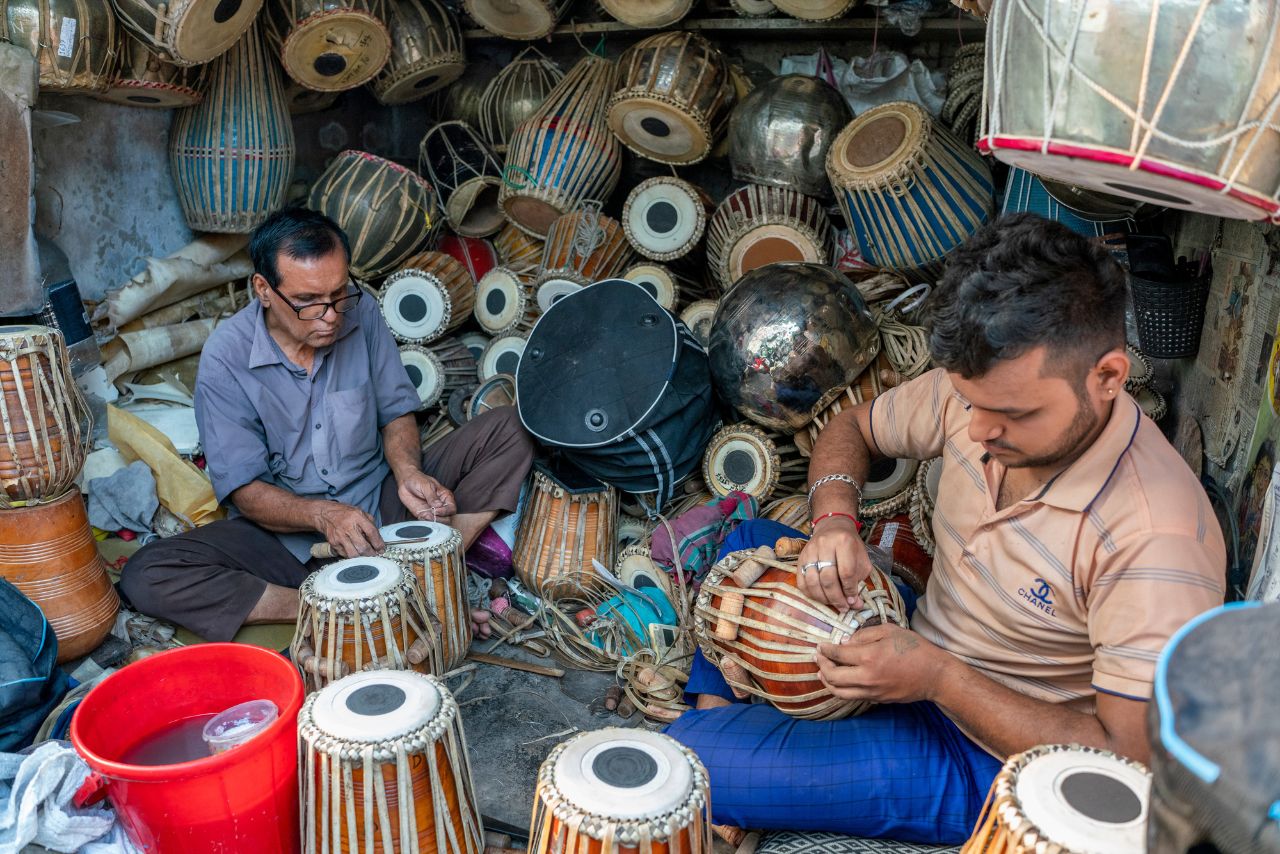
Then, leather is fitted onto them using a special method to create the main structure of the instrument.

In the case of tablas, delicate work is required, such as making the pudi or chhati from leather, fitting the sihai or black portion with gab, and adjusting the tension with rope or leather straps.
Every step requires experience and precise handiwork.
The artisans here make and repair various instruments, including tabla-baya, dhol, dhak, khol or srikhol, dhamsa, dugi, kada, and damru.
Replacing the worn-out leather of old instruments, fitting new pudis, tuning the scale of tablas, and adjusting the tension and pitch of dhols and dhaks are also their regular work.
For the artisans, this is not merely making an instrument by joining wood and leather.
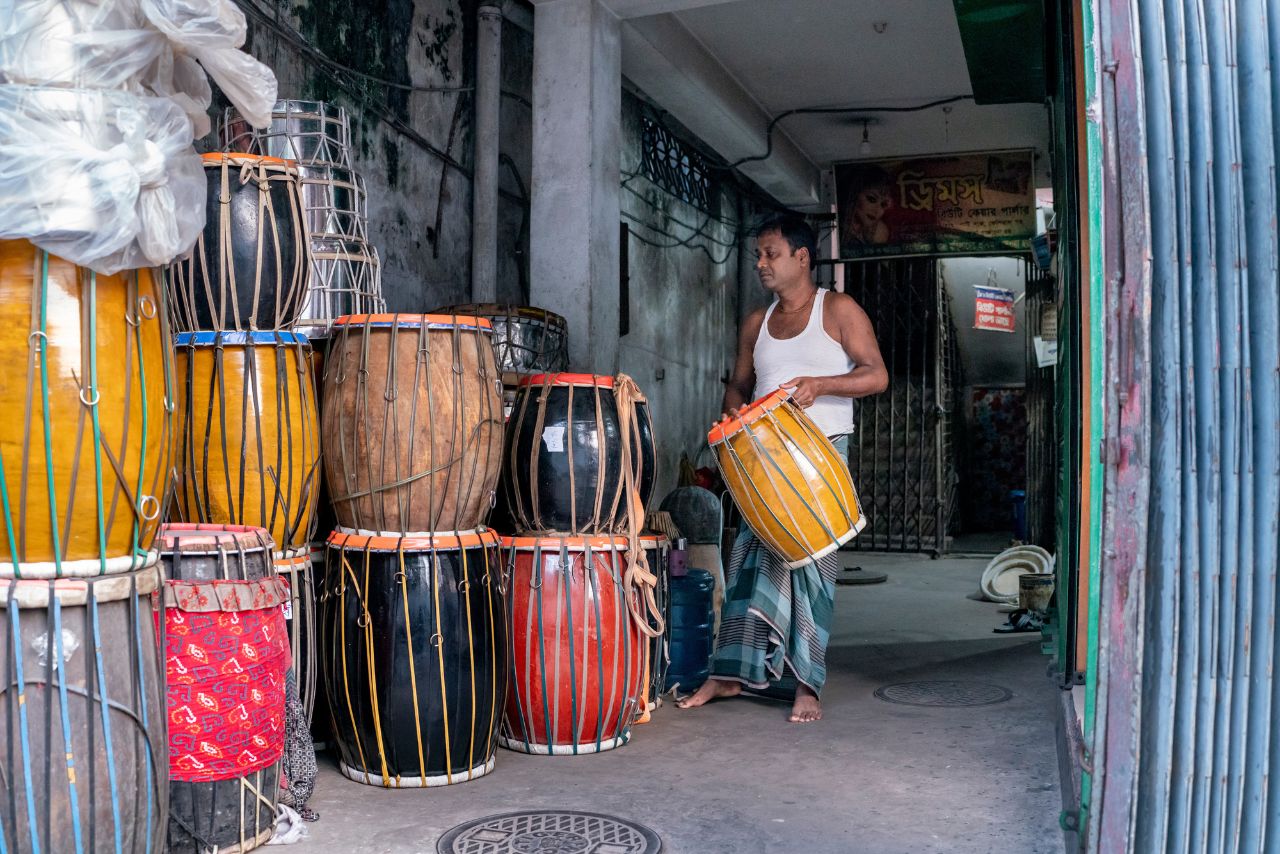
To keep an instrument’s sound right, they must pay attention to everything: the type of wood, the quality of leather, the tension, and the balance of the sihai.
Compared to other times of the year, the musical instrument traders and artisans of Patharghata become busiest, centring on Durga Puja.
Orders begin to increase well before Mahalaya.
Along with Chattogram city, puja organisers, dhakis, and instrument players from various areas come to Patharghata for necessary instruments and equipment.
Dilip, owner of Mridanga Bhandar at 34 Satish Babu Lane in Patharghata, said that currently, the sale of puja-centric tablas and related equipment is going on reasonably well.
He said that at present, the price of a pair of tablas is about Tk6,000.
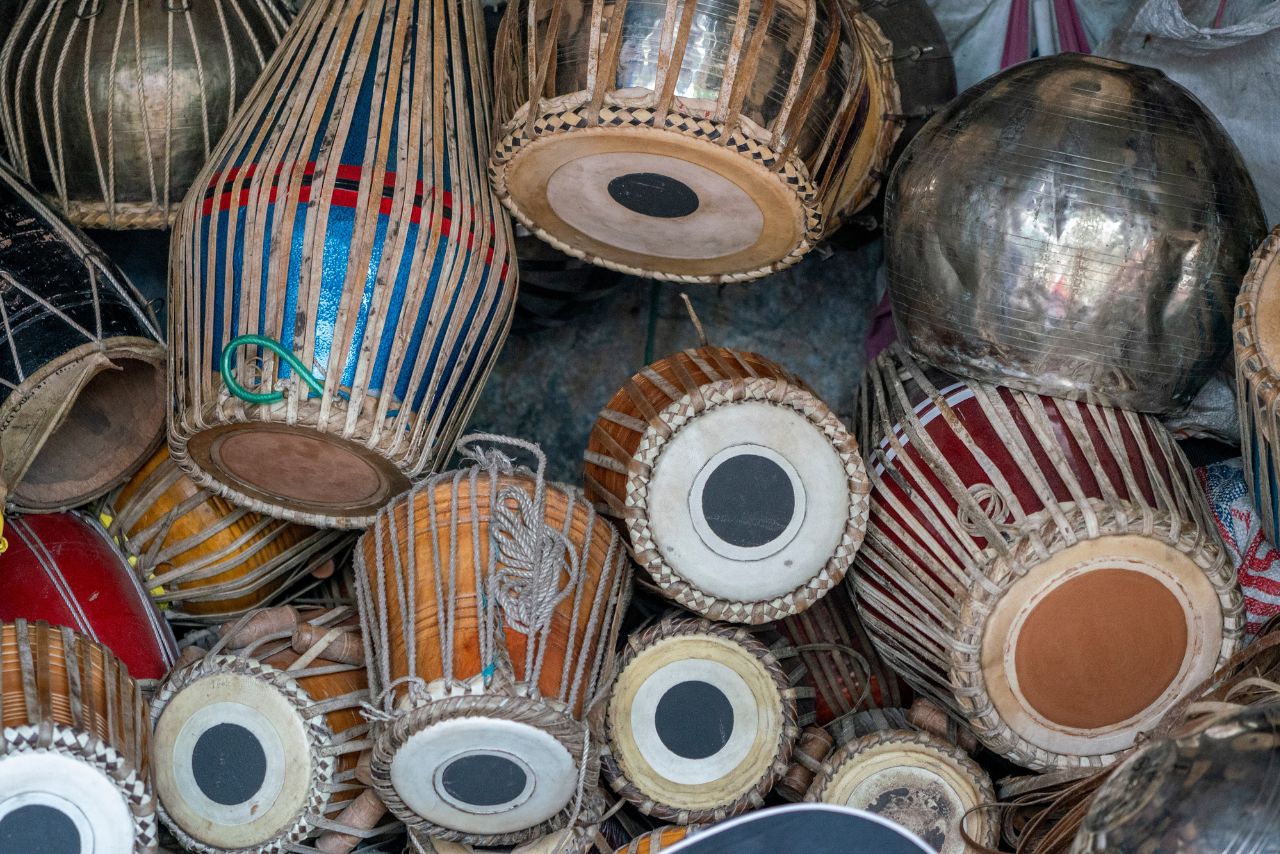
Photo: Zakir Hossain/TIMES
This includes a brass baya weighing about 2.5 kg, a Nilghat tabla, a bag, and a pair of baya.
Dilip said the rise in raw material prices is a major reason behind the increase in tabla prices.
The pyari that could once be bought for Tk1,600 now costs about Tk2,600. Along with this, other production costs and the price of leather have also increased.
For these reasons, although tabla prices have risen, the sales of nearby traders are not in a very favourable position.
Despite the challenges, the artisans of Patharghata continue their work.
Their hands remember what machines cannot replicate: the patience of a craft learned in childhood, the rhythm of a tradition passed from parent to child, and the quiet dignity of creating something that brings music to life.