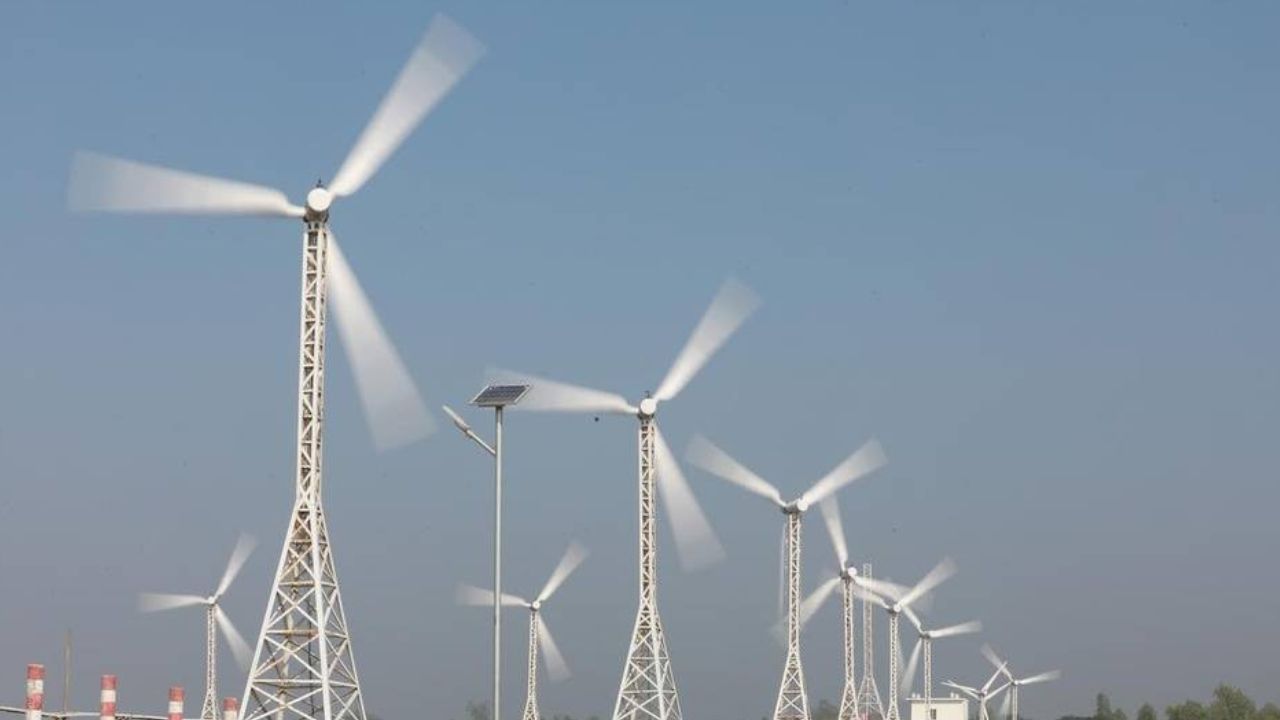



A Tk42 crore wind power plant built along the Jamuna River in Sirajganj has failed to generate electricity commercially even eight years after construction began, raising questions over the project’s planning, feasibility and accountability.
The plant, located at Crossbar-3 along the western bank of the Jamuna in the Malshapara area of Sirajganj town, was designed to generate 2 megawatts (MW) of electricity through eight turbines and feed it into the national grid.
Construction began in 2018 under Pan Asia Power Service Ltd, with completion scheduled for April 2019. However, the project remains incomplete and has not been formally handed over to the Power Development Board (PDB).
The project was delayed for various reasons, including relocation of the site, elections, the Covid-19 pandemic, complications over tower height and mechanical problems, according to people involved.
But the prolonged delay has raised questions about how Tk42 crore was spent and whether the project was properly assessed before implementation.

Locals said the turbine blades are rarely seen rotating, while recent reports suggest that the plant has not supplied electricity to the national grid. Any electricity generated is reportedly being used for the project’s own operations.
The project was planned to generate 2MW, but Engineer Fazlur Rahman, proprietor of Pan Asia Power Service Ltd, now says actual generation may be 1MW or less.
This has raised questions about whether wind speed, consistency of airflow and the project’s technical feasibility were adequately assessed before the project was approved.


Adequate wind flow is essential for wind power generation, while proper technical planning and management are also crucial for such projects.
Locals allege that the project suffered from planning deficiencies from the beginning and have called for an investigation into its feasibility study, design, tender process, cost estimates, implementation and repeated delays.
They also want the authorities to determine whether any irregularities or negligence occurred during construction and who should be held accountable for the failure to commission the project.
Saidur Rahman Bachchu, president of the Sirajganj Chamber of Commerce and Industry, said a wind power project cannot deliver the desired output unless sufficient wind flow is ensured.
“The fact that the turbines have not been operational for so long raises questions about the project’s planning and implementation. It should be reviewed immediately and effective measures taken,” he said.
He also alleged that the project was part of an income-generating plan of the previous government and that people were misled and public money was siphoned off.
Engineer Fazlur Rahman attributed the delay to the Covid-19 pandemic and complications over the height of the towers. He said steps were being taken to commission the plant soon.
However, he acknowledged that the plant may generate 1MW or less instead of the planned 2MW. The project has yet to be formally handed over to the PDB, while local officials have provided no clear account of its current status. Some said they were unaware of the details, while others referred inquiries to different offices.
Locals have called for an independent investigation to determine whether the project was economically and technically viable, whether the Tk42 crore expenditure was justified and whether proper feasibility studies were conducted before its approval.
They also urged the authorities to repair, test and commission the plant without further delay if it is found to be viable.
After eight years, the eight towers standing on the banks of the Jamuna have become a symbol not only of a stalled power project but also of broader questions over the planning, implementation and accountability of publicly funded development projects.