


In Bangladesh’s garment factories, the scale of the country’s menstrual hygiene problem is easy to miss precisely because it hides in plain sight. Research on the sector has found that roughly 60 per cent of female ready-made garment workers manage their periods using fabric rags collected from the factory floor – often unwashed, unsterilised, reused – a practice linked to recurring infections that leaves close to three-quarters of those women unable to work for nearly a week each month.
Multiply that lost time across an industry that employs millions of women, and a private health issue becomes a measurable economic one.
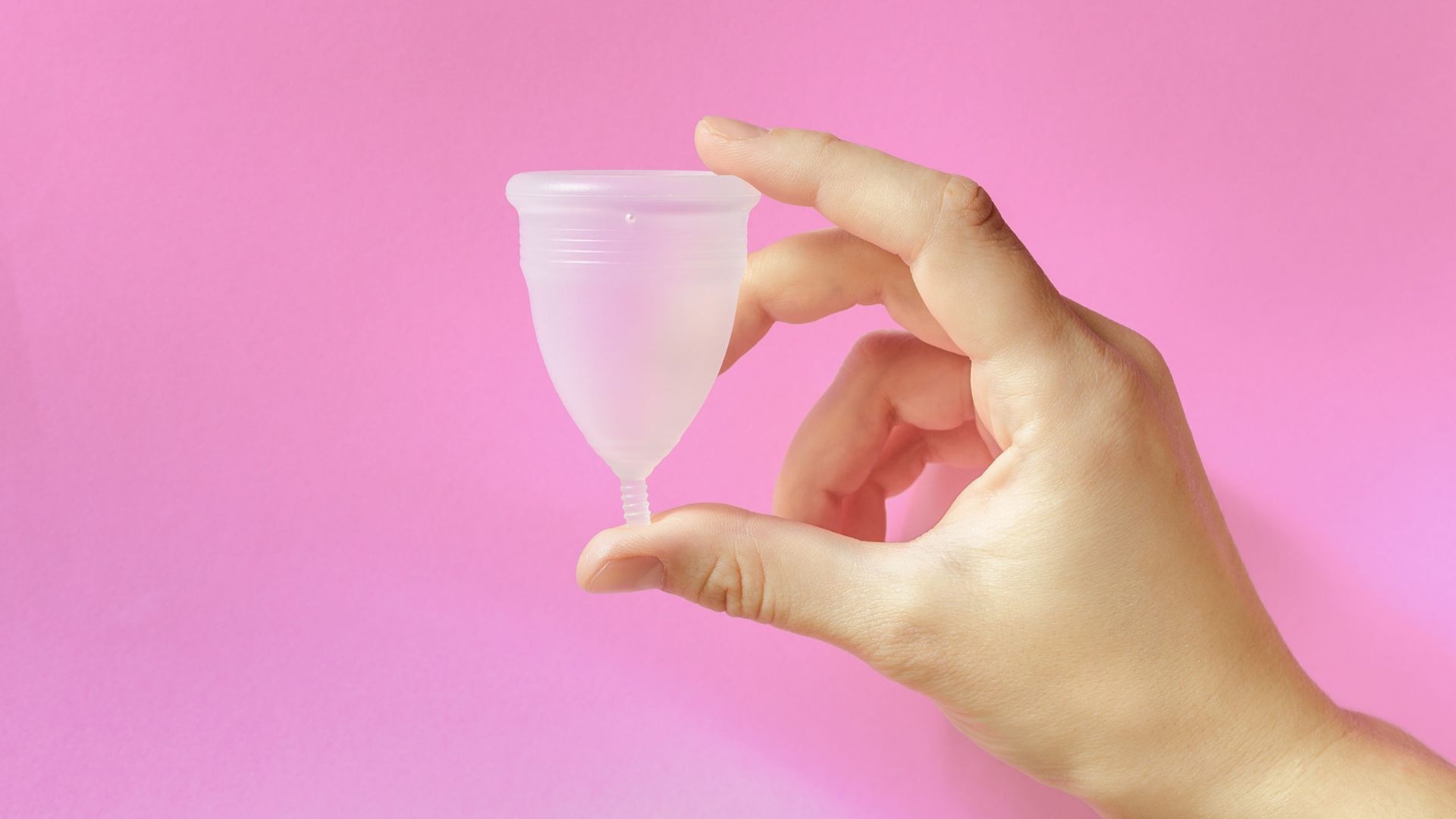
Menstrual cups – small, flexible, funnel-shaped devices made of medical-grade silicone or latex that are inserted to collect rather than absorb period flow – are one of the few products with a documented track record of solving exactly this kind of problem elsewhere in the world. In Bangladesh, however, they remain close to invisible.
Unlike a pad or tampon, a menstrual cup is not thrown away after use. Emptied, rinsed, and reinserted throughout the day, and sterilised in boiling water between cycles, a single cup can last several years, a stark contrast to a monthly recurring cost of disposable pads that, for many low-income women, is not a minor expense. Global research has repeatedly found cups to be a safe, effective, and notably eco-friendly option, generating a fraction of the waste that disposable products do over the same period of use.

Yet in Bangladesh, awareness remains close to nonexistent outside a small circle of urban, internet-connected women. National surveys illustrate how uneven basic menstrual knowledge already is: In one district-level study in Netrokona, only 34 per cent of girls said they understood what was happening to them at the time of their first period, among the lowest such figures recorded in comparable South Asian and Southeast Asian surveys. Against that baseline, a product requiring internal insertion and a working knowledge of one’s own anatomy faces a steeper introduction than pads ever did.
The barriers standing between that early advocacy and mainstream adoption are structural as much as cultural. Local manufacturing is essentially nonexistent, and availability in ordinary pharmacies is limited enough that most interested buyers still rely on pages like Antobihin and Menstrual Cup by Mumble rather than a nearby shop.




Research on reusable menstrual products more broadly has found that where alternatives to disposable pads exist at all, awareness and correct usage lag far behind availability -one study found only 9 per cent of women using reusable cloth followed the recommended cleaning and drying process, a warning sign for any reusable product introduced without sustained hygiene education alongside it.
Cultural stigma compounds the access problem. Surveys of menstrual practices in Bangladesh describe restrictions still placed on menstruating women and girls – from being kept away from prayer and places of worship to avoiding markets altogether – alongside practices like burying used menstrual material rather than discussing it openly.
In that climate, a product that must be physically inserted carries an extra layer of hesitation beyond ordinary unfamiliarity, echoing concerns documented in similar early-adoption studies elsewhere, where some young women worried, inaccurately, about the cup’s effect on virginity.
Practical hygiene infrastructure matters too. A cup ideally requires access to clean, private water for rinsing between uses – a resource not guaranteed in every factory floor bathroom, school toilet, or rural home, which helps explain why interventions in Bangladesh have historically focused on disposable or reusable pads rather than cups.
None of this means the cup is a poor fit for Bangladesh; advocates argue it may be an especially strong one for exactly the population currently underserved by pads: Low-income women and garment workers for whom a recurring monthly cost is a genuine burden, and whose workplaces already lack the reliable access to disposal that used pads require. A cup purchased once and maintained properly removes both the recurring cost and, done correctly, much of the infection risk tied to unwashed fabric.
Realising that potential, researchers and advocates argue, requires more than awareness campaigns alone. It calls for local manufacturing to bring cost down further, wider pharmacy distribution so buyers aren’t limited to Facebook groups, private water access in factories and schools, and menstrual health education that treats the cup as a legitimate option rather than a foreign curiosity, ideally reaching men and community elders as well, given how much of the current stigma is enforced socially rather than medically.
For now, the menstrual cup in Bangladesh remains what it has been for several years: A product with a small, devoted following, a handful of determined advocates, and a case that has yet to reach the women who might benefit from it most.