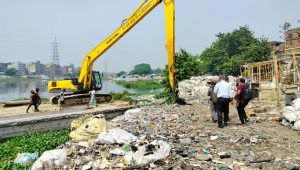
Every day, millions of homes across Dhaka churn out seven thousand tonnes of waste officially, a relentless tide of refuse that has metastasised into an urgent threat to both public health and the environment.
A government initiative to mirror China’s success by generating electricity from this urban detritus remains stalled, failing to see the light of day.
Left with nowhere to go, the daily accumulation of garbage has erected two colossal, synthetic mountains on the city’s flanks. Officially, these sites are designated as landfills, yet one reached full capacity nine years ago and the other five years ago.
Compelled by a lack of space, authorities continue to pile waste onto these towering, unstable peaks, raising the perilous prospect of catastrophic landslides.
In a desperate bid to keep these artificial summits from climbing any higher, waste managers routinely resort to setting them ablaze.
The resulting infernos consume vast quantities of plastic and polythene, choking the air with a toxic smog that environmentalists and medics warn is actively poisoning the population.
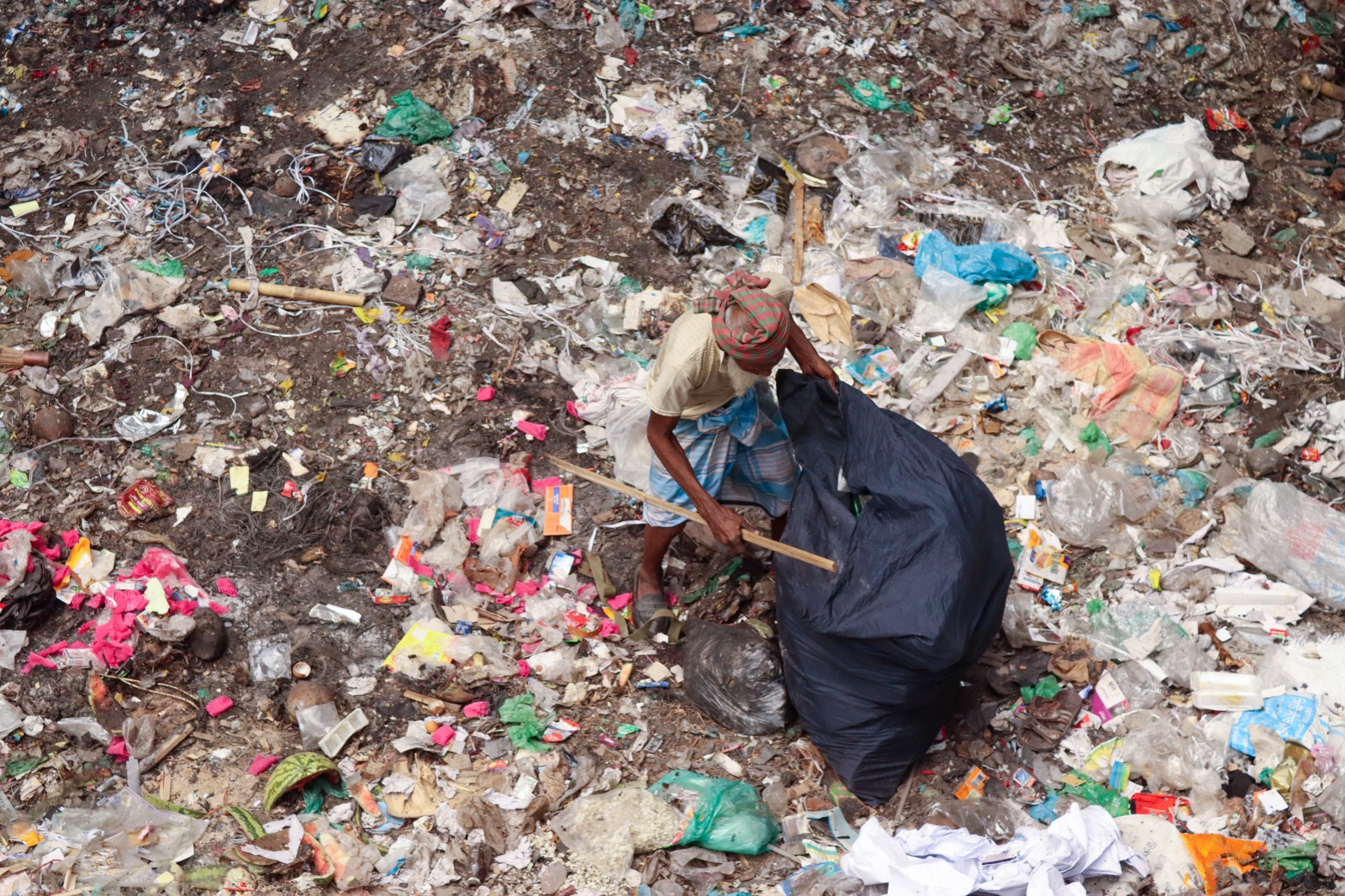
To the north-west, just beyond Gabtoli, lies the Aminbazar landfill, where visitors are instantly assaulted by a sickening, pervasive stench.
Remarkably, settlements and agricultural plots sit right on its doorstep. The crops grown in this fouled earth are routinely sold to the consumers of Dhaka, yet the government has never seen fit to investigate whether this produce is actually safe for human consumption.
In Nagarkonda, the area directly behind the landfill, 54-year-old farmer Mohammad Malek coaxes gourds, potatoes, and coriander from the compromised soil. The yields are poor, a failure he attributes to the constant smoke and the dark, toxic runoff locally dubbed “acid water”.
Pointing toward the towering heap of refuse, Malek encapsulates the daily reality of the community, “It is not only burning our crops, it is also eating us.”
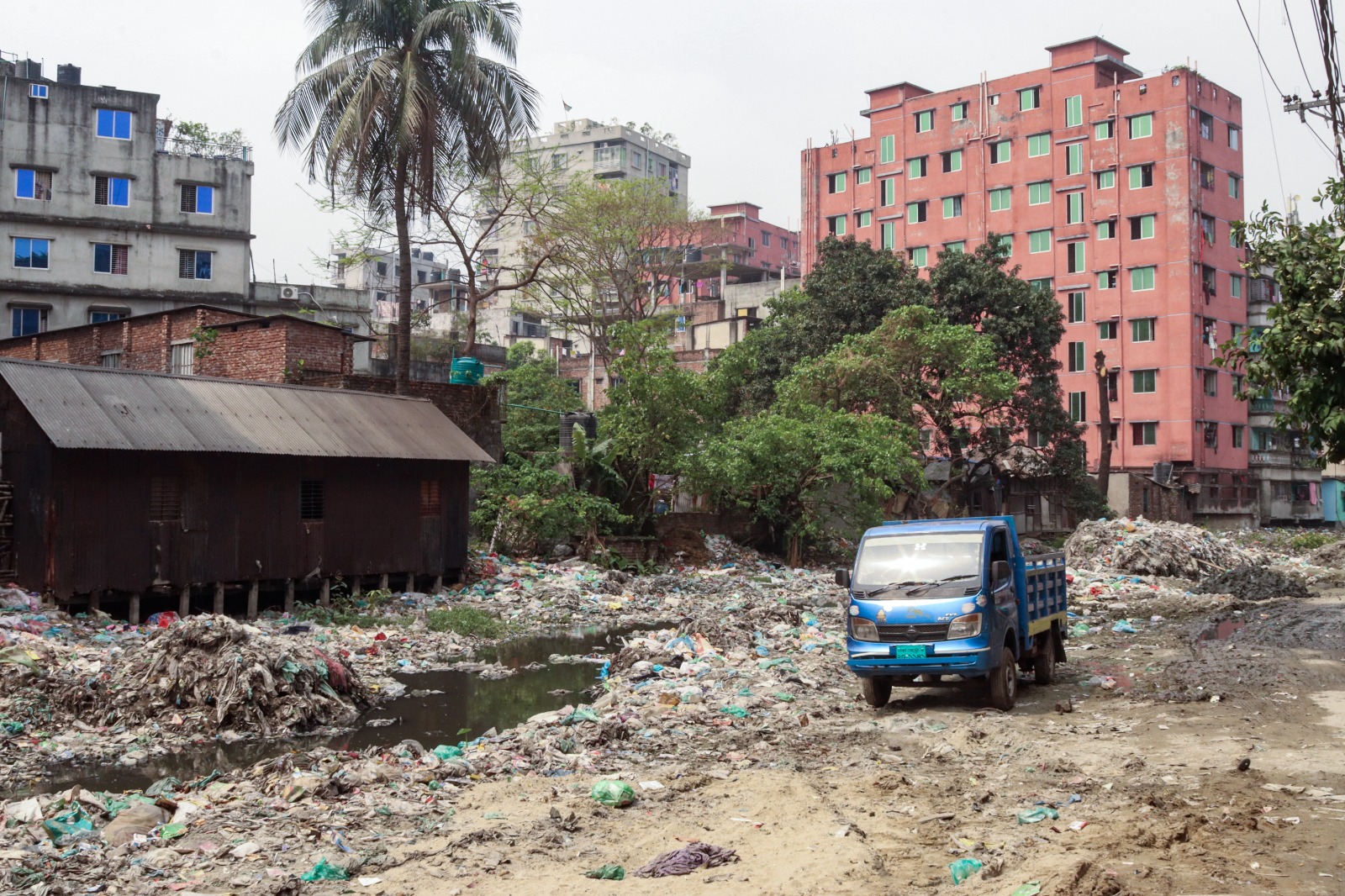
Scientifically known as leachate, this highly concentrated liquid waste leaks continually from the site alongside carbon monoxide-rich smoke, ravaging local agriculture and taking a severe toll on the human body.
“It is hollowing me out from the inside,” Malek says.

The transformation over the past two decades has been devastating.
Before the city corporation’s garbage trucks began arriving in 2007, these lands flourished with boro rice crops and the local waterways teemed with fish, sustaining a community built on farming and fishing.
Today, the misery of these urban fringes is mirrored to the south-east in Demra, where the Matuail landfill forms Dhaka’s second garbage mountain.
Prevailing winds regularly carry toxic gases from these sites directly into the heart of the city.
Environmental scientist Dr Atiq Rahman, who is the executive director of Bangladesh Centre for Advanced Studies, warns that unplanned waste management, open-air burning, and structurally weak leachate control are quietly triggering a long-term, systemic crisis across Dhaka’s food chain, water supply, air quality, and public health.
Aminbazar chokes under mounting pollution
The Aminbazar landfill, originally established as a temporary 52-acre fix in 2007, outlived its lifespan nearly a decade ago in 2017. Yet it remains a hyper-active hub of pollution.
Every day, an average of 570 trucks under the Dhaka North City Corporation rumble into the site from 57 secondary transfer stations.
With each vehicle carrying between nine and 12 tonnes of refuse, the landfill is choked with an estimated 5,130 to 6,840 tonnes of fresh waste daily. But the DNCC claimed that only about 3,000 to 3,500 tonnes of fresh waste are generated in its area.



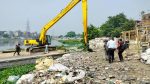
While local residents allege that fires are deliberately stoked using chemicals to manage the volume, municipal officials downplay the claims.
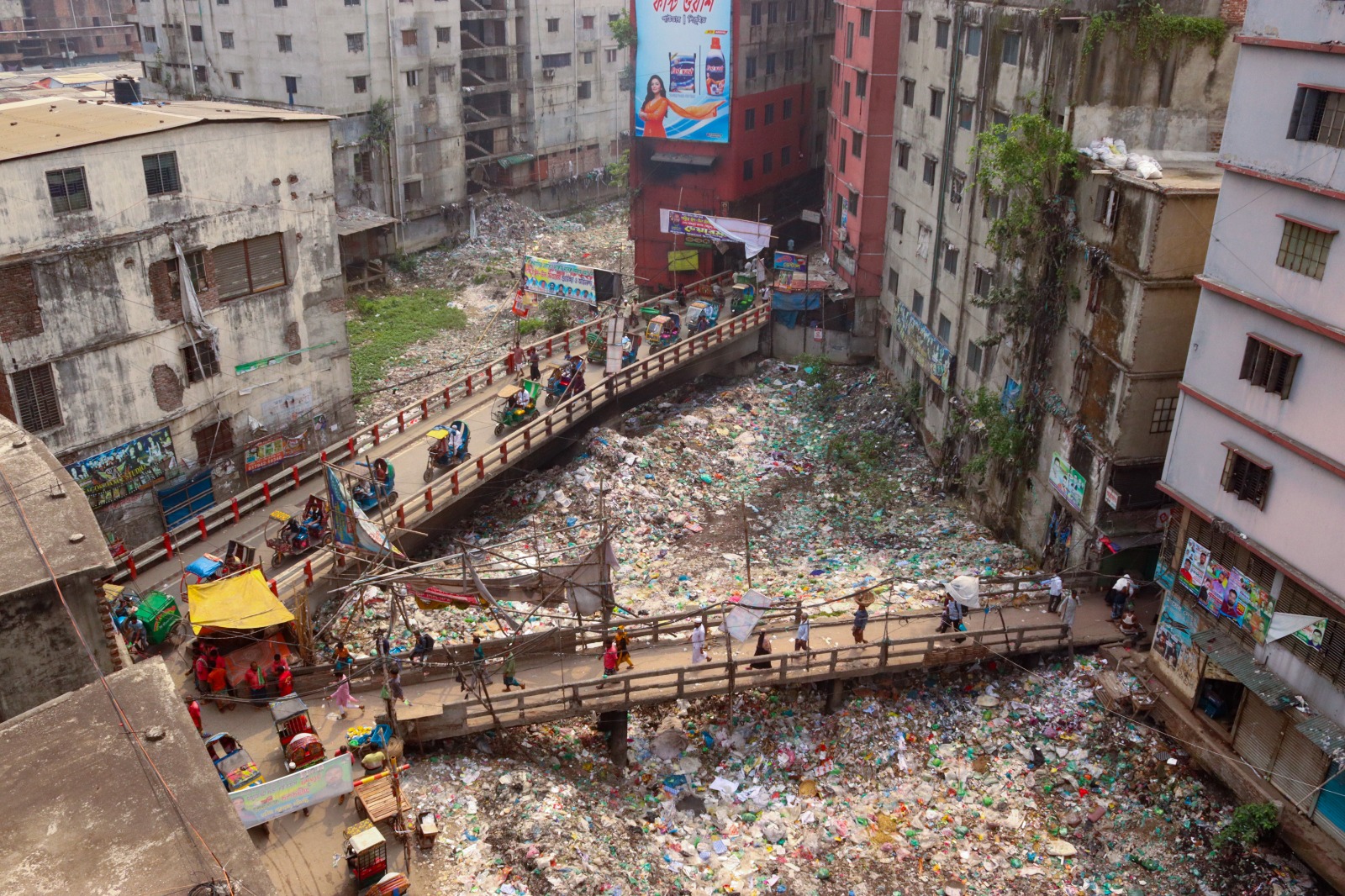
Md Arifur Rahman, DNCC’s additional chief waste management officer, insists that any blazes are spontaneous.
“Fires can occur naturally beneath the piles,” he says. “However, if a large-scale fire breaks out, we have systems in place to control it by spraying water.”
The reality on the ground tells a more suffocating story.
Billowing smoke rises continuously from all sides of the landfill, drifting lazily wherever the wind dictates into the settlements behind.
Beneath this toxic shroud, a semblance of daily life persists: children play in open fields, the elderly take evening walks, and shepherds tend to cows and goats. But there is no relief.
Vegetables grown in the surrounding fields, including water spinach, spinach, red amaranth, and coriander, are routinely washed in the black, foul waters of the adjacent Kanyapara canal before being dispatched to major Dhaka kitchen markets in Mirpur, Mohammadpur, and Dhanmondi.

The corrosive nature of this environment is felt acutely by those working the land. “In the past, a bamboo fence would last until the rainy season,” says Md Badal, as he rinses coriander leaves in the canal. “Now, it rots and falls apart before a single crop is harvested. Even the sickle I use to work deteriorates quickly.”
Nearby, a thick, fog-like smog blankets the canal even in the middle of the day, completely obscuring sand-carrying ships just 500 metres away.
The hidden toll of this contamination is starkly quantified by science.
A study by the Bangladesh University of Engineering and Technology (Buet) revealed that lead levels in the soil within 450 metres of the dumping site are up to three times higher than safety limits set by the United States Environmental Protection Agency.
The same research flagged a high health risk from arsenic in the groundwater, recording a Landfill Pollution Index (LPI) of 12.44 in the site’s southern zone – well above the 7.37 threshold that denotes “very high pollution”.
This localised ecological disaster feeds into a broader national crisis; Bangladesh ranks second globally for air pollution according to IQAir, with World Bank data attributing 11 per cent of Dhaka’s dismal air quality directly to the open burning of waste.
Pollution drives hospital surge
The human cost of this ecological crisis is spilling directly into local clinics, where doctors are witnessing a stark escalation in pollution-linked illnesses.
Village doctor Mohammad Shamsuddin, practicing in the Nagarkonda area for four decades, has watched community health deteriorate rapidly.
“In recent years, there has been an abnormal increase in patients suffering from respiratory problems, asthma, allergies, and skin diseases,” he says. “We never used to see so many stroke patients, but now stroke is one of the leading causes of death here. Respiratory issues in children have become as common as the seasonal cold or flu; almost every household now owns a nebuliser.”
Environmental expert Dr Atiq Rahman warns that open-air incineration of refuse releases a lethal cocktail of pollutants, including PM2.5, PM10, dioxins, and furans, sharply escalating long-term risks of cancer and cardiovascular disease. This toxic smog threatens pregnant women with potential foetal development disruption.
Dr Rahman also notes that heavy metals accumulating in soil are infiltrating the local food chain through contaminated crops, paving the way for kidney failure, neurological disorders, and other chronic conditions.
Meanwhile, the Matuail landfill continues its unchecked expansion.
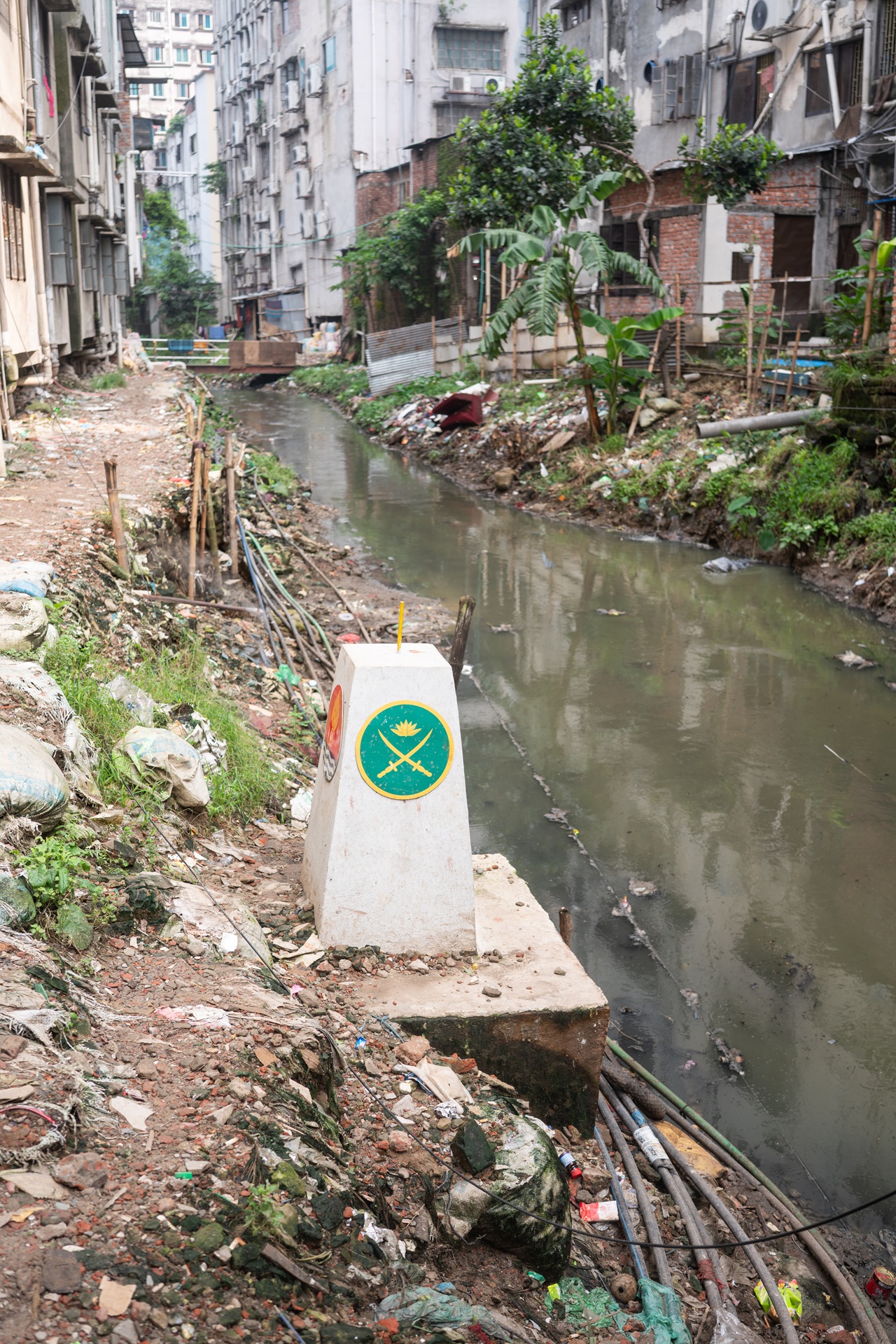
What began as a 50-acre dumping ground in 1989 has metastasised into a sprawling 181-acre wasteland, swallowing 3,200-3,500 tonnes of refuse daily from the Dhaka South City Corporation area. Authorities claim mitigation steps are underway.
Md Mahabubur Rahman Talukder, DSCC’s chief waste management officer, insists a one-foot soil layer is being laid over refuse to suppress methane emissions and prevent spontaneous combustion.
“Half of the work has already been completed, and we aim to cover 100 acres by December,” he claims, adding that fire hydrants are being installed.
Yet the site reveals a stark disconnect between rhetoric and reality. There is no evidence of promised soil covering; the yard remains an exposed expanse of raw refuse, where women and child labourers scavenge daily.
Local residents contradict official assurances, alleging fires are deliberately set after dark. “You cannot go near the site after dusk,” says Mohammad Rudra, a local resident. “They come out at night and deliberately set the garbage piles ablaze with kerosene.”
Waste-to-energy only in the plan
In the long term, waste-to-energy technology could have offered a definitive escape from this crisis.
The government certainly harboured such ambitions; in December 2021, an agreement was signed with the Chinese firm CMEC to build a waste-to-electricity plant at Aminbazar.
Yet, despite four separate deadline extensions, the project remains entirely on paper.
The missed opportunity is stark when contrasted with China’s own urban landscape. There, modern mechanical incinerators burn waste at temperatures exceeding 1,000°C, shrinking landfill volumes by up to 95 per cent.
Megacities like Beijing and Shenzhen are actively pursuing “zero landfill” targets.
In Beijing alone, a single waste-based power plant generates roughly 600 million kilowatt-hours of electricity each year.
The potential for Bangladesh is immense.
“The country generates 25,000 to 30,000 tonnes of waste every day, with around 7,000 tonnes coming from Dhaka alone,” says Khan Zahirul Islam, associate editor of the Canadian Journal of Development Studies. “If this waste were converted into power, it could generate between 300 and 400 megawatts of electricity daily.”
For now, however, that energy remains trapped beneath mountains of smouldering refuse.