


Once, the MV Kafela-1 sailed the ocean, carrying goods and people, racing across the waters.
But in 2016, Cyclone Roanu struck, leaving the ship stranded on the char of Patenga beach in Chattogram.
Since then, 10 years have passed.
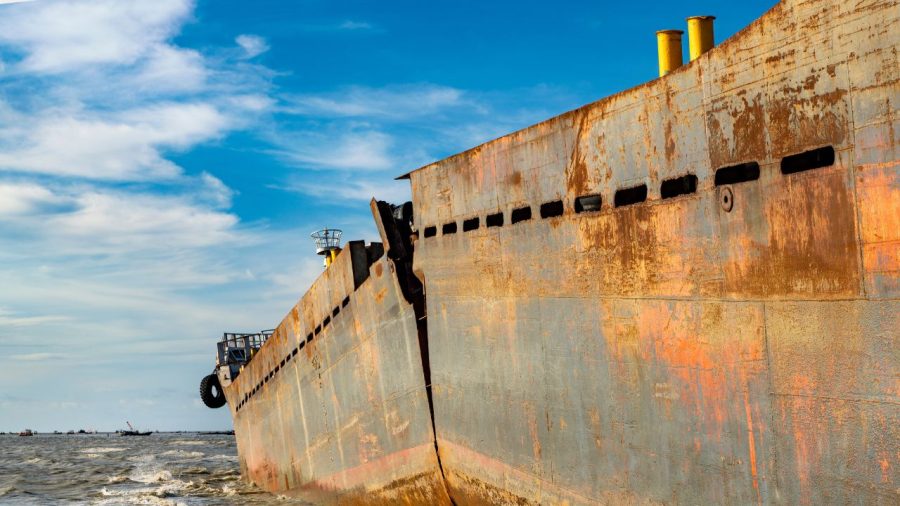
In the daily battle with the sea’s waves and tides, the ship’s iron body has slowly eroded.
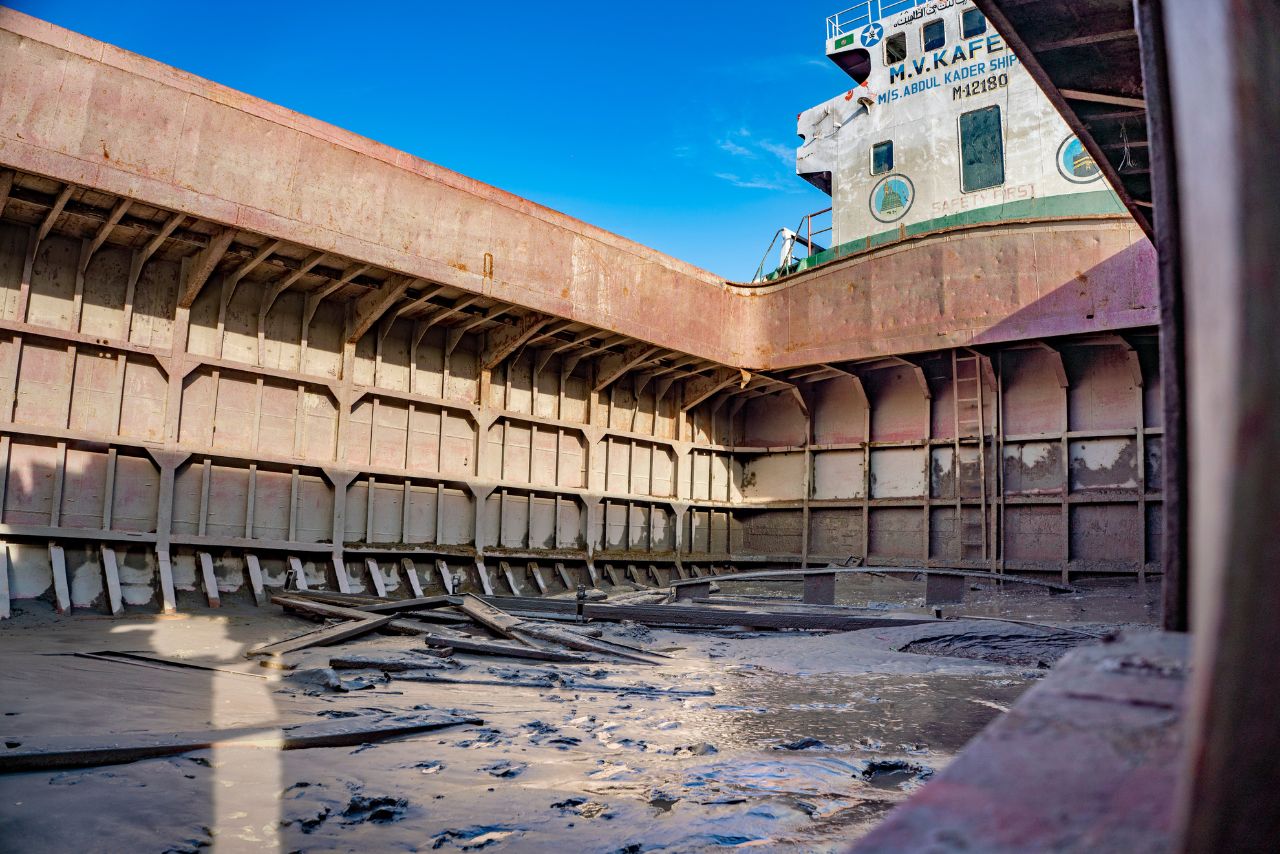

The saltwater’s relentless assault has rusted its structure.
A vessel that was once powerful has, with the passage of time, turned into a broken, crumbling metal frame.
At one point, Kafela-1 broke in two down the middle.
Now, sand has begun to accumulate on both sides.




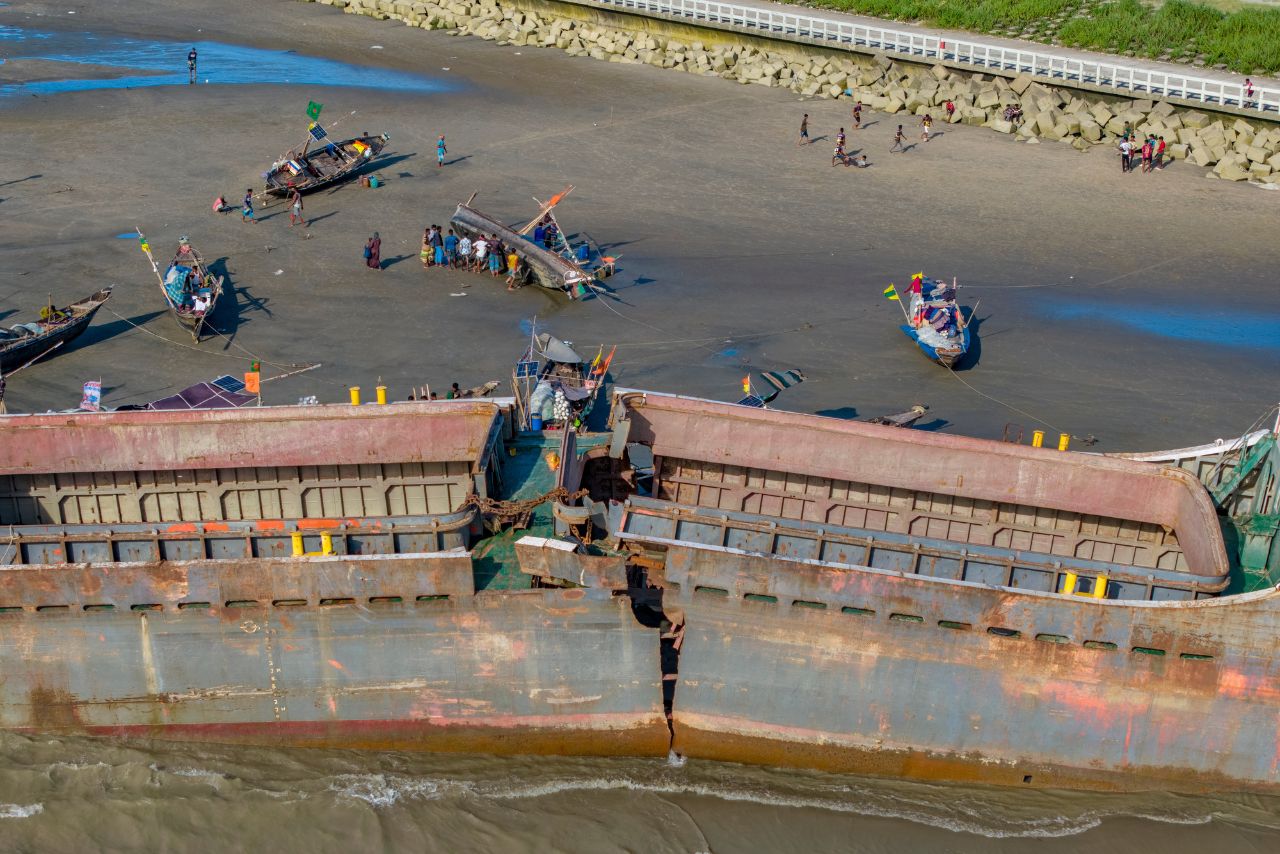
A new char is slowly emerging around the ship, almost as if nature itself is creating a new landscape around the abandoned vessel.
During low tide, the scene becomes even clearer.
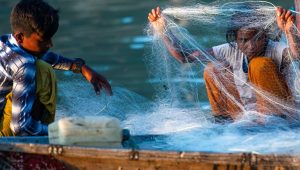
Small fishing boats gather on that char around the ship’s broken structure.
Fishermen get off their boats, unload goods, and head back out to sea.
Where a large ship once ran aground, a small workplace of fishermen’s daily lives has now grown up.
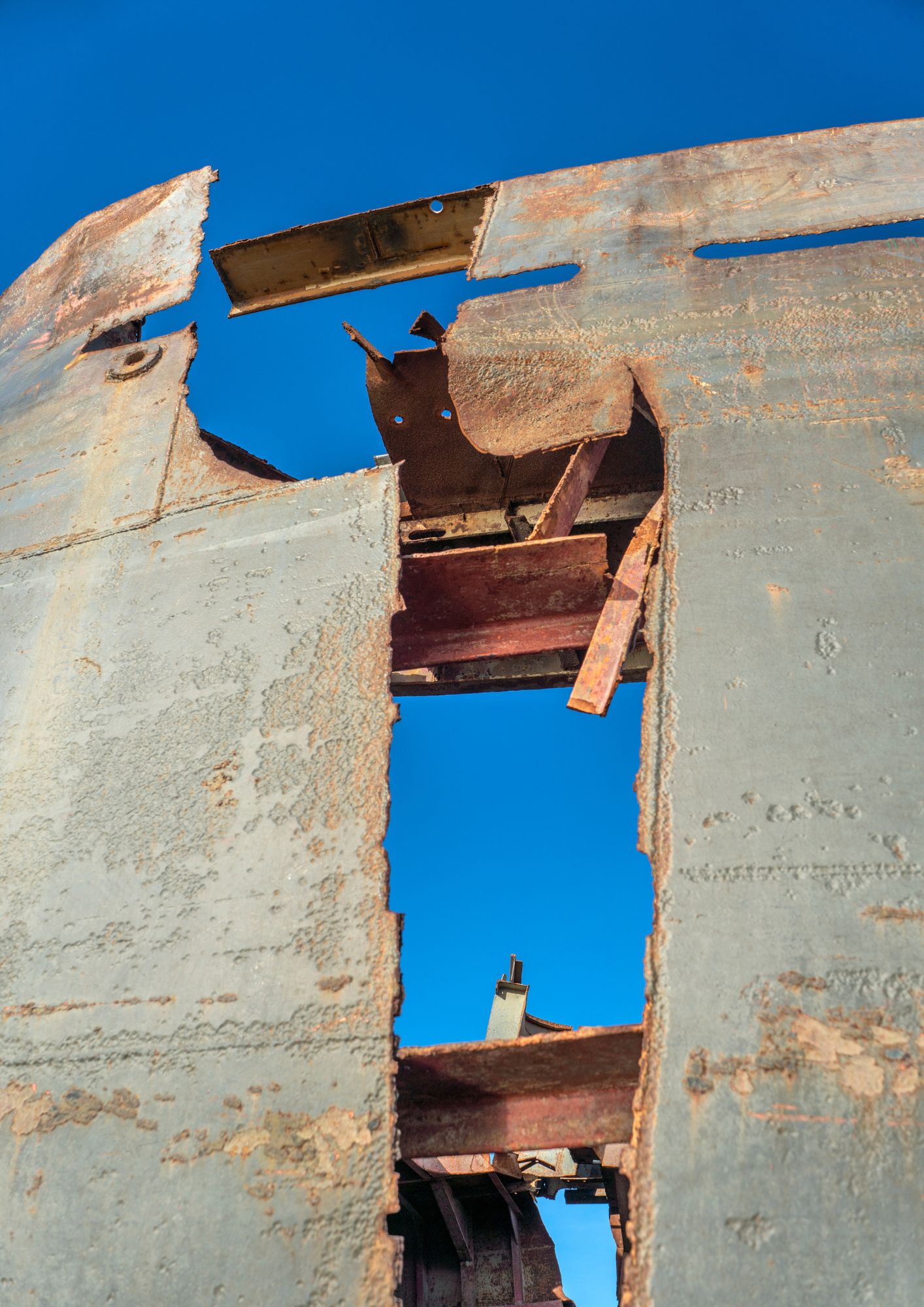
The sea’s water now flows through the ship as well.
The gaps in the iron plates, the rusted frame, and the broken parts seem to tell the story of time’s long erosion.
From a distance, it seems the ship is no longer a separate object; it has merged with Patenga’s sea, char, boats, and people’s lives.
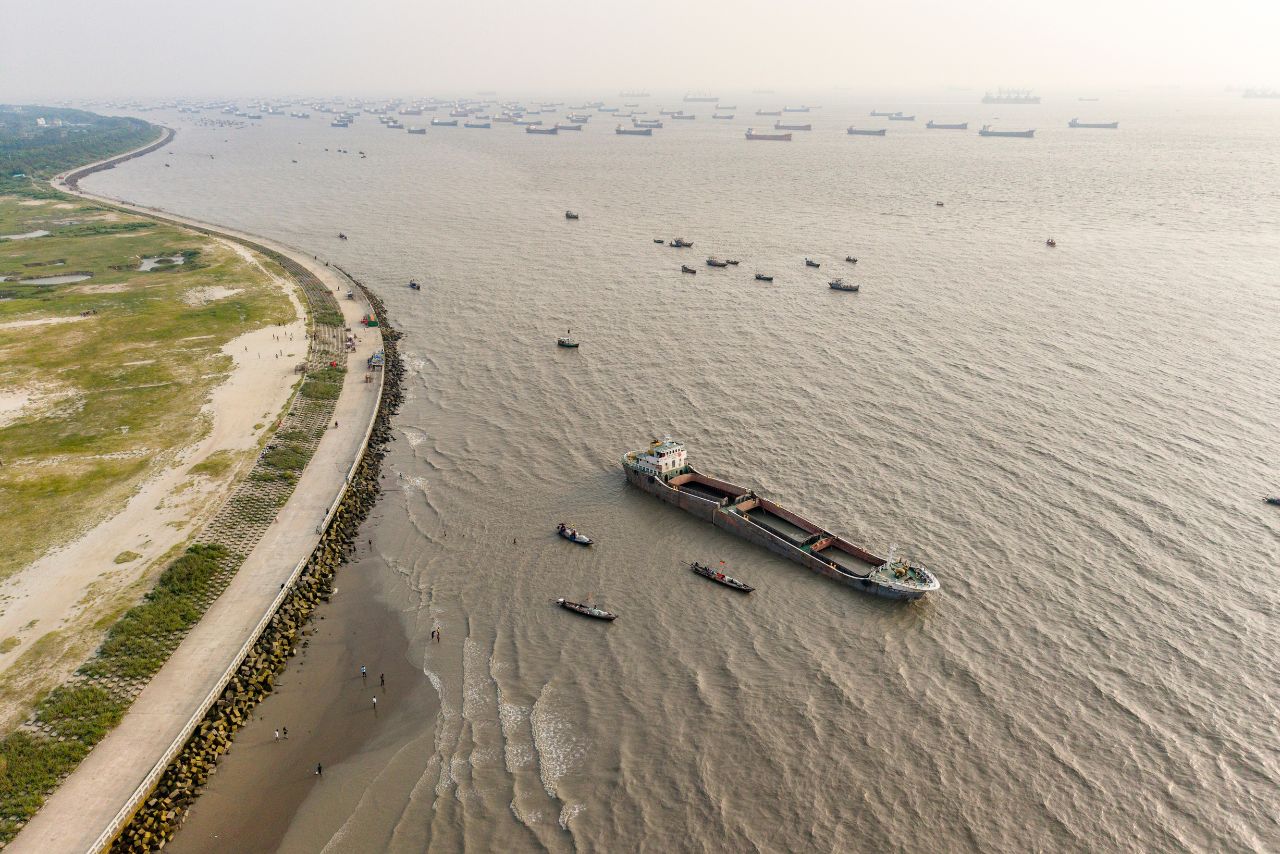
Visitors also stop and look, taking pictures of the broken ship.
Behind it, Chattogram city; ahead, the Bay of Bengal; and in between, a nearly vanished ship, painting a picture of destruction and change.
Kafela-1, once a vessel of sea voyages, has now become part of the landscape of Patenga beach.
What was once a symbol of movement has become a symbol of transformation, of time, and how, even in ruin, life finds a way to build something new.