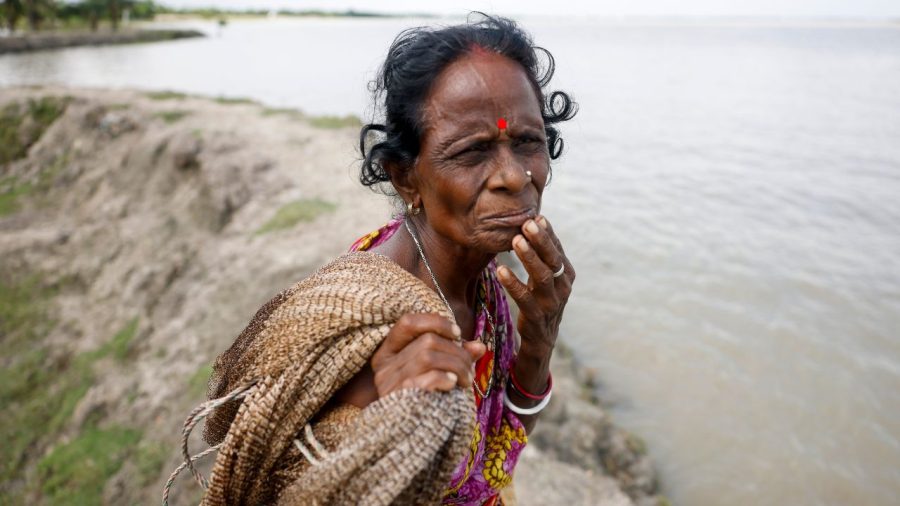



Standing by the Pashur River, Santosh Sarkar, over sixty years old, points at a patch of water. “Right there,” he says, “That is where my house was.”
The river has swallowed a piece of land, every inch of which once boasted a home, formed an identity, held a piece of history, but no funeral was held to mark its passing.
Loss such as Santosh’s is difficult to put a price on, and even harder to capture through official documents or statistics.
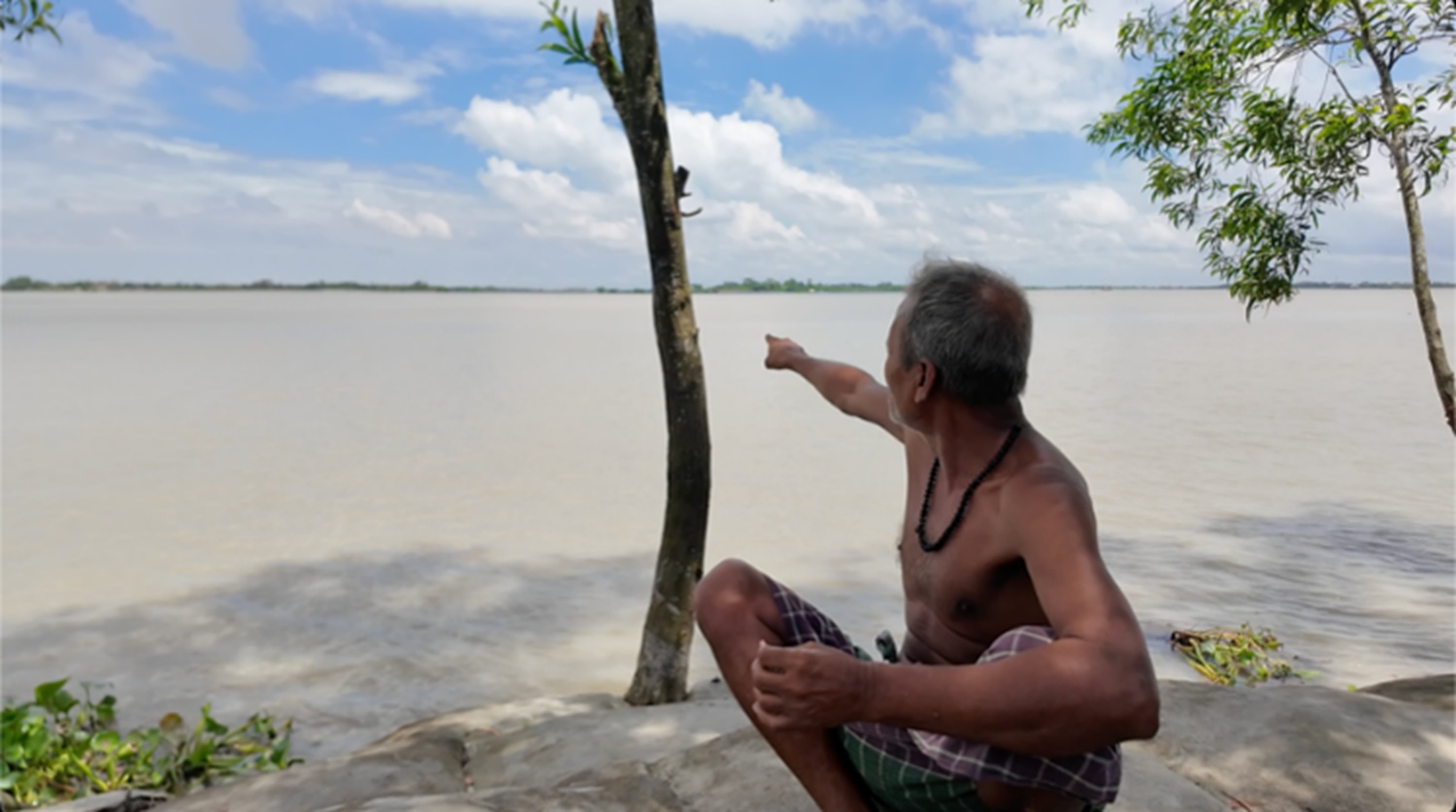
In Bangladesh, climate change is usually measured in numbers, number of homes destroyed, acreage lost, and financial costs. Along Khulna’s coastline, these numbers often fail to fully encapsulate the deep losses experienced by the people who call this land their home.
In international climate talks, they are called Non-Economic Loss and Damage (NELD).
At COP27 in 2022, the UNFCCC established a Loss and Damage Fund, operational since COP28 in 2023, which in principle covers non-economic losses too. But, for residents of coastal Bangladesh, that promise is nothing more than words on a piece of paper. Stories of lost memory, heritage, and scattered communities rarely shape policy, even as the water levels keep rising.
In Kalabogi, Kamona Biswas, 34, stands at the riverbank with her son Dev. Behind her, the tip of a relative’s grave breaks the water’s surface. She cannot recall the exact year the grave went under, but the memory of her homestead sinking remains vivid.
Telling Dev about what was once their ancestral home provokes an intense nostalgia for her childhood. Every time she comes here to fish, she sees the grave and sighs.
For Dev, now in seventh grade, the place his mother calls “home” vanished before he was born. The growing list of questions he has for his mother about where his family comes from are left unanswered.
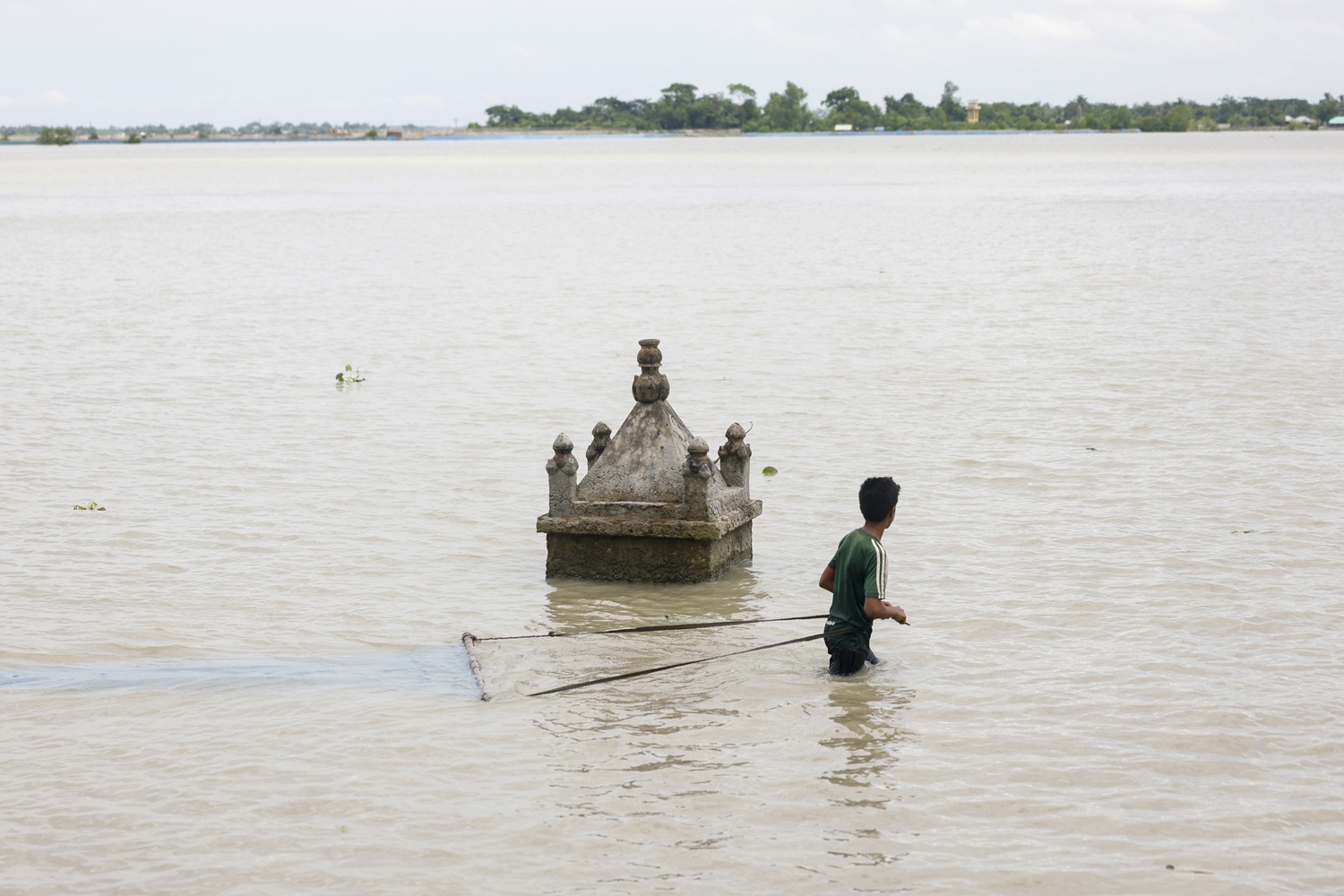
The river has taken the centre of Kalabogi’s religious and social life twice, which once hosted chariot festivals, kirtan, and community gatherings.
Like a mythical creature come back to life, the river first swallowed the old Kali temple. Followed by not one, but two Radha Govinda temples, one after the other.
The villagers worry that the third Radha Govinda temple will meet the same fate.
Dipali Saha, visibly traumatised by the experience of witnessing its disappearance, recalls: “The first one went into the river. Later, people built another further inland. That one did not survive either.”
Beside the sacred ground, she lost her home, land, and the only shop her family owned. Now she lives on a newly formed char with her husband, who has since fallen ill.

Previously, people would take shelter at these places of worship during times of crisis or disaster. Where can they go now?
Dipali does not know. Neither does Santosh.
Associate professor at the National Institute of Mental Health and Hospital Dr Mekhla Sarker describes these places not only as sites of worship but sources of security, community, and emotional strength.
“People also lose the social connections that grew around it,” she says. “And when it disappears, relationships between people can weaken, or even break. When connection to family history, ancestral land and a familiar environment is gone, it creates a sense of isolation, increases psychological stress and a loss of confidence.”
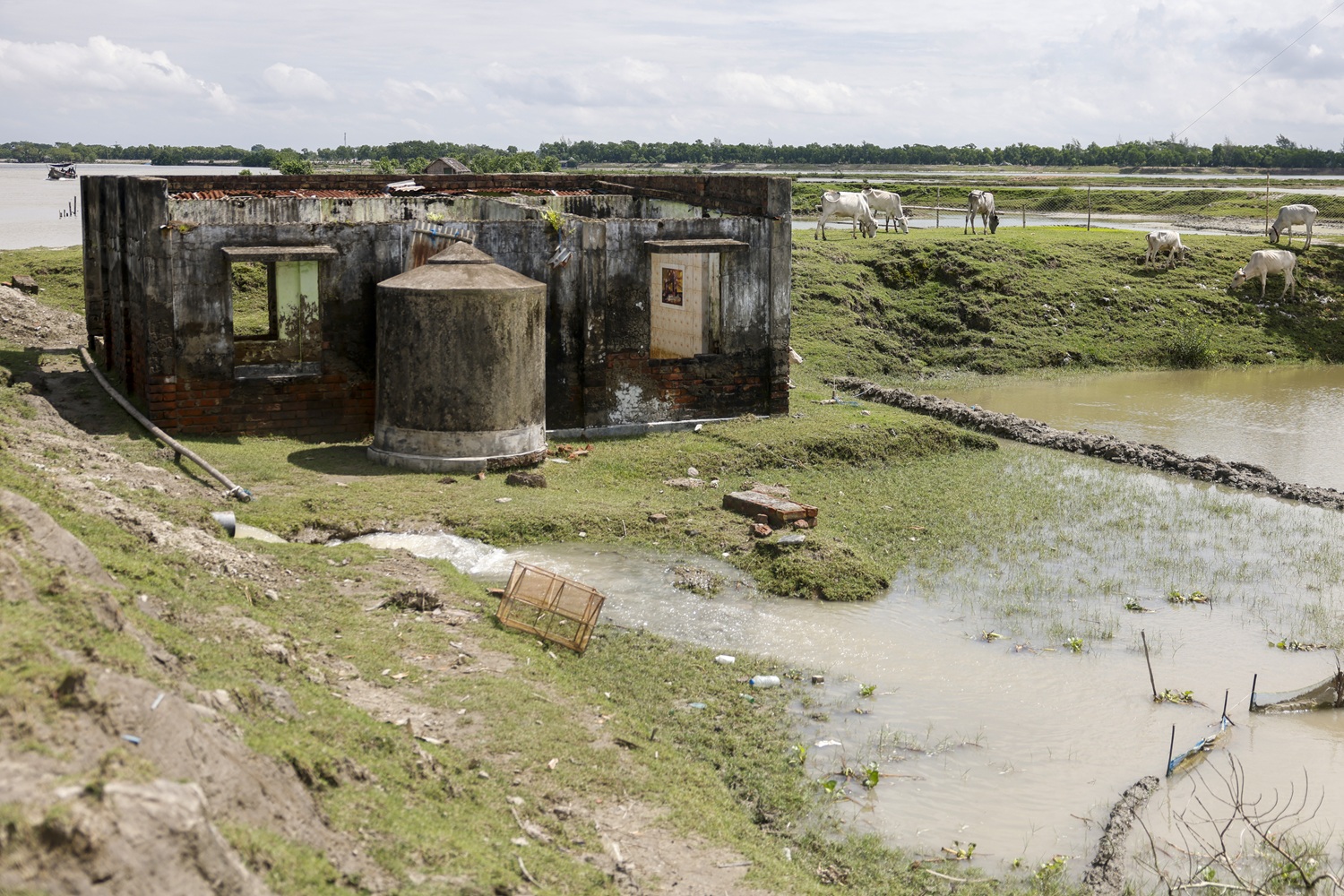
Around Polder 32 in Khulna’s Dacope upazila, the Bangladesh Water Development Board identified 1,232 households vulnerable to the waters that surrounded them. 352 of these households are in Kalabogi. These polders had been built to protect farmland from saline water.
The assessment also found 38 shared community structures across the polder, including mosques, temples, schools, clubhouses and cooperative houses, were confirmed to be facing either destruction or abandonment.
However, far more than homes and infrastructure are at stake. As the UNFCCC notes in its report on non-economic losses, the loss of territory and habitable land can cause lasting harm to people’s wellbeing, cultural identity, sacred traditions and collective memory.
The Intergovernmental Panel on Climate Change (IPCC)’s Sixth Assessment Report says global average sea level rose by about 20 centimetres between 1901 and 2018, and it estimates that direct inundation from sea-level rise could drive migration of around 900,000 people in Bangladesh by 2050. By 2100, the figure could range from 730,000 to 2.1 million.
But losing a home is only the beginning. Behind those figures is a quieter reality of people losing the places that made them who they are.
The losses that begin after displacement
When coastal soil drowns or turns to salt, families are pushed into a cascading struggle for shelter, survival and new ways to survive.




For Nazma Begum and her husband Mafizur Sana, river erosion and saltwater intrusion destroyed their house more than a decade ago. Whatever farmland they had was “swept away by the river,” as Nazma describes it. Today, they live in Montu Colony, a slum near Khulna’s Ghat 7.
“The little soil left is now too salty to grow crops,” adds Mafizur, a claim supported by the government’s 2024 Soil Salinity Map finding. According to the map, 1.156 million of the country’s 1.7 million coastal hectares have been affected by salt.
Another 2015 study published in Ambio found that, every year, rising seas, reduced freshwater flows and cyclones have been increasing soil salinity by 20 to 90 microsiemens per centimetre (µS/cm) in key areas.
Displaced by salinity, they found work unloading urea fertiliser from ships by hand, barefoot and without protective gear, covering their bodies with just scarves.
Now, both suffer sores and constant itching. Research on urea exposure explains direct skin contact causes inflammation, weakens the skin barrier, and increases blood flow and tissue thickness.
For the couple, the transition from farming on their own land to now working as day labourer has been difficult to come to terms with.
The itching is relentless. Nazma fears it might be contagious, preventing her from even touching her own children, lest the disease spread.
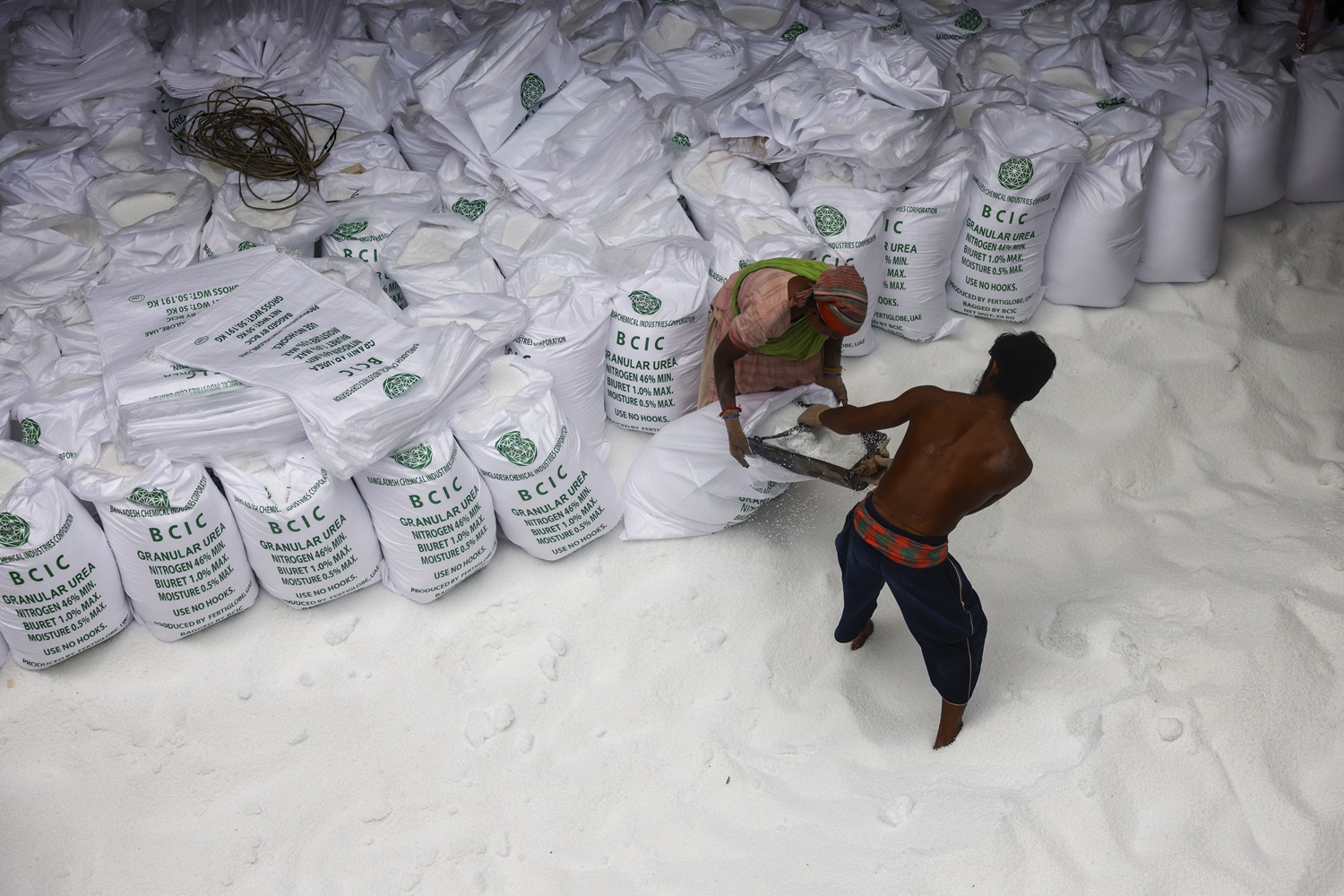
For Mafizur, the sores now populating the skin all over his body is no less than humiliating.
Mental health specialist Abdul Hamid links these persistent skin problems, which cause discomfort and disrupt sleep, with psychological distress, particularly among people already facing displacement, livelihood insecurity, and long-term environmental uncertainty.
Yet, in the shadow of loss, life persists. Their 9-year-old son, Amir Hamza, dreams of one day becoming a high-ranking government official. But without a place to come home, that dream has never been further from reach.
In Dacope’s Parjoynagar village, Kamarkhola Union, Nazma’s sister-in-law Khadiza Begum and her family were also forced to relocate onto government “khas land”.
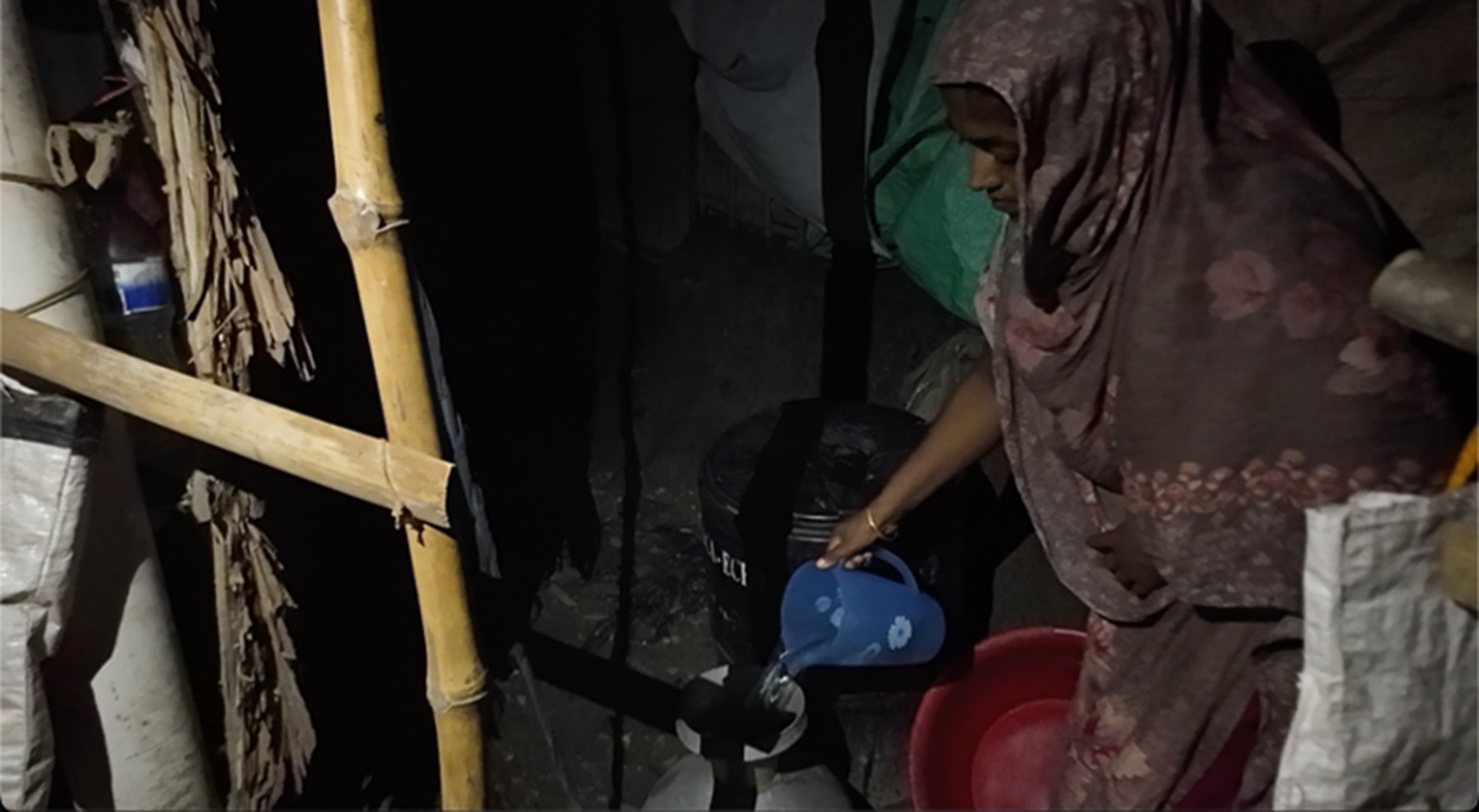
But moving did not end the crisis that displaced her. She said that the saltwater “kept coming in, until it ruined our drinking and cooking water.”
She is now forced to travel more than 1.5km every day to fill two to three clay pots, bringing back 10-15 litres of water, far less than what her family needs.
Warming oceans are making the threat worse. According to the IPCC, there is strong evidence that tropical cyclones are becoming more intense; with higher seas, the same storm now pushes taller surges across low lying coast.
A 2018 study published in Natural Hazards and Earth System Sciences used the Delft3D model to examine how sea-level rise could worsen cyclone flooding along Bangladesh’s coast found that. If a cyclone as strong as 2007’s Sidr hit under future sea-level conditions, the flooded area could grow by 31% by the mid-21st century, from 1,860 to 2,437 square kilometres, with a 0.26-metre rise in sea level.
By the end of the century, with sea levels 0.54 metres higher, the flooded area could increase by 53%, reaching 2,846 square kilometres. The study found a similar pattern for a cyclone like Aila. Under these scenarios, the flooded area could increase by 28% and 47%, respectively.
For people living in these vulnerable coastal areas, like Mosammat Moriom, 43, the consequences have already become part of everyday life. After losing her home to erosion years ago, she ended up here in Kalabogi. Her struggle has narrowed down to how long the drinking water will last. Despite being surrounded by water, most of it is not fit to drink.
It has strained her relationships at home and with her new neighbours. Tense about the future, arguments break out every other day. Adjusting to a new place and building new relationships has also proven to be difficult for the family.
A 2026 study in BMC Women’s Health, which surveyed 4,693 women aged 18 to 49 in coastal Bangladesh, found that drinking-water salinity and psychological distress were each independently linked to hypertension.
Using saltwater can also lead to diarrhoea, vomiting, dizziness and abdominal pain, according to findings from a 2021 EcoHealth study.
The study found that diseases spread through water contact were 14% more likely, while risk of water-related diseases overall were 11% higher.
For Moriom, every day is a fight for the security that she lost when erosion took away her home.
For families like hers, displacement sets off a chain of losses that can keep unfolding long after the water has receded.
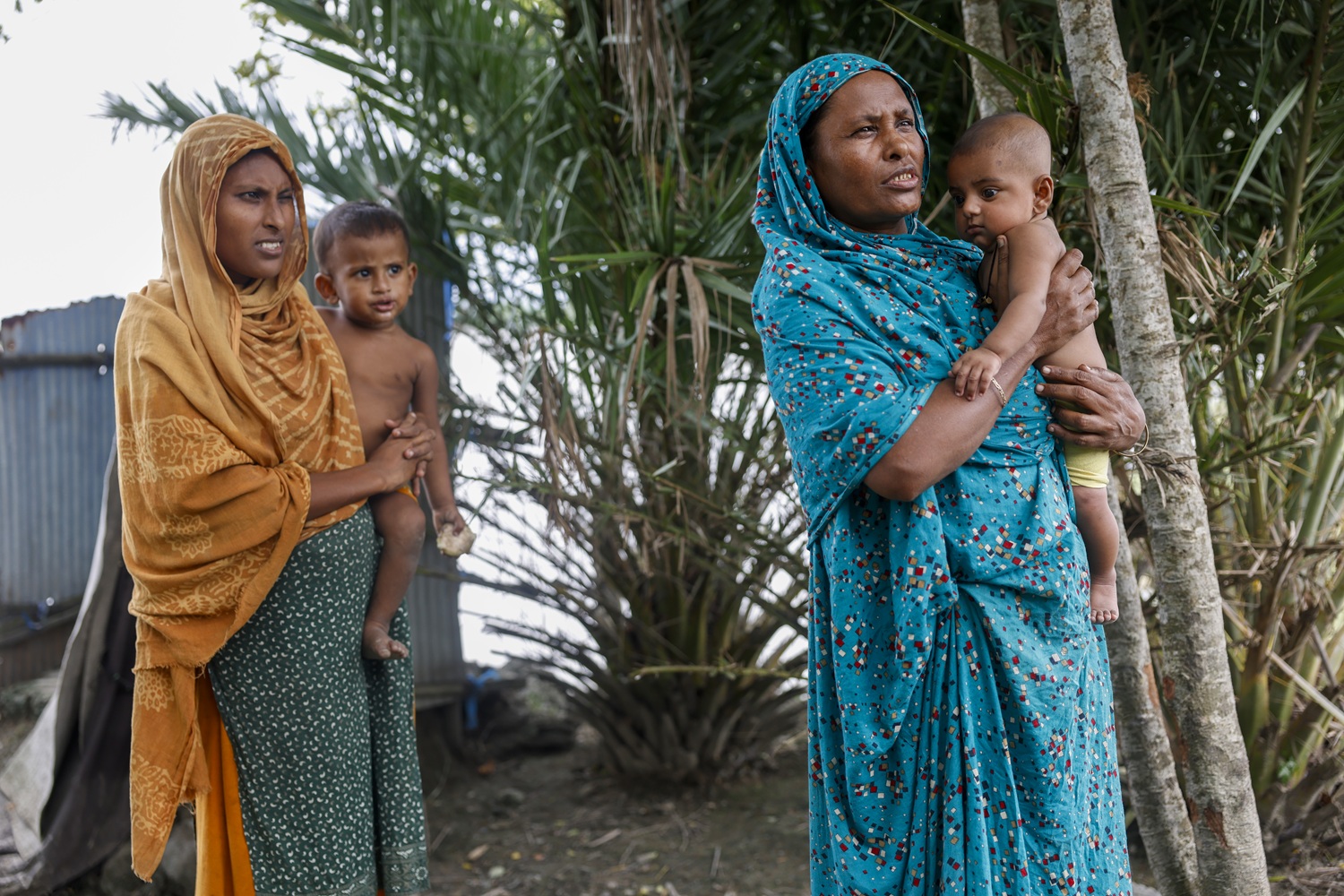
Faruqe Ahmed, program manager at Rupantar, an NGO working with these people displaced by climate change, describes it as a long unravelling.
“Because of climate change, there’s a big disaster every other year,” he says. “People just can’t hold on.” What follows, he says, is a “survival adjustment”, people adapting just to get by, in a life that never lives up to the old one.
For Israfil Shikdar, who is almost forty, that never-ending “survival adjustment” began at the age of seven. Forced to move to Rupsha with no savings and nowhere safe to go, now he drives an autorickshaw in Khulna city.
What haunts him is not the land he lost, but his inability to describe to his children about their grandparents’ house, part of the family’s history.
Once a playful, happy boy living by the riverbank, Israfil feels like a wanderer with no home to go back to.
The International Organization for Migration estimated 4,955,527 people were living in disaster-related internal displacement in Bangladesh in 2025, while the Internal Displacement Monitoring Centre recorded 21.2 million disaster-related forced movements between 2008 and 2024.
The World Bank estimates that, without strong adaptation, 13.3 million people could become internal climate migrants over the next 30 years.
Sonam Saha, assistant professor in the Department of Development Studies at the University of Dhaka, says, “When communities are displaced by climate shocks and resettled elsewhere, they become disconnected from one another, and the everyday bonds of mutual goodwill and empathy that sustain relationships weaken.” Her research focuses on community-based development and social relationships at the local level.
Children growing up in such displaced families may become a generation disconnected from society and uprooted from its cultural roots, she adds.
Ayesha (not her real name), 46, was also one of those children, who lost her home at 11. When a flood took her house, one of her neighbours had brought her to Banishanta, one of the country’s largest red-light districts.
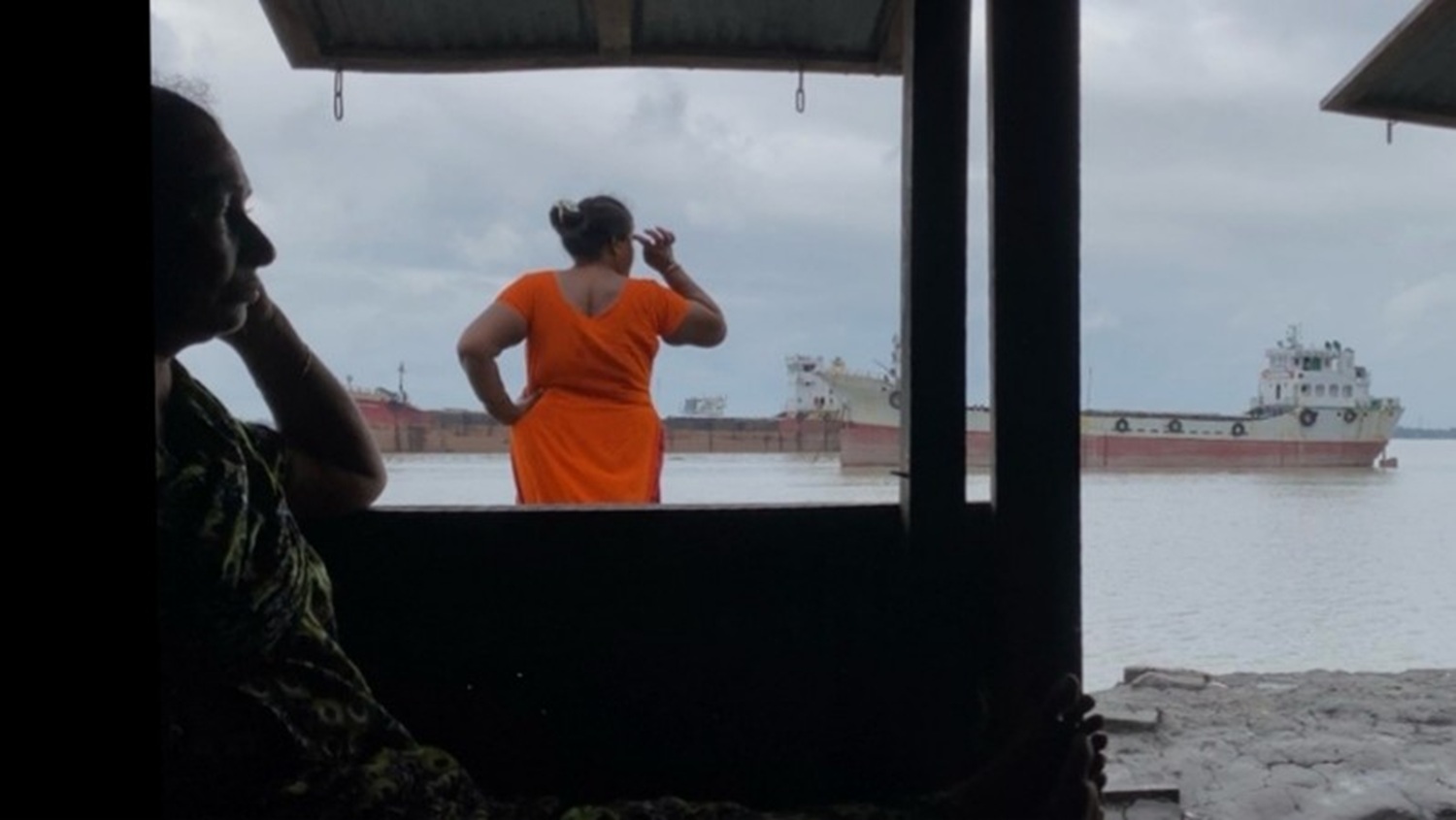
She now considers this her home.
Arpita Biswas Puja, an NGO worker in Banishanta, has watched these cases for years.
“Because of water level rise and erosion due to climate change, how long they can even stay here is a constant worry,” she says.
A 2024 study found these people at higher risk of more distress, depression, anxiety, and stress, with environmental stress and resource loss linking sea level rise to mental health.
This is what researchers call “ecological grief”, as mourning for a lost landscape, a homestead, and a familiar way of life.
Professor Kamal Uddin Ahmed Chowdhury of Dhaka University’s Department of Clinical Psychology says, “When these struggles continue one after another, many are eventually forced to give up.”
That giving up happens slowly. Story after story weave together a tapestry of loss that spreads across generations, traumatised by the disappearance of their own history, and with it, their own identity.
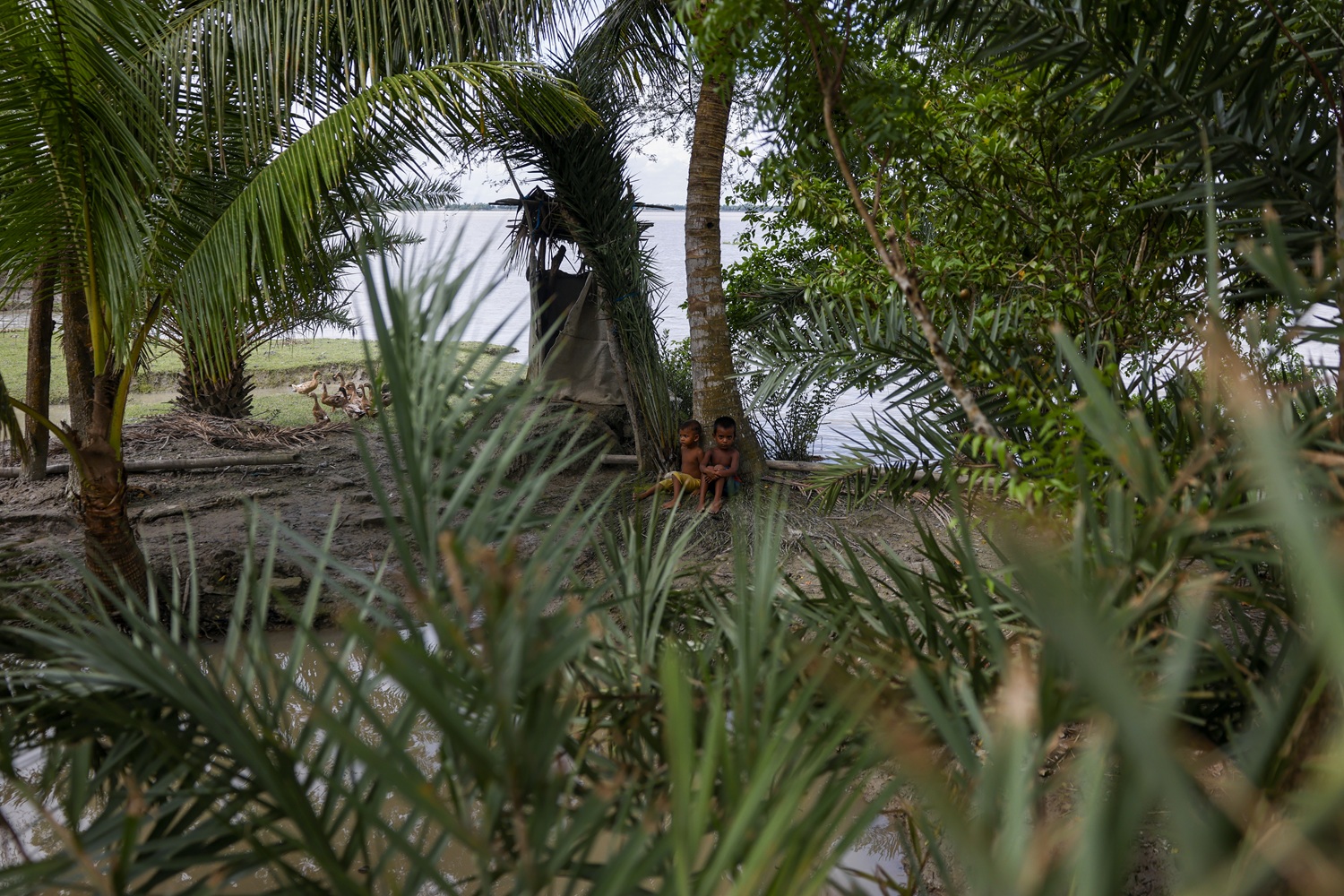
As families struggle to rebuild elsewhere, the children grow up without knowing their own history.
This story was produced by Earth Journalism Network (EJN)