
The Kaliganga once flowed from the Gorai, carrying large boats and sustaining generations of fishermen. Today, much of the 35-kilometre river is barely recognisable as a river.
Its sources have been blocked, ponds and fish enclosures have been dug into the riverbed, and homes, shops and other structures have been built on land where water once flowed.
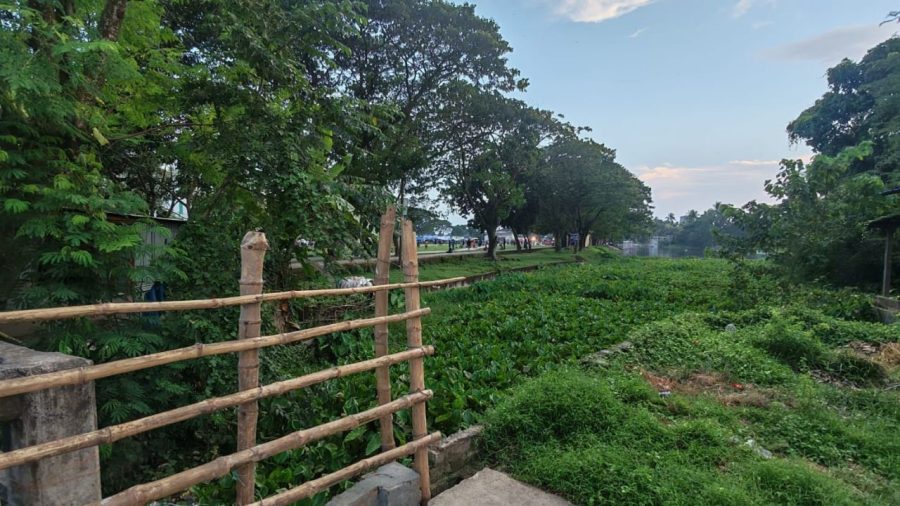
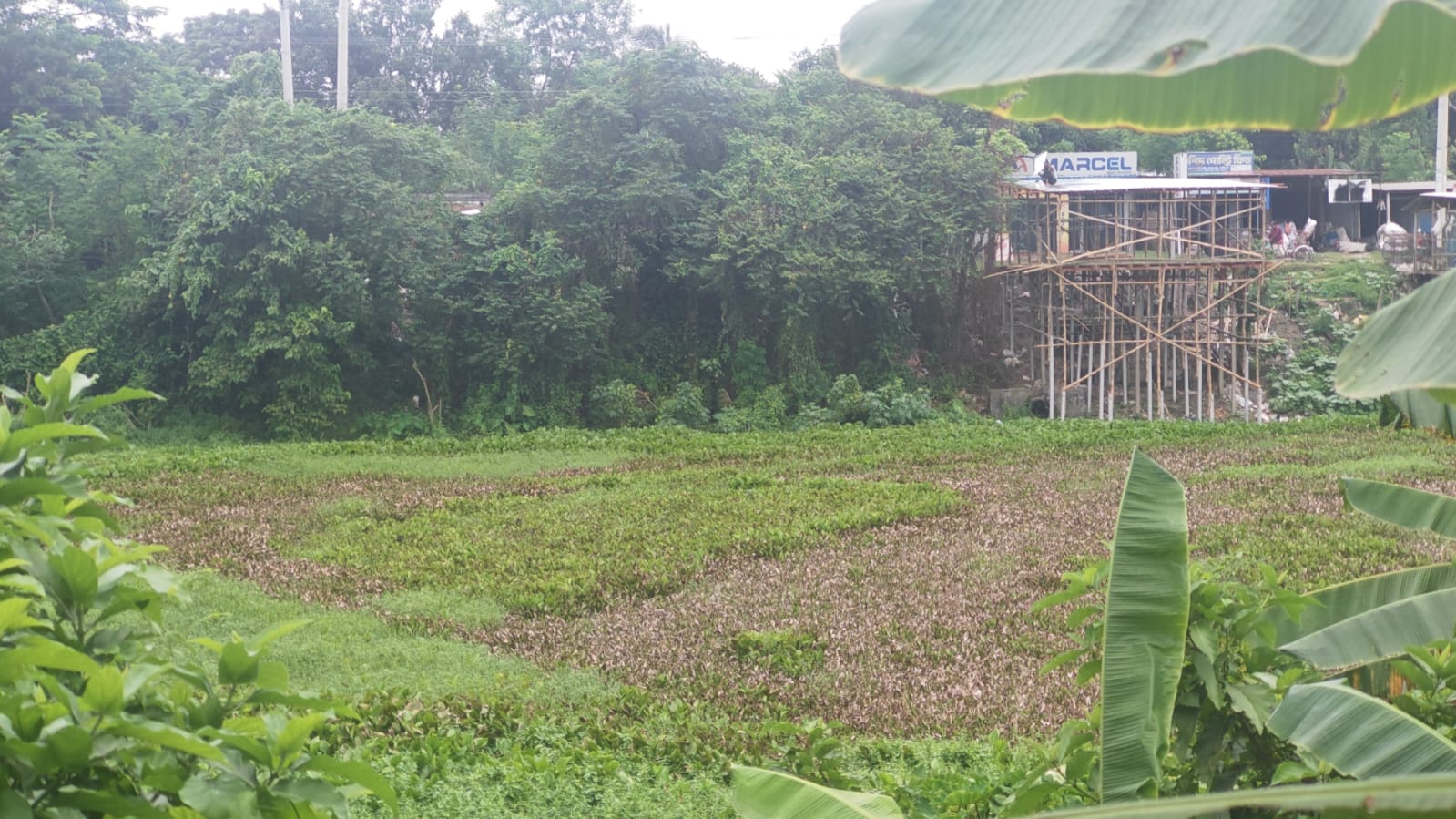
The river, once 100 to 350 metres wide in different stretches, has narrowed to as little as 30 metres in many places. In some sections, its main channel has disappeared beneath filled land, embankments, ponds and structures.
The shrinking river has also destroyed a traditional fishing economy. As the water receded and fish became scarce, many families abandoned a profession followed by their parents and grandparents.
Locals allege that the river has been encroached upon openly for nearly three decades, with some claiming that certain administration officials helped facilitate the occupation in exchange for bribes.
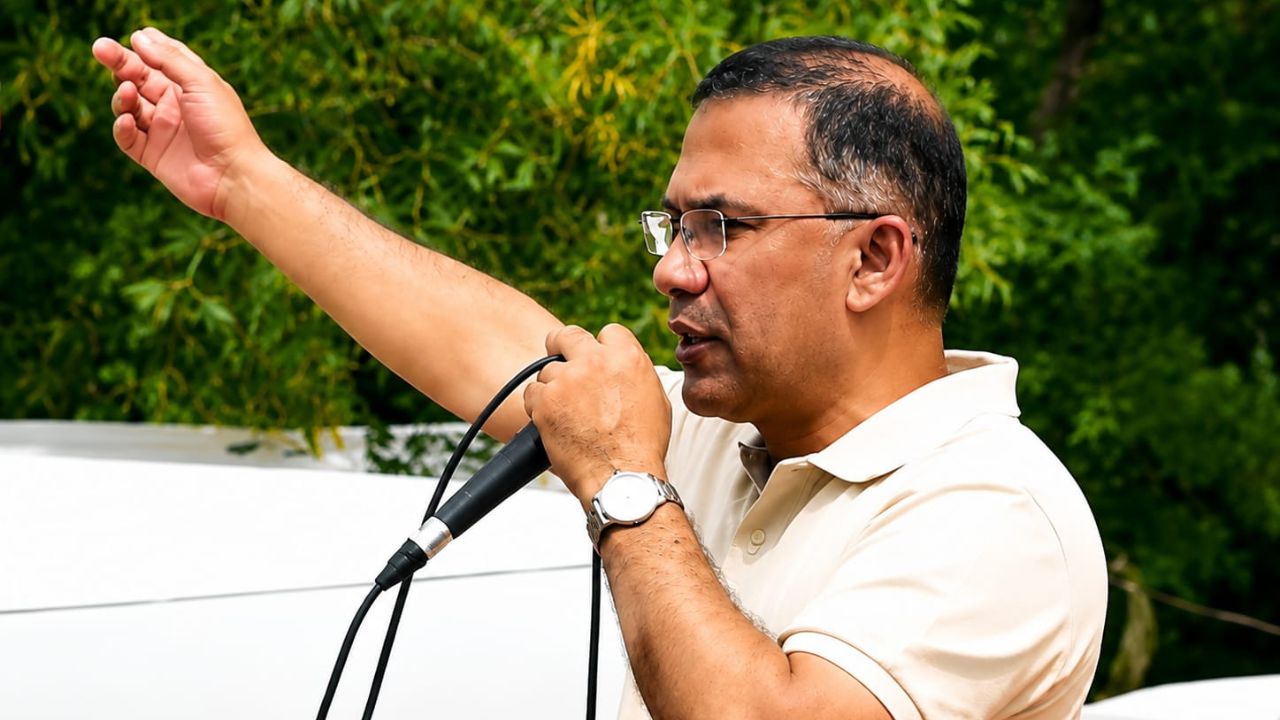
Kushtia Chamber of Commerce and Industries Director Abu Moni Zubayer Ripon told TIMES, “Leaders and activists of all parties are involved in river encroachment. During the Awami League government, river land was occupied and sold. Even after 5 August 2024, several areas were newly occupied.”
He said the administration had been informed repeatedly, but no effective action was taken.

A district administration source said a list of at least 3,000 people identified as encroachers had been prepared for different sections of rivers and canals across the district, but no action was subsequently taken against them.
The Kaliganga originates beside the Chheuria cremation ground in Kumarkhali upazila. Water from the Gorai once entered the river there, keeping it flowing.
The source was blocked around 30 years ago. Sand and earth were later dumped there, narrowing the channel further. Parts of the source were also raised above the Gorai riverbed, preventing water from entering the Kaliganga naturally even during the monsoon.
The river had another connection with the Gorai at Saota in Kumarkhali. That route was also blocked by an embankment.
With both routes cut off, ponds, fish enclosures and other structures gradually spread across the riverbed.
Near the source is a waterbody of around three and a half acres in Bahadurkhali mouza, from which the government regularly collects revenue.



Locals question how the government can collect revenue from a legal waterbody beside the river’s source while large stretches of the river itself have been turned into private ponds, fish enclosures and sites for structures.
“Arrangements should be made to collect revenue from those who have occupied the riverbed by building embankments and creating ponds. At least that would increase government revenue, which could be used for other development work,” local resident Mirazul Islam told TIMES.
The river has also been extensively altered around the Lalon Shah shrine. Around 2000, nearly two-thirds of the river was filled in to create the Lalon fairground. A field and a waterbody were subsequently developed there, while another nearby waterbody is identified in government records as an oxbow lake.
The Lalon Academy has earned income from the waterbody for the past two decades.
The filling, waterbodies and encroachment have effectively cut the Kaliganga off from its source. There is no water at the source even in peak season, while some stretches have only knee-deep water and others waist-deep water. Fishing tickets are also being sold in some encroached sections.
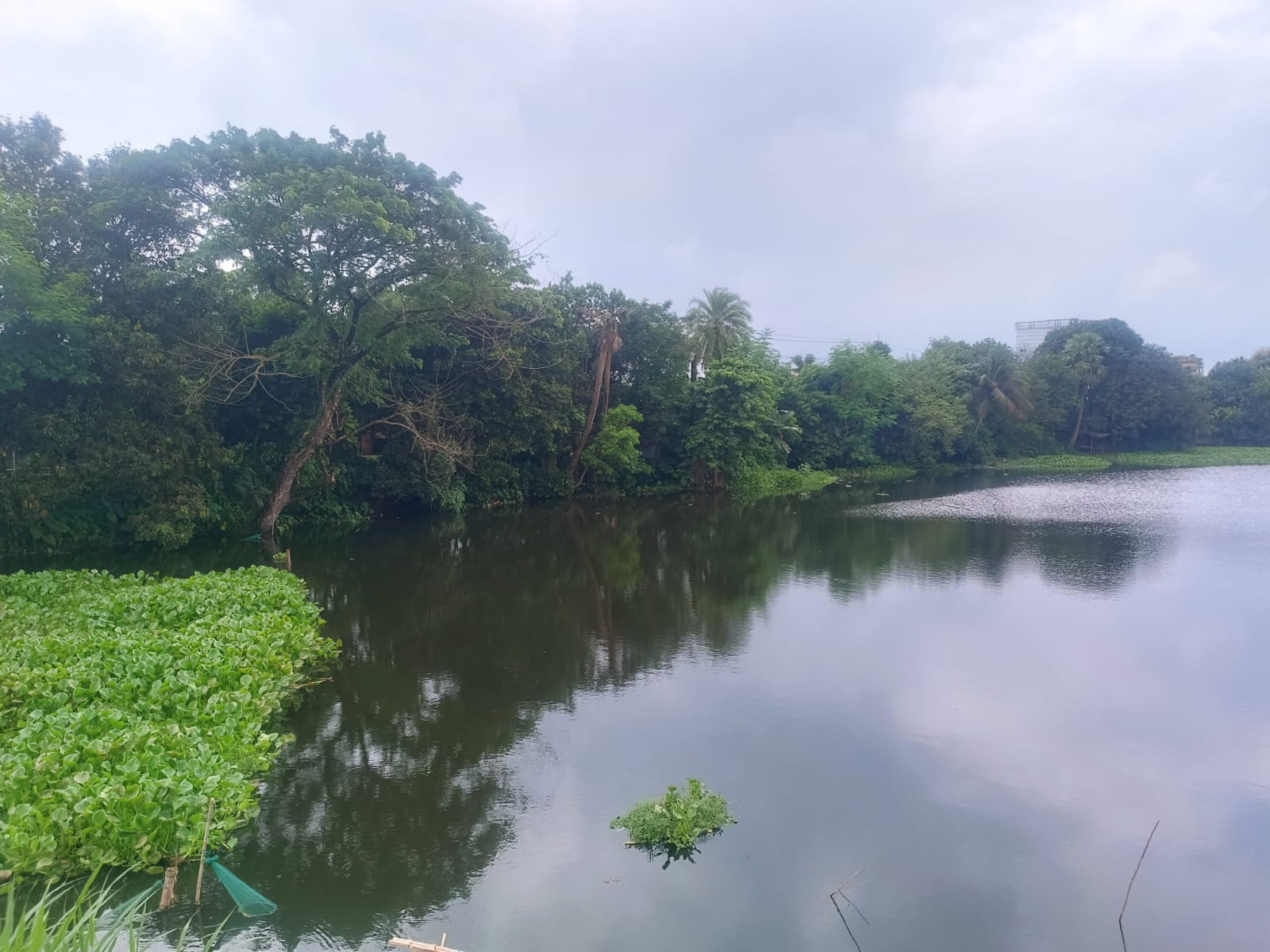
Waterbodies and water estates connected to the Kaliganga are government property and can be leased to generate revenue. But encroachment, litigation and management complications have kept wetlands such as the 65.83-acre Kaliganga Badalbasar water estate outside the regular leasing system for years.
The water estate is an important habitat for indigenous fish. Leasing stopped after lessee Musa Ali Khan filed a writ petition with the High Court in 2023.
Local resident Shahabuddin questioned who was benefiting from the river.
“There was talk of fishermen, but there were no fishermen. Now a huge part of the river is being occupied and used privately. The encroachers earned money, fish were farmed and structures were built – how much money went into the government’s revenue account?” he said.
Bangladesh River Travellers Network Kushtia Unit President Khalilur Rahman Mazu told TIMES, “A river is government property. There is no scope for private use there. It is essential to reopen the Kaliganga’s source and evict the encroachers.”
He said the river would also be needed to retain water if the Padma Barrage Project is implemented.
Fishing livelihood disappears
A fishing community grew up along the Kaliganga when the river carried enough water and indigenous fish were plentiful. Fishermen went out in boats, caught fish and sold them to support their families.
That livelihood faded as the river dried up.
“Some drive vans, some work in agriculture,” local resident Shamsul Rahman said of former fishermen.
A former fisherman said, “How can there be fish if there is no water in the river? And if there are no fish, why would fishermen go to the river?”
Plan to reconnect river
The government is now considering reconnecting the Kaliganga with the Gorai through an alternative channel at the Saota embankment in Kumarkhali, according to a Water Development Board official.
The official said restoring the old source at Chheuria could cost more, so a connection through Saota is being considered.
Kushtia Water Development Board Assistant Engineer Rafiqul Islam confirmed the plan.
Kushtia Deputy Commissioner Touhid Bin Hasan told TIMES that he had spoken to several people about maintaining water in the reservoir near the Lalon shrine but had not received a satisfactory answer.
“Three ministries could work on the issue. It is not possible to say anything definitive about it right now,” he said.