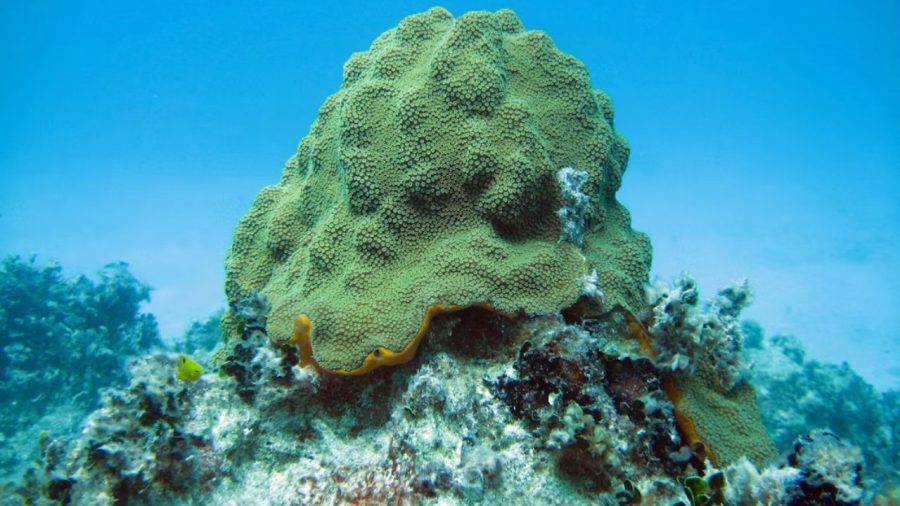

Scientists have discovered nine new species of deep-sea sponges off Alaska’s coast, offering new insights into the region’s marine biodiversity.
The National Oceanic and Atmospheric Administration (NOAA) announced the discovery on Thursday, stating specimens were found in the Gulf of Alaska and the Aleutian Islands.
The findings bring total known sponge species in Alaska to 232, reports The Guardian.
Collected during NOAA Fisheries’ annual bottom-trawl surveys monitoring groundfish and shellfish stocks, researchers analysed samples collected as far back as 2012, describing the new species in two scientific papers.
Often described as living water pumps, sponges are among Earth’s earliest multicellular animals, dating back over 600 million years.

They filter seawater and help create seafloor habitats, despite lacking brains or complex organs.
“Sponges are ecologically important,” said Sean Rooney, a NOAA fisheries biologist at the agency’s Alaska Fisheries Science Center.
“Like trees in a forest, they provide structure along the seafloor creating habitat and refuge for commercially important fish and crabs,” he added.



Rooney noted each new species opens doors, emphasising deep water is hard to access. He stated that with 232 identified species and hundreds unknown, the field’s future is exciting.
Unlike animals identified by visible traits like fins, sponges are harder to distinguish. Lacking complex organs, scientists rely on microscopic skeletons and genetic material.
“DNA barcodes provide a quick genetic reference,” said Meredith Everett, a biologist at NOAA’s Northwest Fisheries Science Center.
She explained filter-feeding leaves foreign DNA that inhibits testing, but researchers developed several new DNA barcodes for Alaskan species.
Dense sponge communities are considered essential fish habitat by NOAA, providing shelter that supports fish survival and recovery.
Sponges also produce defensive chemicals showing promise for cancer treatments.
However, Alaska’s sponge communities face threats from bottom trawling and Donald Trump’s proposals to expand seafloor mining for critical minerals like nickel and copper.
Environmental groups oppose these plans, warning of damage to fragile ecosystems.
Cooper Freeman of the Center for Biological Diversity warned bottom trawling destroys habitats, while seafloor mining devastates ocean life for short-term profit.
The Trump administration has also proposed deep-sea mining across Pacific ecosystems, drawing backlash from territories including Guam and the Northern Mariana Islands.