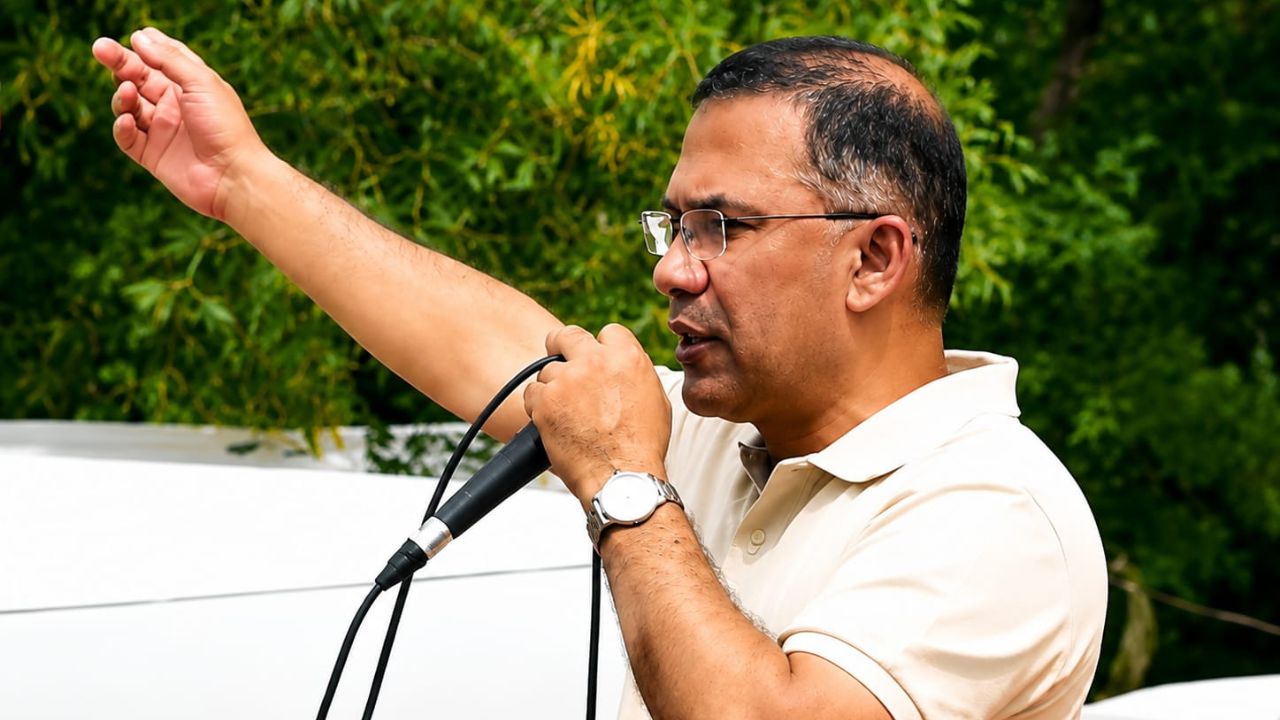



Prime Minister Tarique Rahman on Sunday called for greater public awareness and coordinated efforts to save rivers, canals, haors, beels, and other water bodies from pollution, stating that safeguarding the environment is essential to protecting the country’s fisheries resources.
“If we are truly conscious and want to protect our environment, and if we want to save our fish, then we must also pay attention to protecting the environment. We must safeguard our natural environment,” he said, pointing to the growing degradation caused by plastic bottles, tissue paper, and other waste.
The prime minister made these remarks while inaugurating National Fisheries Fortnight-2026 at the George Institute Mini Stadium in Katiadi upazila. The fortnight is being observed nationwide from August 16 to 30 under the theme – “A self-sufficient country through silver fish, Bangladesh first.”
Highlighting the vital role of fisheries in meeting nutritional needs and creating employment, Tarique urged for environment-friendly and sustainable fish farming to help Bangladesh become a prosperous nation.
He called for the restoration of unused ponds and water bodies to expand production and raise incomes for young people and marginalised communities.

“Bangladesh is a riverine country. There are opportunities to become self-reliant by using ponds, beels, haors, baors, and other water bodies, or even small areas of land, for fish farming,” he added.
During the programme, Tarique handed over the National Fisheries Medal (Gold Medal) to 14 individuals and organisations across 13 categories for their contributions to production, innovation, and exports.


He noted that the government has decided to renovate unused water bodies and allocate them to local youth for fish farming.
Tarique informed that he has already instructed State Minister for Fisheries and Livestock Sultan Salauddin Tuku to take necessary steps in this regard.
According to the prime minister, Bangladesh earned over Tk6,000 crore in foreign currency by exporting fish products to approximately 52 countries in the 2025-26 fiscal year. Citing a June report by the Food and Agriculture Organization (FAO), he noted that Bangladesh ranks fifth globally in aquatic animal production and second in world inland fish capture.
To further boost the sector, the Department of Fisheries has formed 300 clusters in the Khulna region for shrimp farming, while a master plan has been prepared for 7,000 acres of land in Chakaria upazila, Cox’s Bazar.
He also highlighted the significance of hilsa, which accounts for roughly 10 per cent of total fish production and over 1 per cent of the GDP.
With approximately 2 crore people, including 14 lakh women, dependent on the sector, the government is expanding social safety nets. Fish farmers will be included in the Farmers’ Card programme, while fishermen in the Sundarbans and haor regions have been brought under the VGF programme during fishing bans for the first time in the 2026-27 fiscal year.
Tarique also announced a Tk 500 crore startup fund to encourage technology-driven employment and innovation, offering grants ranging from Tk 5 lakh to Tk 5 crore.
The inaugural event was chaired by Fisheries and Livestock Minister Mohammed Aminur Rashid.
Other attendees included State Minister Sultan Salauddin Tuku, State Minister for Local Government, Rural Development and Co-operatives Mir Shahe Alam, State Minister for Textiles and Jute Md Shariful Alam, Kishoreganj-2 MP Md Jalal Uddin, Fisheries and Livestock Secretary Delwar Hossain, and Department of Fisheries Director General Md Khaled Kanak.
Earlier in the day, Tarique released fish fry into the old Brahmaputra River in Pakundia and visited the Katiadi Carp Hatchery Complex. His schedule also included a tree-planting programme at Sholakia Eidgah and a Family Card distribution event at Kishoreganj Stadium.