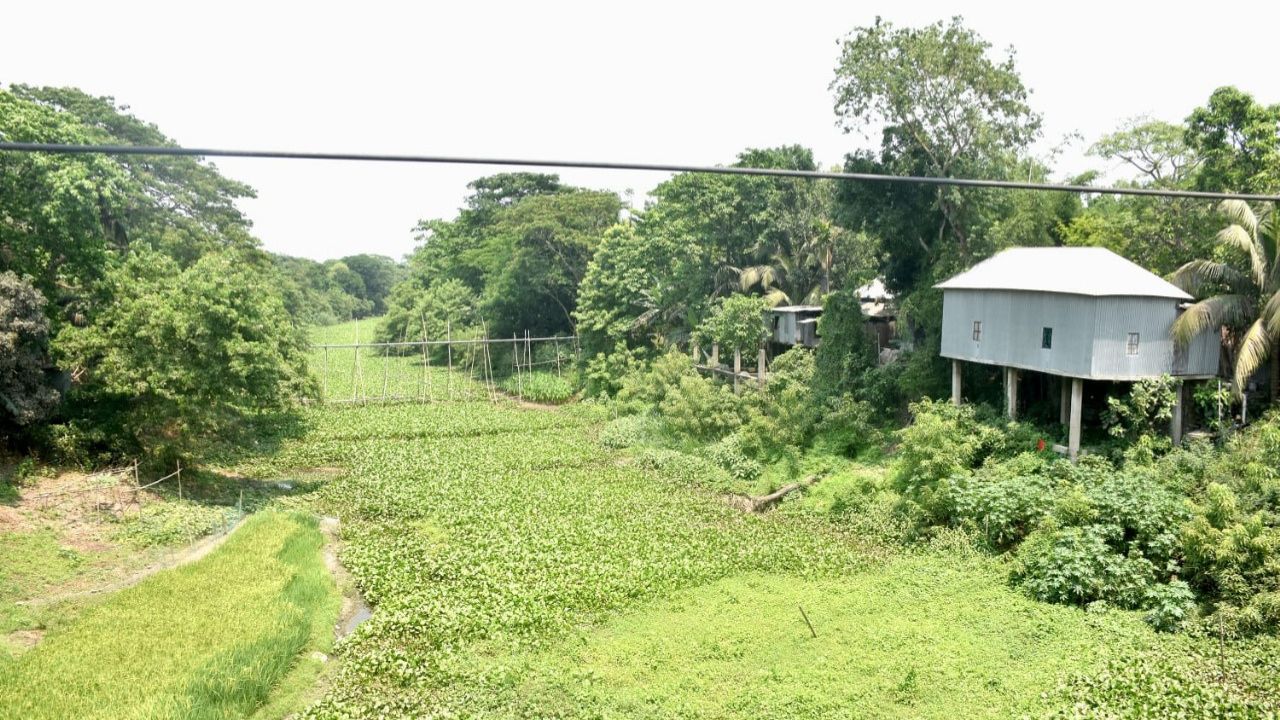

Ichamati River, a lifeline flowing through Harirampur in Manikganj is now on the verge of death due to encroachment, pollution and the construction of unplanned dams.
In many areas its natural flow is suffocated, the riverbed dried up, choked with waste and water hyacinths.
Stretching roughly 38 kilometres from Daulatpur through Ghior and Shibaloy to Harirampur, the Ichamati once merged with the Padma at Bahadurpur but Padma’s erosion and encrochment cut the link off.
At several points of the river, 10 to 12 small dams built over the years have become dysfunctional. Shops and houses have developed atop these earthen barriers, blocking the water pathways and further stalling its flow.
Water Development Board Executive Engineer Akteruzzaman said two dams have already been identified for removal.

“Under a new project, we will dismantle these structures and install proper hydraulic facilities to restore the flow,” he said.
Manikganj Deputy Commissioner Dr Manowar Hossain Molla said many of the dams were originally built by locals to protect farmland but have now turned into major obstructions.



“We have instructed the UNOs and WDB to remove the barriers and revive the natural flow,” he said.
Abdul Kuddus of Andharmanik village said he relocated here 25 years ago after losing his home to Padma erosion. “Back then, the river was full of life. Now it is just water hyacinths and bad smell.”
Farmer Rafiqul Islam said stagnant water caused by the dams has severely affected cultivation. “The water does not move, and farming has become difficult,” he said.
As the crucial water link with the Padma has weakened, wetlands including Vatsala, Diyar and Gopinathpur in Harirampur have dried up. Once rich in crops and fish, these areas are now marked by poverty and despair among farming and fishing families.
Mahidul Islam Mahi, joint general secretary of environment conservation group Shyamol Nisorg, said the river is rapidly disappearing. “Unplanned dams and illegal occupation have brought Ichamati to the point of extinction,” he warned.
“Agriculture, fisheries and even human livelihoods are under threat. Without urgent action, the river will vanish from the map within a few years,” he added.