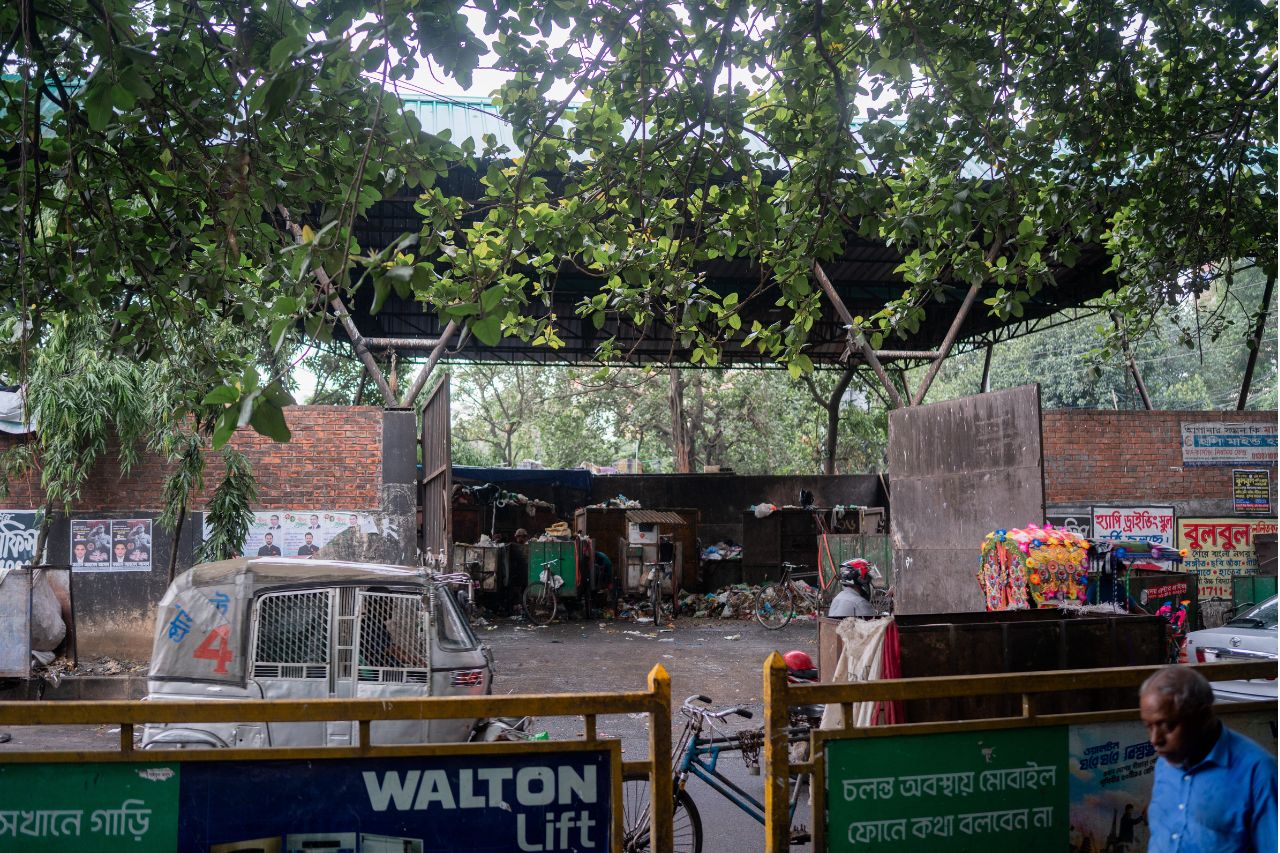
What was designed as a solution to Dhaka’s waste problem has, for many residents, become a problem of its own. Across the capital, neighbourhood waste collection points sit beside homes, schools and markets.
Known officially as Secondary Transfer Stations (STSs), these facilities were introduced as part of a modern waste management system.
Their purpose was straightforward: to hold household waste before it is transported to landfills temporarily. In reality, many have become permanent sources of discomfort, pollution and health concerns for nearby residents.
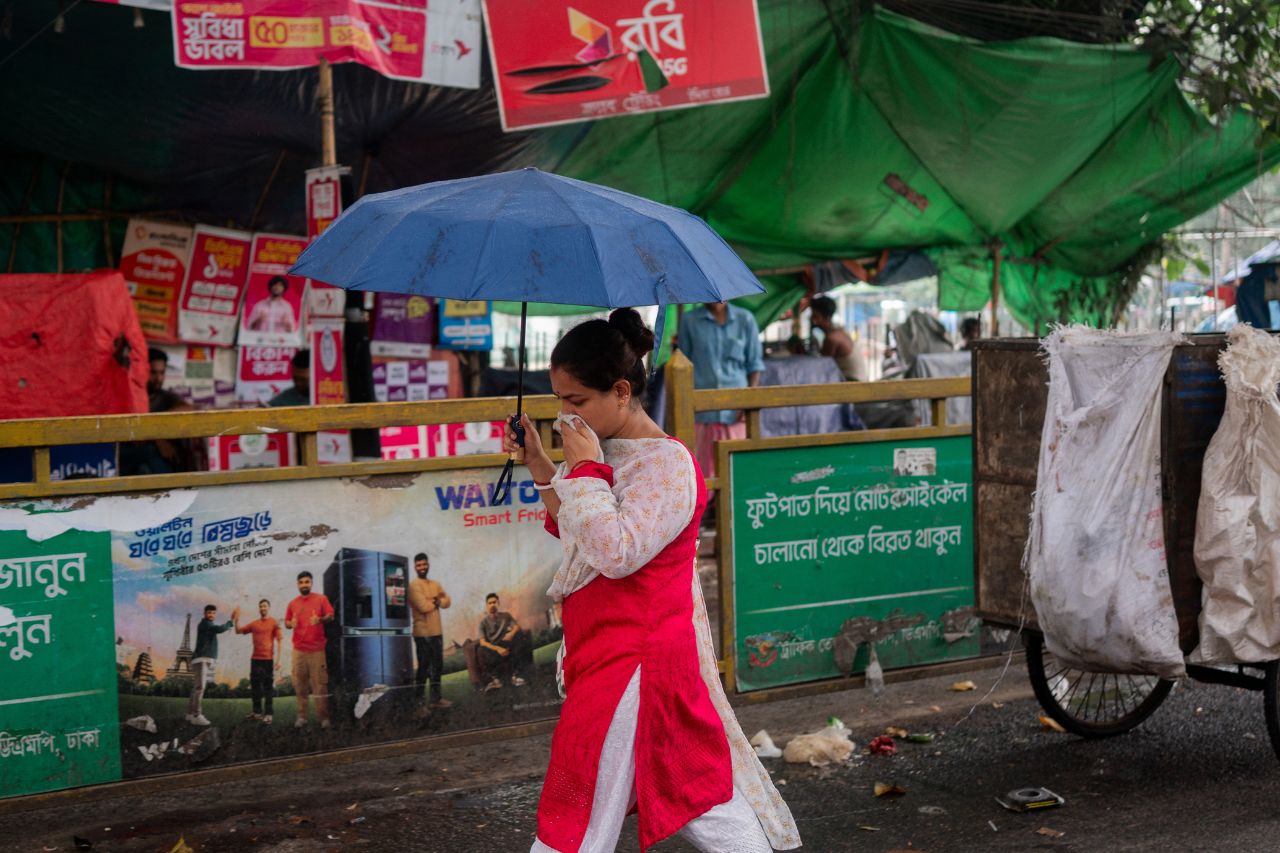
The first thing people notice is the smell. A sharp, sour odour hangs in the air long before a waste station comes into view. Residents living nearby often keep their windows shut throughout the day.
Fresh air becomes a luxury. The stench seeps into homes, shops and offices, making daily life increasingly difficult.

“I live in Dhaka Uddan, and every day when I leave for work and come back, my head spins from the bad odour,” said Alimuzzaman Munna, 32.
“The waste collection point is right beside the entrance to our community. This is crazy. It should have been at the outskirts of the city, not in the middle of it, and same goes for the rest of Dhaka.”

The scenes around these collection points are equally troubling. Overflowing garbage spills onto roads and footpaths.



Black leachate, the foul liquid released from decomposing waste, seeps into drains and puddles. During the monsoon, pedestrians often have no choice but to walk through contaminated water.
They are impossible to ignore. Vans arrive one after another, unloading fresh piles of garbage.
Flies swarm overhead. Stray dogs and crows rummage through the waste. Late at night, the roar of city corporation trucks disrupts the sleep of nearby residents.
The problem is not a lack of laws. Bangladesh’s waste management system is governed by the Solid Waste Management Rules, 2021, under the Bangladesh Environment Conservation Act, 1995.
The regulations clearly outline how waste should be collected, stored and transported. Yet implementation remains weak.
Dhaka generates thousands of tonnes of waste every day, overwhelming many collection points. Garbage often remains exposed for hours, sometimes days.
Odour-control systems are frequently absent, while drainage facilities for waste liquid are non-existent. What was intended to be a temporary holding area often becomes a mini dumpsite in the heart of a residential community.
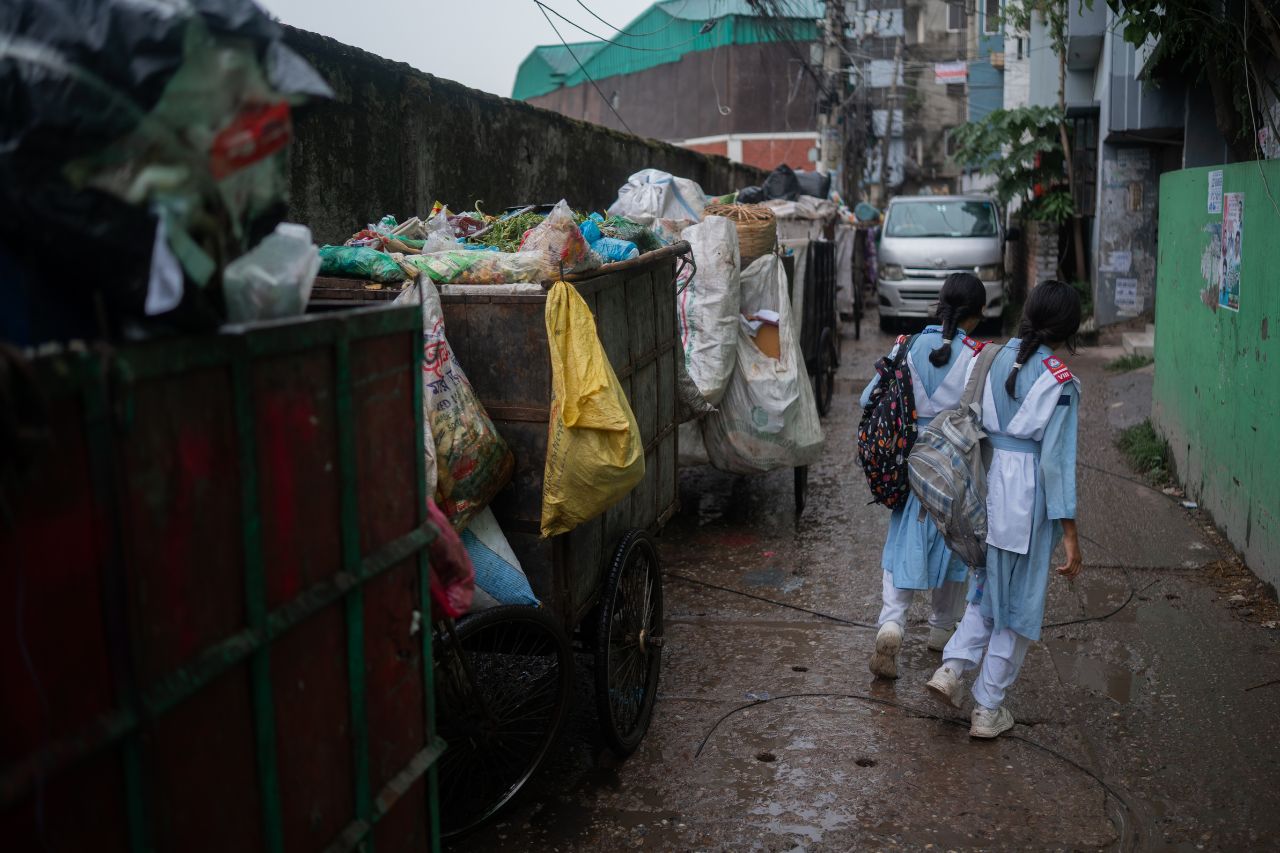
The consequences are far-reaching. Children pass these stations on their way to school. Patients visit nearby clinics. Residents live alongside swarms of flies, disease-carrying pathogens and the constant smell of decomposition.
A clean city begins with responsible waste management.
Until collection points are properly maintained, monitored and relocated away from densely populated areas, thousands of Dhaka residents will continue paying the price for a problem they did not create.