Bangladesh’s budget deficit could rise to nearly Tk 4 lakh crore in FY2026–27 if the proposed national budget is fully implemented, as shortfalls in revenue mobilisation and external borrowing may significantly widen the financing gap beyond official estimates, according to a private research assessment.
The projection was presented on Thursday at a discussion organised by Research and Policy Integration for Development (RAPID) at the CIRDAP auditorium in Dhaka, where economists assessed the fiscal realism of the Tk 9.38 lakh crore budget and flagged structural risks in both domestic revenue and external financing assumptions.
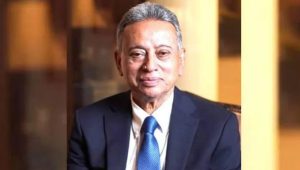
RAPID Chairman MA Razzaque said the fiscal framework is built on optimistic assumptions that are unlikely to materialise in full given Bangladesh’s historical revenue and borrowing performance.
According to the economist, the National Board of Revenue has been assigned a Tk 6.04 lakh crore revenue target, but past trends indicate persistent underperformance in tax mobilisation.

Even under a strong collection scenario, Razzaque estimated revenue could fall short by at least Tk 1 lakh crore, reflecting what he described as a structural gap between budget targets and actual outcomes.
On external financing, he projected a shortfall of around Tk 50,000 crore, noting that the budget’s assumed Tk 1.09 lakh crore in net foreign borrowing may not fully materialise amid tightening global liquidity and weakening aid flows.




He cited global data showing foreign assistance declining from $232 billion in 2023 to $153 billion, underscoring reduced concessional financing space for developing economies.
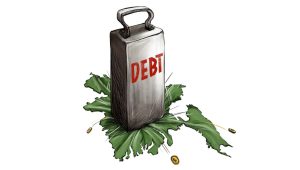
Taken together, these gaps could push the effective fiscal deficit significantly beyond the official Tk 2.43 lakh crore estimate, potentially approaching Tk 4 lakh crore if expenditure plans remain unchanged.
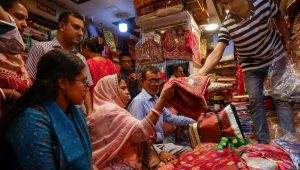
The discussion also highlighted sustained inflationary pressure, which has eroded real incomes and weakened household purchasing power, particularly among lower-income groups.
Razzaque said the most recent poverty assessment by Bangladesh Bureau of Statistics in 2022 likely understates current hardship, given prolonged inflation since then.
Economists at the event warned that prioritising rapid growth without securing price stability could intensify inflationary dynamics and delay real income recovery.
They added that the budget assumes higher growth will expand the tax base while external borrowing fills financing gaps, but both channels face downside risks if global conditions tighten further and domestic tax administration fails to improve materially.
The analysis has added to an ongoing debate over whether fiscal expansion is aligned with credible financing capacity and whether macroeconomic stabilisation is being prioritised alongside growth ambitions.