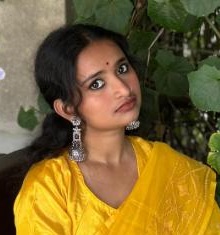



Snigdha Saha had already bought her clothes for Durga Puja. But as she searched for shoes at Dhaka’s Chowrangi Market and Gausia Market, completing her festive look was proving more expensive than she had expected.
“The pairs I like are priced beyond my budget. So, this time, instead of buying expensive shoes, I’m looking for something good within my budget,” she said.
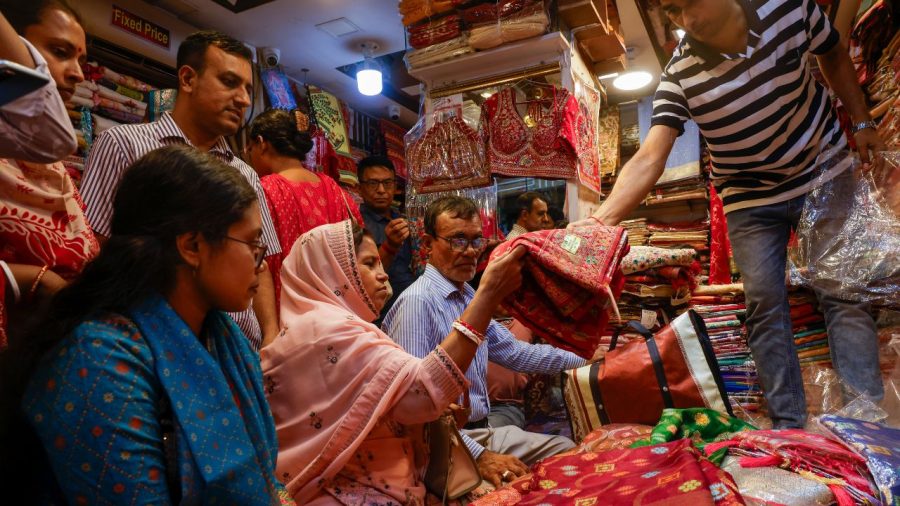
Her dilemma reflects a wider challenge for Dhaka’s Puja shoppers this year- preserving festive excitement while keeping spending within their means. Malls display new sarees, three-piece outfits, panjabis and accessories, but retailers report mixed sales, with some struggling to attract customers and others seeing steady demand for selected products.
At Momtaz Tat Centre in Dhanmondi Hawkers Market, salesperson Imran told TIMES the subdued demand is partly due to customers’ limited disposable income. The shop offers silk, Kani silk and boutique sarees alongside new designs. Despite introducing new collections, they are failing to meet their expected sales.
Rising procurement and operating costs have also become a challenge. The cost of transporting goods has increased from Tk1,200 to Tk1,400 per kg, said Anokhi salesperson Nurul Islam, adding that shop rent and service charges have further reduced profit margins. This data shows that the transport cost hiked 16.67 per cent.

With Mahashashthi, marking the beginning of Durga Puja festivities, on 16 October, many shoppers have already purchased their main outfits and are now looking for shoes, bags and other accessories. But rising prices are forcing some to compromise, bargain harder or settle for less expensive alternatives.
Retailers across the capital describe a mixed picture of the Puja market. While some shops report steady demand for specific products, others say customer turnout and sales remain below expectations compared with previous years. Higher procurement and operating costs are adding to the pressure on businesses, even as shoppers remain interested in festive purchases.
At Anokhi in Bashundhara City Shopping Complex, salesperson Nurul Islam said customer footfall had declined in recent days, making sales difficult even during the evening. Although some customers visit on Fridays, sales on other days have remained below expectations, he said.



The store sells Indian and Pakistani outfits, including ghararas and three-piece sets, with some customers buying outfits priced between Tk9,000 and Tk10,000.
“Earlier, we could make more profit than we do now. We have to calculate all our expenses before selling a product,” he said.
The pressure is also evident at M A Enterprise, where salesperson Juboraj said sales had remained moderate but were still well below the levels recorded during the same period in previous years. T-shirts and other clothing items were among the better-selling products, but higher purchase costs have made it harder to keep prices affordable. An item, for example, that previously cost the shop Tk1,000 now costs around Tk1,700, while Chinese products have become even more expensive, he said.
“We need to make a profit of at least Tk300 to Tk400 per item, which puts considerable pressure on us,” Juboraj said. Customers are mostly buying products priced between Tk1,500 and Tk2,200, with sales concentrated in the Tk1,500 to Tk1,800 range. Retailers sometimes have to accept lower profit margins to keep prices within customers’ budgets, he added.
Not every retailer, however, is reporting a slowdown. A representative of Srishti, a brand under Deshi Dosh, said customer numbers were broadly similar to last year, with encouraging turnout on the previous two Fridays. New sarees and panjabis, along with comfortable cotton outfits and three-piece sets, are selling well, she said. Some customers are also buying several panjabis at once for family gatherings and festive occasions.
Deshal has also recorded sales broadly unchanged from last year, according to a representative. Seasonal three-piece outfits and kurtis are attracting customers, with red and white among the preferred choices.
At Ittadi Jamdani House in Dhanmondi Hawkers Market, salesperson Md Shanjid said sales this year were significantly lower than during previous Puja seasons. He believes the country’s economic situation, alongside the opportunity for customers to travel to India for shopping, may be influencing purchasing patterns. The cost of traditional attire has also increased. A saree that sold for Tk5,000 last year now costs Tk6,000, he said, while most customers are opting for Jamdani sarees priced between Tk2,000 and Tk3,500. This data shows that the saree price hiked 20 per cent.
For shoppers, finding the right outfit has become an act between festive aspirations and affordability. Baishakhi Roy, a third-year student at the University of Dhaka, was shopping for sarees with her cousins ahead of the festival. They wanted sarees in similar designs but found prices high.
“We have to bargain a lot because sellers are asking for high prices. There is also little newness in the collections. For Puja, the collections seem to focus mainly on red and white sarees, while many of the other designs look similar to what is available throughout the year,” she said.
Afrina Habib, assistant general manager (marketing) at Le Reve, said the brand had experienced somewhat lower customer footfall during this year’s Puja season compared with last year. She believes the decline reflects a broader slowdown in festival-related shopping rather than a challenge limited to her company. Demand for clothing has nevertheless continued, with panjabis, women’s salwar kameez and sarees selling at the store, she said. Le Reve continues to introduce new collections but is not offering special discounts or promotions for Puja.
Accessories are providing another source of business. Md Hridoy, a salesperson at Fahima Bag Collection in Eastern Mollika Shopping Mall, said sales had been relatively good during the Puja season. Customers often purchase bags after buying clothes and cosmetics, with many looking for accessories that match their festive outfits. The shop has stocked more small purses and side bags for the occasion, with products priced between Tk1,500 and Tk2,000 selling particularly well, Hridoy said.
Across Dhaka’s shopping malls, the colours and excitement of Puja remain visible, but behind them is a quieter reality- for many families, celebrating the festival also means learning to make more out of a limited budget.