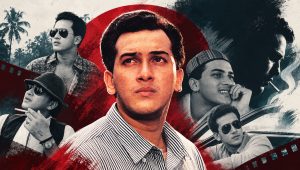
In 1971, during the Liberation War, 30-year-old Alamgir Kabir travelled to Kolkata. He was expected to fight on the battlefield, but instead the Bangladesh government appointed him chief correspondent of Swadhin Bangla Betar Kendra. Broadcasting in English under the pseudonym Ahmed Chowdhury, his announcement, “This is Radio Bangladesh, Mujibnagar…”, delivered in a refined British accent, became a vital channel through which news of the war reached the outside world.
Three of Kabir’s films feature on the British Film Institute’s list of the Top 10 Films of Bangladesh. Born on December 26, 1938, in Rangamati, his ancestral home was in Banaripara, Barishal. His education began at Collegiate School in Hooghly due to his father’s employment there.
Following Partition, he completed his matriculation at Dhaka Collegiate School, intermediate studies at Dhaka College and later graduated in Physics from the University of Dhaka.
After graduation, Kabir moved to England to study Electrical Engineering at Oxford University. During this period, Ingmar Bergman’s ‘The Seventh Seal’ had a profound impact on him and inspired his decision to pursue filmmaking. He later studied film history, direction and aesthetics at the University of London and the British Film Institute.

Drawn to left-wing politics and opposed to capitalist social structures, Kabir joined the British Communist Party and began working as a journalist for the Daily Worker. In the 1960s, he travelled to Cuba, received guerrilla warfare training and interviewed Fidel Castro.
While in London, he founded East Pakistan House and the East Bengal Liberation Front to campaign for Bangladesh’s independence. He also participated in the Palestinian and Algerian liberation struggles, during which he was arrested by the French authorities and imprisoned for eight months.
Upon returning to Bangladesh in 1966, he was arrested by the Ayub Khan regime for his political activities. Although released due to his British citizenship, he remained under house arrest for a year.



After his release, Kabir worked with Pakistan Observer, Holiday and his own publication, The Express. For his contributions to film journalism in the 1960s, he received the Syed Mohammad Parvez Award.
During the Liberation War, alongside his broadcasting role, Kabir served as an assistant director on Zahir Raihan’s documentary ‘Stop Genocide’. He also directed several documentaries of his own, including ‘Liberation Fighters’ and ‘Pogrom in Bangladesh’.
His debut feature film, ‘Dhire Bohe Meghna’ (1973), blended real footage with fictional narrative to depict the Liberation War. The film earned him the Bachsas and Zahir Raihan Film Awards for Best Director. ‘Surjokonna’ (1975) won National Film Awards for Best Director and Screenplay for its bold portrayal of women’s lives. ‘Simana Periye’ (1977), based on the 1970 cyclone, received the National Award for Best Screenplay and Dialogue.
‘Rupali Saikate’ (1979) won the Bachsas Award for Best Film, while ‘Mohona’ (1982) earned the National Award for Best Screenplay and a Diploma of Merit at the Moscow International Film Festival. ‘Parineeta’ (1984) won the National Award for Best Film, and Mohanayok (1985) marked his final directorial work.
In total, Kabir directed seven feature films and nine short films and documentaries. In 2010, he was posthumously honoured with the Swadhinata Award.
His contributions as an organiser were equally significant. In 1967, he was elected General Secretary of the Pakistan Film Association. Two years later, he founded the Dhaka Cine Club and the Dhaka Film Institute, laying the foundation for institutional film education in Bangladesh.
As coordinator of the Film Appreciation Course at the Bangladesh Film Archive, he mentored and influenced filmmakers such as Morshedul Islam, Tanvir Mokammel and Tareque Masud.
In his personal life, Kabir married Manjura Begum in 1968. Following their separation, he married actress Jayashree Kabir in 1975, who went on to appear in several of his films.
On January 20, 1989, Alamgir Kabir died in a road accident at the Nagarbari ferry ghat while returning to Dhaka from a film programme in Bogura. He was only 50. His untimely death remains an irreparable loss to Bengali cinema.