Mezbaur Rahman Sumon’s Roid is a film whose true power cannot be fully grasped if it is read merely as an Adam and Eve allegory, a love story, or an arthouse film. On one hand, it is a story of myth, religion, desire, love, and expulsion from paradise; on the other, it is a deeply humane portrait of two people living on the margins of rural Bangladesh.
While watching the film, I was repeatedly reminded of my own childhood. Growing up in Sunamganj, I saw many families where a woman would suddenly be labeled as “possessed by a spirit,” “affected by the wind,” or simply “gone mad.” At that age, I did not fully understand what was happening. But I remember how these households would attract curious crowds. People would gather to watch the woman’s behavior, witness exorcisms, or simply satisfy their curiosity. Some would even sit nearby with bowls of fruit, pitha, or snacks. A deeply personal tragedy would slowly transform into a public spectacle, sometimes resembling a small village fair.
That is why Roid never felt particularly obscure to me. I have encountered people like the film’s central female character in real life. It also reminded me of another Bangladeshi film, An Apple Tree Inside the Head, Directed by Mohammod Rabby Mridha and produced during the COVID period and screened internationally in 2024, which similarly explores the relationship between a mentally distressed woman and her husband. From lived experience, I can say that relationships like these are shaped simultaneously by love, affection, exhaustion, responsibility, desire, and helplessness.
Yet the strength of Roid lies in more than just this relationship. Mezbaur Rahman Sumon takes a familiar reality and transforms it into a cinematic world where the real and the unreal, memory and folklore, human experience and myth coexist. As a result, the film feels both deeply familiar and strangely elusive.
Many viewers may find the film overly symbolic or difficult. But my question is: is Roid really that difficult? Or are we trying to extract a kind of explanation that the film itself has no interest in providing? To me, its emotional core is remarkably simple. It is the story of people trying to find a small refuge within a broken reality. The film’s symbolism, mythology, magical realism, and mystery do not obscure that human story; rather, they deepen it.
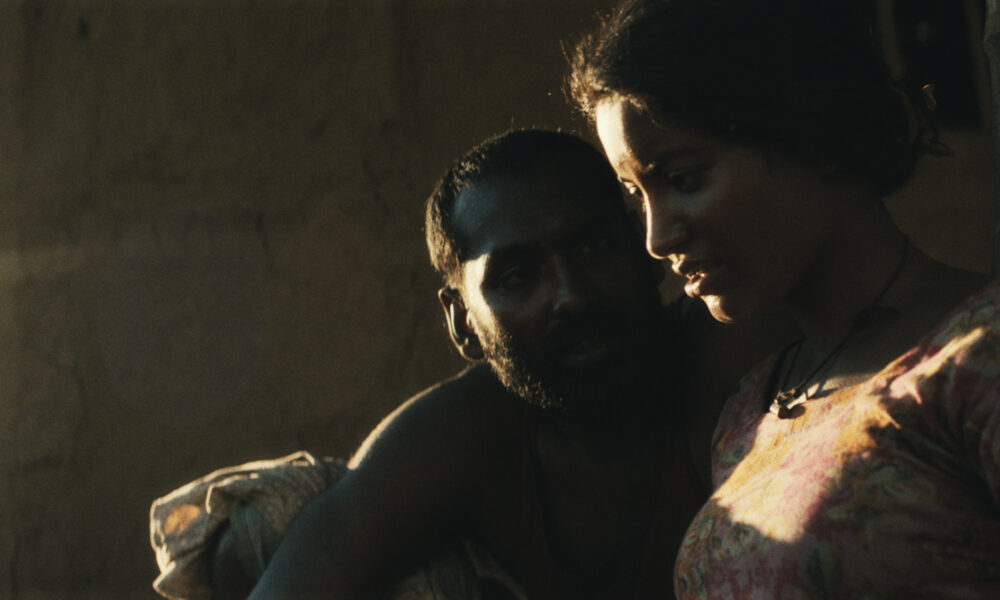
For this reason, I would describe Roid primarily as a cinematic experience. One may not find answers to every question by trying to explain it. But if the viewer is willing to surrender to the film, its folk atmosphere, magical realism, marginal lives, and the sorrow of an incomplete relationship come together to create an extraordinary cinematic experience.

At the center of the story are Sadhu and his nameless wife. Everyone simply calls her “Pagli”—the mad woman. She has no identity of her own; she barely seems to know her own name. This namelessness is not merely a character trait—it is a sign of society’s cruelty. Society does not see her as a person but as a condition. She clearly carries some form of psychological instability—perhaps trauma, perhaps an undiagnosed mental illness, perhaps the result of prolonged neglect and violence. The film never diagnoses her, nor does it explain her past. We only learn that she had been married before. What happened in that marriage? Why is she the way she is today? What caused the fracture in her life? The film deliberately leaves these questions unanswered. And that is precisely where Roid departs from conventional storytelling.
Many viewers may interpret the film’s mysteries and unanswered questions as obscurity. But to me, the form of the film is an extension of the character’s mental state. Just as Pagli cannot organize her fragmented memories, emotions, and experiences into a coherent narrative, the audience cannot neatly organize the film’s events, symbols, and mysteries into a single explanation. Who unlocks her chains? Who saves her on the night of the fire? How does she repeatedly find her way back to Sadhu from distant places? Who is the father of her unborn child? The film offers no answers. Yet within those unanswered questions lies its truth. It is not interested in events; it is interested in experience.
This is why Roid feels deeply rooted in magical realism. Reality, folklore, memory, rumor, religious belief, and the possibility of the supernatural coexist here. Such is life in the lowland regions of Bangladesh, where reality is never entirely rational. Sumon captures that reality so naturally that the film’s mysteries never feel unnatural.
Many have interpreted the film through the lens of Adam and Eve, and such a reading is certainly valid. The small home shared by Sadhu and Pagli resembles a primordial Eden. They live apart from society. There is no judgment, no surveillance, no social control. But eventually the outside world intrudes. Children mock Pagli, village arbitration begins, chains are placed upon her, and judgment is passed. It is at this moment that their fall from paradise begins. Yet the most fascinating aspect of Roid is that there is no devil here. There is no singular villain. Society itself occupies that role. Its control, its judgments, its definitions of normality, and its fears collectively become the force that expels them from Eden.



Still, I believe the film’s greatest strength lies not in the Adam and Eve allegory but in the complexity of Sadhu and Pagli’s relationship. I am not convinced that Sadhu was in love from the beginning. Rather, he wanted a household. He wanted a wife. He wanted a functioning home. He desired physical intimacy. His longing was profoundly human, but it was not necessarily love. He desired Pagli, wanted to touch her, wanted the fulfillment of married life. Pagli, on the other hand, felt affection for him, but that affection never develops into a conventional marital bond. Their relationship therefore exists within a strange imbalance.
The palm cake becomes an important symbol in this context. Many viewers have interpreted it as the forbidden fruit. I find that reading persuasive. But beyond the symbolism of the fruit itself lies something even more significant: desire. Once desire is awakened, there is no return. Sadhu’s tragedy begins when he becomes afraid of losing this woman. In other words, the fall begins not with love, but with desire. And it is that desire that gradually transforms into love.
The most heartbreaking aspect of the film is that Pagli carries the burden of the relationship. Sadhu abandons her. She returns. She leaves. She returns again. It is as if she alone keeps trying to preserve the relationship. Yet in the end, neither truly understands the other. That inability to fully understand one another becomes the deepest source of the film’s sorrow.
Mezbaur Rahman Sumon’s filmmaking elevates this story even further. The changing seasons, the scent of palm fruit, silence, fire, animals, and the surrounding landscape all come together to create a cinematic language in which reality and mythology, folk life and philosophical inquiry become inseparable.
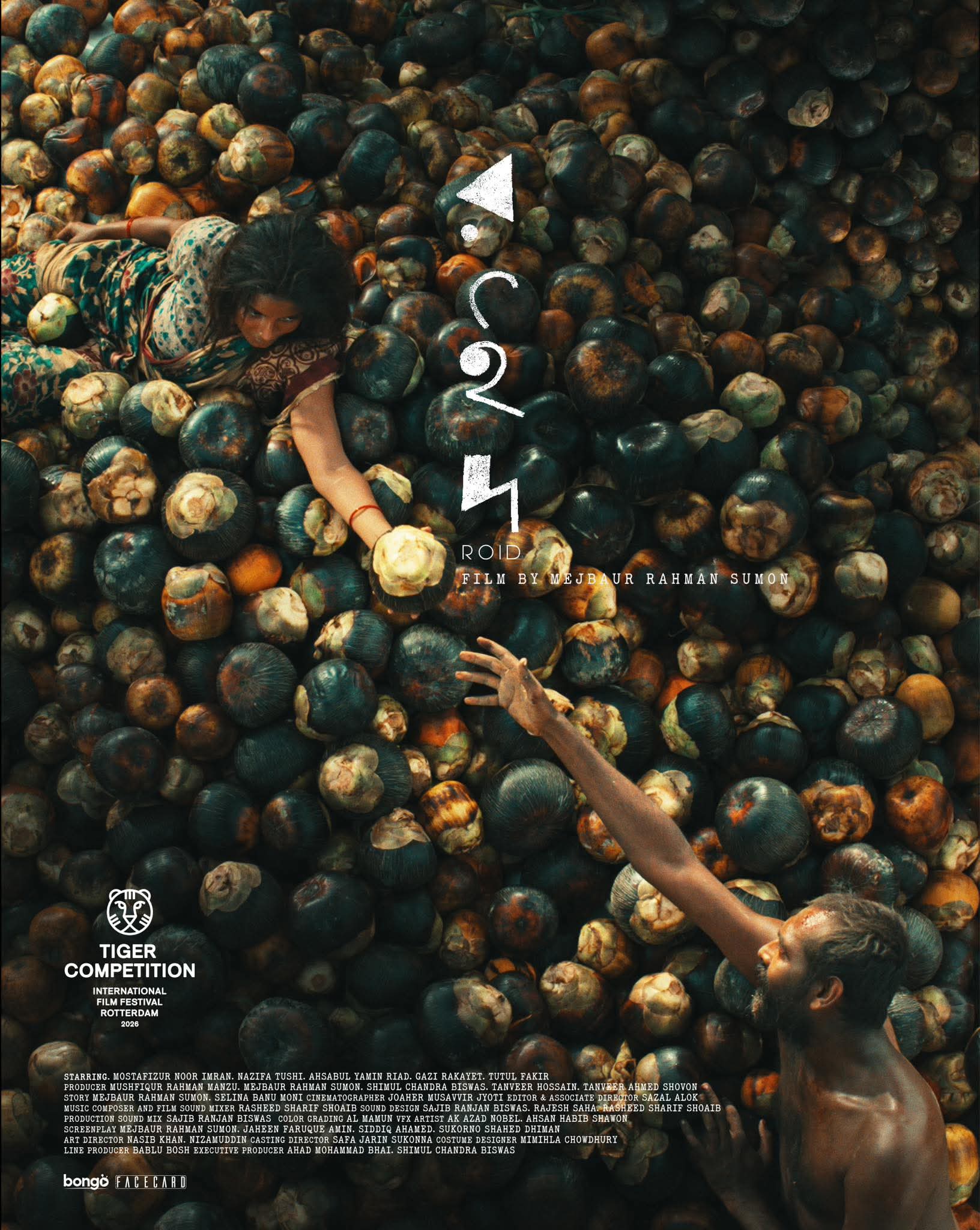
Perhaps the film’s greatest achievement is that it never turns its technical excellence into a spectacle. Instead, every contribution from its artists and technicians is woven so seamlessly into the narrative that the audience becomes immersed in a complete experience. The cinematography of Xoaher Musavvir deserves particular praise. His sensitive portrayal of the vast lowland landscapes, seasonal changes, monsoon melancholy, and lonely palm groves transforms reality into something almost otherworldly. These images are not merely beautiful; they are extensions of the characters’ inner worlds. Likewise, the restrained use of sound design and score is one of the film’s greatest strengths. Silence, wind, distant rain, and the sound of falling palm fruit often communicate more than dialogue. As a result, the viewer does not merely watch the film but inhabits its atmosphere.
The production design and costume design are equally remarkable. The world inhabited by the characters feels authentic and lived-in rather than constructed. The simplicity of the costumes, colors, and environments prevents the characters from being tied to a specific historical period, placing them instead in a timeless human condition. These technical achievements find their fullest expression through the performances of Nazifa Tushi and Mostafizur Noor Imran. Tushi brings a vulnerability, mystery, and childlike instability to her role that makes her simultaneously real and mythical. Imran, meanwhile, captures Sadhu’s loneliness, physical longing, frustration, and incomplete love with remarkable restraint and depth. As a result, Roid is not merely the success of a director; it is a rare collaborative achievement where performance, cinematography, sound, production design, and folk reality merge into a complete cinematic world.
A closer look at Pagli reveals that she undergoes a transformation of her own. At the beginning of the film, she is almost childlike. She delights in small things. She dances when she hears a beautiful song, rejoices in the rain, and experiences the world with a child’s sense of wonder. Sadhu, by contrast, is much more socialized. Though he belongs to society’s margins, he is not entirely free from notions of social respectability and public opinion. When people begin telling him that his wife is mentally unstable, he slowly starts seeing her through their eyes. From that moment onward, he spends more time trying to fix her than understand her. He begins instructing her on how to behave, what to do, and what not to do, gradually imposing a social framework upon her.
Interestingly, Pagli cannot cook and struggles with the practical demands of household life, yet Sadhu initially accepts these shortcomings with compassion. Over time, however, that acceptance becomes a burden. Eventually he makes one of the film’s most disturbing decisions: he abandons her far from home. When Mia Saheb asks, “Is a wife a cat that you can leave wherever you want?” the audience laughs. Yet for me it is one of the film’s most painful moments. It reveals how easily Sadhu can leave behind the woman he calls his wife. The film quietly asks whether abandoning a mentally distressed person is really so different from physically abusing them.
Yet Pagli returns. She comes back without complaint, saying only that she needed time for her head to cool down. Within that simple statement lies a profound humanity. Upon returning, she begins making palm cakes. Sadhu is enchanted by their taste, repeatedly saying that he has never eaten anything like them in his life. For a brief moment, it feels as though they have found their Eden again. It seems possible that they might finally build a life together.
But that paradise does not last. The harassment from village boys, Pagli’s reaction, and the decision to chain her once again shatter their world. Sadhu’s efforts to care for her, tame her, and control her become part of a tragic cycle. Then their house burns down. With no alternative left, Sadhu leaves her at her aunt’s riverside home. Yet this farewell is different from the first. Pagli has changed. She seems to understand that her presence has become a source of instability in the household. For the first time, she appears mature. The scene is devastating.
When she returns again on a stormy night—this time pregnant—the character becomes even more complex. The film never directly explains the transformation that leads her to attempt to harm her unborn child, withdraw from the household, or retreat into silence. Yet it is here that one of the film’s most compelling dimensions emerges. Gradually, it begins to feel as though we are experiencing the entire narrative through Pagli’s consciousness. A person who cannot organize fragmented memories, emotions, and experiences into a coherent whole would naturally perceive the world as fragmented, mysterious, half-spoken, and half-unknown.
Perhaps that is why Roid feels so dreamlike. So many questions remain unanswered. So many events remain unexplained. But if the film is understood as an extension of Pagli’s inner world, those ambiguities cease to feel like weaknesses. Instead, they become a way for the audience to enter the same emotional vortex through which Pagli experiences reality. It is here that Roid discovers its unique identity—not as a story alone, but as a lived emotional landscape.
In the final scene, as palm fruits fall endlessly from the trees and Sadhu lies almost buried beneath them, Pagli once again extends a palm fruit toward him. At that moment, the film leaves behind all explanations. Only feeling remains. Is the fruit once again the forbidden fruit? Is it a final gesture of love? Or an invitation to acceptance? The film never answers.
And perhaps that is Roid‘s greatest achievement.
The more one tries to explain the film, the more it slips away. Just as no single truth can be found within Pagli’s fragmented memories and scattered emotions, there can be no definitive interpretation of Roid. It is more important to feel it than to fully understand it. And within that feeling, the film gradually becomes a rare cinematic experience—one in which an incomplete relationship, a nameless woman’s loneliness, a man’s unfulfilled longing, and the invisible cruelty of society come together to tell the story of the fall of a primordial Eden without a devil.