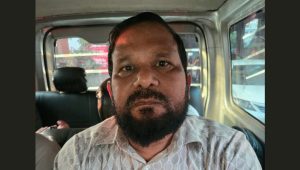
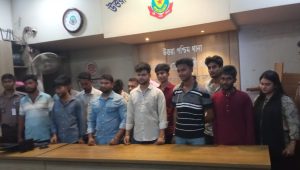
A high-ranking government engineer and his wife are in custody now, accused of a horrifying crime: throwing their young domestic aide to her death from a Dhaka high-rise. Meanwhile, in Khulna, a police couple face arrest for the stomach-churning, systematic torture of another helpless maid.
While authorities have moved swiftly in both bombshell cases, history suggests the outrage will end here. In Bangladesh, a grim, unspoken rule persists: when elite officials, industrialists, journalists, or celebrities are accused of brutalising the vulnerable hands that feed them, justice is almost never served.
There is virtually no precedent for successful prosecutions in highly publicised cases involving the wealthy.
Time and again, the public is left shocked by horrifying images of hot water burns, knife wounds, and severe head injuries. Yet, while arrests are occasionally made, almost all cases eventually end in a quiet compromise. Flawed investigations and subsequent acquittals remain a persistent trend.
Abul Hossain, coordinator of the Domestic Workers Rights Establishment Network, told TIMES of Bangladesh, “There has been only one successful prosecution in recent years. On 23 September 2013, 11-year-old Aduri was tortured and dumped in a dustbin in Dhaka. In that instance, the court sentenced the housewife to life imprisonment.”
Regarding the regular acquittal of affluent suspects, Hossain noted that initial police statements are often intentionally weakened.
“The victims are uneducated and do not understand the law,” he explained. “On the other hand, influential employers easily pressure the police. Coupled with coercion and financial settlements out of court, the cases effectively die there. Consequently, justice is never served.”

Human rights activist and lawyer Salma Ali echoed these systemic concerns. “Although cases of women and children being tortured are recorded, there is subsequently no progress,” Ali warned. “Due to a lack of strong witnesses and extreme financial hardship, these cases are inevitably settled out of court.”
Attempts to compromise in the Kalpana torture case
The horrifying torture of 13-year-old domestic worker Kalpana Akhter in Bashundhara, which sparked widespread outrage in October 2024, is facing a familiar hurdle: an attempted out-of-court settlement.
Kalpana suffered unspeakable brutality. According to police reports, she was scalded with a hairdryer, her fingernails were ripped out with scissors, and her front teeth were smashed with a cleaning brush. Beaten raw, her wounds began to rot, emitting a foul odour that her employer allegedly masked with perfume rather than providing medical care. Kalpana required four months of hospitalisation to survive.
Yet, despite the severity of the case, a compromise application was submitted to the court last July, claiming the entire ordeal was merely a “misunderstanding”.




In a rare victory for accountability, the court rejected the application and ordered the trial to proceed, setting a hearing for 25 August. However, the two main accused, siblings who owned the flat, remain out on bail.
“If there is a compromise in exchange for money in such a horrific torture incident, it is deeply tragic,” plaintiff’s lawyer Fahmida Akhter told TIMES.
Easy bail despite brutal torture
The torture inflicted on an 11-year-old child at the home of Shafiqur Rahman, former Managing Director and CEO of Biman Bangladesh Airlines, was heartbreaking.
The young girl’s small body was covered in severe injuries, including deep gashes caused by a hot stove.
The former Biman MD and his wife, Bithi Akhter, were arrested on 2 February and subsequently remanded in custody for questioning.
Yet, less than three months later, on 28 April, they were granted bail on a bond of just Tk5,000.
Similarly, film actress Simon Hasan Eka faced two lawsuits after being arrested for allegedly torturing a domestic worker at her residence on Ulan Road of Rampura. She managed to secure bail within just three weeks.
Fahmida Akhter, a human rights activist and lawyer at Dhaka Medical College Hospital’s One-Stop Crisis Centre, observed, “Plaintiffs quickly become discouraged by the painfully slow pace of investigations. Ultimately, the accused secure bail through out-of-court settlements, and even then, the victims rarely receive meaningful compensation.”
Highly publicised incidents fail to lead to prosecutions
A report by the human rights organisation Ain o Salish Kendra (ASK) reveals that 140 domestic workers were tortured over the six-year period from 2020 to 2025.
The report, compiled from newspaper coverage, shows that only 50 of these incidents resulted in legal action.
This means that in 65% of cases, no formal charges were ever filed.
Abu Ahmed Faizul Kabir, senior coordinator at ASK, told TIMES, “When an incident of torture initially comes to light, everyone is proactive and cases are filed. However, when organisations follow up later, we find that the victims themselves have backed down.”
Tahmina Rahman, the organisation’s executive director, added, “Only strict punishment can act as a deterrent and reduce domestic torture.”
A report by another organisation, the Bangladesh Institute of Labour Studies (BILS), recorded 714 cases of abuse against domestic workers over the 15-year period from 2011 to 2025. Among the victims, 350 were killed, 345 were injured, 17 committed suicide, and two went missing.
Syed Sultan Uddin Ahmed, executive director of BILS, told TIMES, “There is a deep-seated scepticism among litigants; they simply do not believe they will get justice. Being poor creates insurmountable economic and social pressures. As a result, they eventually settle the matter for financial compensation.”
Mahfuza Parveen, coordinator of Shapla Neer, an international organisation working for the rights of child domestic workers, echoed this sentiment, “Working-class people do not feel comfortable navigating the legal system. A major reason for this is that the cost of litigation is prohibitively high. Furthermore, many remain completely unaware of their basic legal rights.”