


For Shah Alam, a middle-aged private-sector employee from Nilkhet, medicine is no longer a routine monthly expense, it is a crushing financial burden.
Earning between Tk 55,000 and Tk 60,000 a month, he spends roughly a third of his income, Tk 20,000, on prescription drugs for himself and his wife, both of whom suffer from diabetes and thyroid conditions.
As the sole earner supporting his wife and college-going daughter, any further rise in drug prices threatens to push his household to the brink.
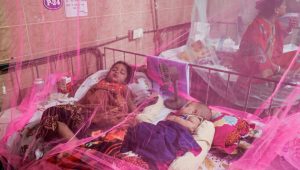
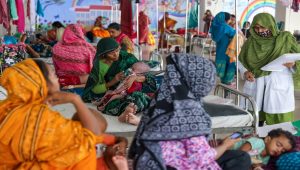
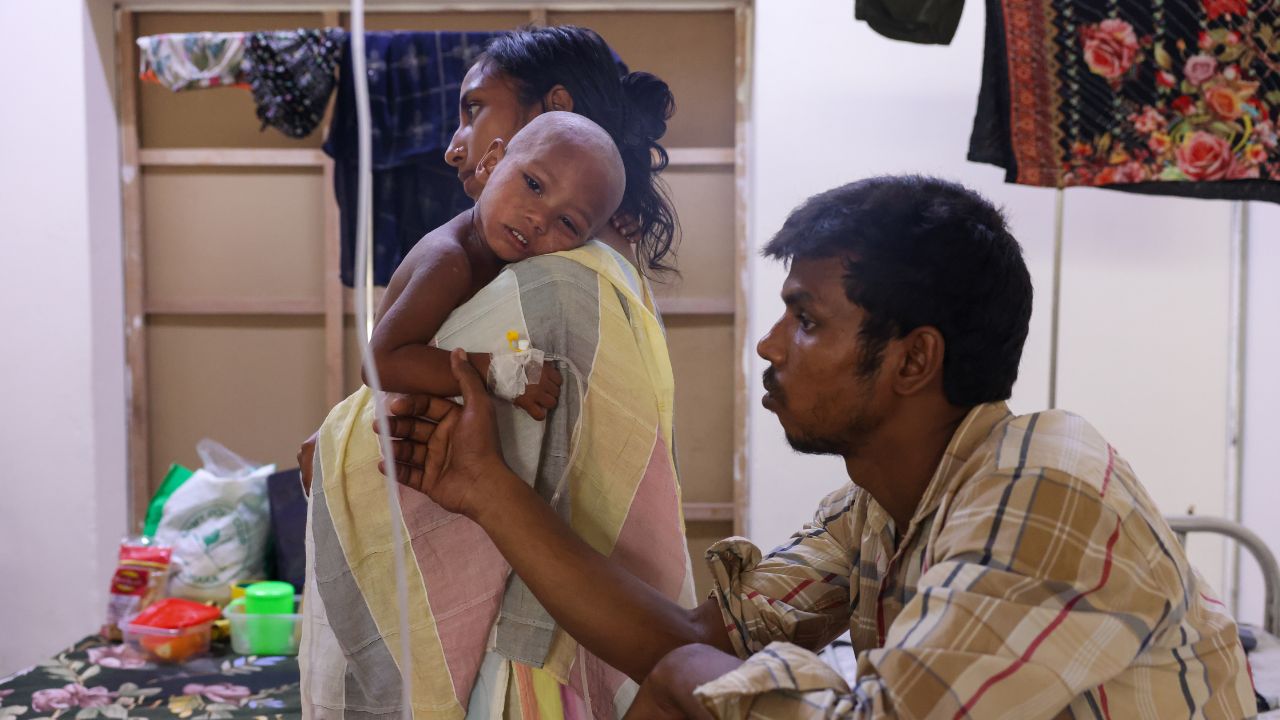
His plight reflects a deepening healthcare crisis across Bangladesh, where families shoulder some of South Asia’s heaviest out-of-pocket (OOP) medical costs.
A 2026 study by the Bangladesh Institute of Development Studies (BIDS) revealed that OOP health expenditure in the country has surged from 55.9 per cent in 1997 to 79.3 per cent today, the highest in the region.
This burden falls disproportionately on low-income households, who spend roughly 35 per cent of their earnings on healthcare, compared to just 5 per cent amongst the affluent. Pharmaceuticals account for the lion’s share of this expenditure, representing 54 per cent of outpatient spending and 25 per cent for inpatients.

A separate BIDS study noted that soaring health expenses pushed 6.1 million Bangladeshis, 3.7 per cent of the population, into poverty in 2022 alone.
Against this stark backdrop, public concern has mounted over the government’s decision to scrap a newly proposed medicine pricing framework that would have extended price controls to roughly 180 additional drugs. These 180 drugs encompass widely prescribed treatments, including therapies for diabetes, hypertension, and cancer, as well as anaesthetics and pain relief.
On 3 August, the Cabinet approved a proposal to withdraw the ‘Essential Drugs List 2026’ and the ‘Drug Price Determination Method 2026’. Introduced on 8 January under the former interim administration, the framework aimed to expand the number of regulated generic medicines from 117 to 295, significantly tightening government oversight.
However, the reform was scrapped prior to implementation. Authorities cited procedural flaws, explaining that the measures were drafted without consulting the National Drug Advisory Council, a statutory requirement under the Drugs and Cosmetics Act 2023.



The framework’s legal validity had also been challenged in a High Court writ petition that remains sub judice.
By reverting to the 1994 list, price regulations once again apply to only 117 medicines, returning commercial pricing power for the remaining 180 drugs to pharmaceutical companies.
While the government maintains it will now update the list through proper legal channels, vulnerable consumers are once again left exposed to market forces.
The decision has polarised key stakeholders across the country. Whilst pharmaceutical manufacturers have welcomed the government’s U-turn, consumer rights groups and healthcare experts warn that diluting price controls will heap further financial strain onto already struggling patients.
Muhammad Halimuzzaman, treasurer of the Bangladesh Pharmaceutical Industries Association and CEO of Healthcare Pharmaceuticals Limited, told TIMES of Bangladesh that the interim administration had imposed the regulations arbitrarily. “The previous decision was taken without any discussion with industry stakeholders,” he said. “We welcome the fact that the current government has scrapped it and committed to acting strictly in accordance with the law.”
Dismissing fears of impending price hikes, Halimuzzaman argued that market forces naturally keep costs down, “Following the 1994 drug policy, we saw numerous instances where medicine prices fell. Our companies sell drugs at far lower rates than most international markets, so these concerns are largely unfounded.”
Consumer advocates have sharply criticised the rollback.
AHM Shafiquzzaman, President of the Consumers Association of Bangladesh (CAB), argued that the move effectively restores the pharmaceutical sector’s dominance over pricing mechanisms.
“The government is reverting to a system where drug companies hold greater control,” he remarked. “The scrapped framework offered a real opportunity to bring more essential drugs under regulatory oversight. A truly people-friendly government ought to prioritise ordinary consumers; this decision falls well short of our expectations.”
Public health experts share this anxiety. Dr Mushtuq Husain, former Chief Scientific Officer at the Institute of Epidemiology, Disease Control and Research (IEDCR), warned that low- and middle-income households would bear the brunt of the policy shift.
“Out-of-pocket health expenditure is already extraordinarily high. While there was hope that medicine costs might fall, they are now likely to rise further, potentially making life-saving treatments unaffordable for ordinary citizens.”
Echoing these concerns, the National Health Alliance (NHA), backed by the National Citizen Party (NCP), issued a statement warning that loosening controls on roughly 180 drugs would severely hit elderly patients and those managing chronic illnesses. The group called for immediate market surveillance and a patient-centric national drug policy.
Meanwhile, health economists have advocated a pragmatic middle ground between rigid regulation and free-market pricing.
Dr Syed Abdul Hamid, Professor of Health Economics at Dhaka University, suggested establishing a dedicated task force to introduce a benchmark pricing framework for all medicines. “Benchmark prices should balance consumer affordability with commercial sustainability, adjusting annually for inflation,” Dr Hamid explained.
“For non-essential drugs, the benchmark could reflect prevailing market rates, such as the median price of equivalent products within a capped range. This would streamline regulation whilst ensuring pharmaceutical companies remain viable,” he said.